

Tokenization is reshaping conversations about access, liquidity and transparency in the commodity markets. In a previous article, I explored why this shift matters strategically, who should participate and how.
But I think what has received less attention is its impact on valuation itself. When the underlying market mechanics of commodities evolve, the very way investors price those commodities must evolve too.
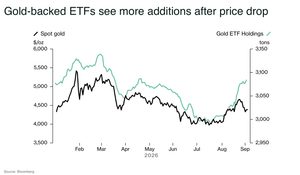
Tether Gold, a token, now reportedly owns nearly $12 billion in gold. With gold sitting at or near all-time highs, you have to wonder what the impact of this and similar gold tokens has had on the physical market and what it means for the tokenization of other commodities.
Liquidity As A Valuation Variable
Traditional commodity valuation models assume illiquidity as a constant. Oil, copper or nickel may trade on exchanges, but physical ownership—warehouse receipts, offtake contracts or royalties—does not. Investors demand an “illiquidity discount” for holding real assets that are difficult to sell, finance or verify.
Tokenization collapses that discount. When a physical asset can be represented by a compliant, verifiable token and traded frictionlessly across global markets, the cost of liquidity declines and valuations rise accordingly.
Consider how this played out with Real Estate Investment Trusts (REITs) or Exchange Traded Funds (ETFs). Once an asset became easy to own and sell, investors paid a premium for convenience and accessibility. Tokenized commodities should follow the same trajectory, with liquidity itself becoming a driver of return.
Price Discovery In Continuous Markets
Commodities have historically been priced through centralized exchanges and bilateral contracts—systems that close each afternoon and reopen the next day. Tokenized assets, however, never sleep.
A 24/7 market means price discovery becomes continuous. A nickel token held in wallets across Asia, Europe and North America could trade in real time based on regional demand, foreign exchange shifts or even social sentiment. That constant feedback loop compresses arbitrage opportunities, making prices more reflective of global supply and demand conditions.
For portfolio managers, this creates both a challenge and an opportunity. The challenge: Volatility will increase as markets digest information around the clock. The opportunity: Price accuracy improves. The “closing price” becomes less meaningful than the aggregated digital footprint of trades across geographies and time zones.