




America’s $27 billion push to break China’s minerals grip
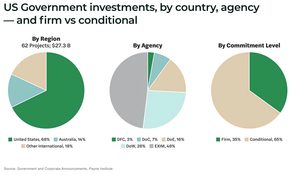
The US has committed or conditionally committed at least US$27.3 billion to 62 critical minerals projects since the start of 2025, according to the Payne
Titanium is a strategic critical mineral essential for aerospace, defence, medical implants, chemical processing and advanced manufacturing.
High-purity titanium sponge and aerospace-grade alloys supply is concentrated, just as rising aircraft and defence demand, supply risks and limited Western processing capacity are accelerating efforts to build secure, traceable titanium supply chains.
Titanium is a strong, lightweight and corrosion-resistant metal, chemical symbol Ti and atomic number 22.
Pure titanium is silvery-grey, while titanium alloys can combine high strength with substantially lower weight than many steels. Titanium also forms a stable oxide layer that protects the underlying metal from corrosion.
The name comes from the Titans of Greek mythology. Titanium is abundant in the Earth’s crust, but it does not occur naturally as a pure metal. It must be extracted from minerals and processed through several technically demanding stages.
Most titanium minerals are not converted into metal. The majority are used to manufacture titanium dioxide, a white pigment found in paint, plastics, paper and other products. Only a much smaller share enters the titanium-metal supply chain serving aerospace, defence, medical and industrial markets.
Titanium combines several valuable properties:
These properties make titanium important where performance, durability or reduced weight justify its relatively high cost.
The titanium market should be understood as two related but distinct value chains:
They begin with some of the same minerals but serve very different customers.
Titanium dioxide, or TiO₂, is the largest use of titanium minerals.
It is a bright white material with a high refractive index, allowing it to scatter light effectively. This gives titanium dioxide excellent whiteness, opacity and covering power.
Titanium dioxide pigment is used in:
Demand is closely linked to construction, manufacturing, consumer goods and general economic activity.
Titanium dioxide is a chemical compound rather than titanium metal. A rise in pigment demand does not necessarily imply equivalent growth in aerospace-grade titanium.
Titanium dioxide gives paint brightness, opacity and colour consistency.
Because it scatters visible light efficiently, a relatively small amount can help a coating hide the surface beneath it.
Applications include:
Pigment performance depends on particle size, purity, crystal structure and surface treatment.
Titanium dioxide is used to make plastics whiter and more opaque. It can also support ultraviolet resistance in selected formulations.
Applications include:
In paper and printing, titanium dioxide can improve brightness and opacity, although manufacturers may use alternative fillers where cost is more important than maximum performance.
Regulations governing titanium dioxide vary by application and jurisdiction, particularly for food, cosmetics and products involving potential inhalation exposure.
Aerospace is the largest high-value market for titanium metal.
Titanium alloys offer high strength at a lower density than many steels. They also resist corrosion and remain stable across the temperature ranges encountered in aircraft.
Applications include:
Titanium is particularly useful in modern aircraft that contain large amounts of carbon-fibre composite material. It has compatible expansion characteristics and is less susceptible to galvanic corrosion with carbon composites than aluminium.
Aerospace titanium must meet strict requirements for chemistry, internal structure, traceability and fatigue performance. Material qualified for general industry cannot automatically be used in an aircraft.
Titanium alloys are used in cooler sections of jet engines, including fan and compressor components.
They provide a useful balance of:
Nickel-based superalloys are generally preferred in the hottest parts of an engine. Titanium and nickel alloys therefore serve complementary roles rather than directly replacing one another across the complete system.
New engine designs, aircraft production and maintenance activity can all influence titanium demand.
Titanium is strategically important to defence and space systems.
Applications include:
Its strength-to-weight ratio can improve range, payload or manoeuvrability. Its corrosion resistance is particularly valuable in marine and naval environments.
Defence and aerospace customers require secure supplies of qualified sponge, alloy, ingot and wrought products—not simply access to titanium ore.
Titanium and selected titanium alloys are used in medical applications because they resist corrosion and can integrate well with bone and tissue.
Applications include:
Titanium’s surface forms a stable oxide layer that helps protect the metal and supports biocompatibility.
Medical-grade titanium must meet strict standards for composition, processing, cleanliness and mechanical performance.
Titanium resists many corrosive chemicals, particularly chloride-bearing environments.
It is used in:
Although titanium equipment can be expensive to purchase, its corrosion resistance may reduce maintenance, unplanned shutdowns and replacement costs.
Titanium is not resistant to every chemical environment. Engineers must select the correct grade and operating conditions.
Titanium performs well in seawater because its protective oxide layer resists corrosion.
Applications include:
Titanium tubing is used in selected condensers and heat exchangers where long operating life can justify the initial cost.
Growth in desalination, offshore infrastructure and coastal power systems can support demand, but stainless steel, copper alloys and polymers compete in many applications.
Titanium is used in conventional, nuclear, geothermal and other power systems.
Applications include:
Its principal advantage is often resistance to corrosive fluids rather than direct involvement in generating electricity.
Titanium is not a major bulk input into every clean-energy technology. Its role is concentrated in specialist components where durability and corrosion resistance matter.
Titanium powder is used in metal additive manufacturing, commonly called 3D printing.
The process can create complex shapes while reducing the amount of material machined away from a solid block.
Applications include:
Additive manufacturing can improve material efficiency and enable designs that are difficult to produce conventionally.
Challenges include powder cost, process speed, quality control, certification and the recycling of unused powder.
Titanium is also found in specialist consumer and architectural products.
Applications include:
These markets value titanium’s appearance, low weight, durability and resistance to weathering.
Consumer demand is smaller than the pigment and aerospace markets but can support high-value fabricated products.
Titanium occurs in several minerals, but the most important commercial sources are:
Ilmenite contains titanium and iron and is the most widely produced titanium mineral.
Rutile has a higher natural titanium dioxide content and can be particularly valuable for pigment and metal production.
Leucoxene is a weathered, titanium-rich material formed through the alteration of ilmenite.
Producers can also upgrade ilmenite into synthetic rutile or titanium-rich slag.
A substantial share of titanium minerals comes from heavy-mineral sand deposits.
Titanium-bearing grains are concentrated by weathering, rivers, waves and wind. Deposits may occur in:
Heavy-mineral sands can also contain zircon, monazite, garnet and other valuable minerals.
Mining generally involves separating dense minerals from ordinary sand before individual products are divided using magnetic, electrical and gravity-based methods.
Titanium minerals can also occur in hard-rock deposits, including large bodies of ilmenite associated with igneous rocks.
Hard-rock ore is mined, crushed and concentrated before entering the pigment or metal supply chain.
Project economics depend on:
A large ilmenite resource is not necessarily suitable for every pigment or metal-processing route.
Titanium dioxide pigment is generally manufactured using one of two methods.
The sulphate process dissolves titanium-bearing feedstock in sulphuric acid.
It can accept a relatively broad range of raw materials but produces substantial acidic and iron-bearing waste streams that must be managed.
The chloride process reacts titanium feedstock with chlorine and carbon to produce titanium tetrachloride.
The titanium tetrachloride is purified and oxidised to create titanium dioxide pigment. Chlorine can be recovered and reused within the process.
This route generally requires higher-grade feedstock or upgraded titanium slag.
Both processes require careful control of chemicals, emissions and waste.
Producing titanium metal is more complex than producing common metals such as steel or aluminium.
The dominant commercial route is the Kroll process.
A simplified titanium-metal supply chain includes:
Each stage has its own capacity, technology and quality requirements.
A country may mine titanium minerals while lacking the facilities to manufacture sponge or aerospace-grade products.
Titanium sponge is the porous, intermediate metal produced after titanium tetrachloride is reduced with magnesium.
It is not usually a finished product. The sponge is crushed, blended and melted—often with alloying elements and carefully controlled scrap—to produce titanium ingots.
Sponge quality varies. Aerospace applications require low impurity levels and strict traceability.
Sponge intended for less demanding applications cannot automatically substitute for aviation-grade material.
Pure titanium is used where corrosion resistance is the principal requirement.
Alloying titanium with aluminium, vanadium, molybdenum or other elements can improve strength, heat resistance and manufacturing performance.
The best-known titanium alloy is Ti-6Al-4V, which contains aluminium and vanadium. It is widely used in aerospace, medical and high-performance engineering.
Different alloys are selected for:
Substitution between alloys requires extensive testing, especially in safety-critical systems.
Titanium minerals are produced in several countries, but high-quality titanium-metal processing is concentrated among a limited group of suppliers.
China is an important producer and consumer across titanium minerals, pigment, sponge and fabricated products. Japan, Russia, Kazakhstan and other countries hold significant capabilities in titanium sponge and metal products.
Supply-chain exposure differs by product:
The limited number of qualified aerospace suppliers makes diversification slower than simply purchasing material from a new mine or metal producer.
Geopolitical tensions, sanctions and trade policy can affect access to metal, technology and finished components.
Qualification is one of the largest barriers to expanding titanium supply.
Aircraft manufacturers and regulators require evidence that material will perform consistently over a long service life.
Approving a new supplier may involve:
This process can take years.
Idle capacity or new production does not immediately become a substitute for an established aerospace supplier.
The environmental impact of titanium depends on the product and processing route.
Titanium-mineral mining can involve:
Heavy-mineral sand deposits may contain monazite, which can carry thorium or uranium. These materials require careful separation, storage and regulatory oversight.
Titanium dioxide production uses acids or chlorine and can generate significant waste streams.
Titanium sponge and metal production are energy-intensive and require magnesium, chlorine and high-temperature processing.
The long service life and weight savings of titanium components can offset some production impacts during use, particularly in aircraft, but the outcome depends on the complete life cycle.
Titanium can be recycled from manufacturing scrap and end-of-life products.
Aerospace manufacturing produces significant offcuts and machining chips because complex components are often cut from larger blocks or forgings.
Scrap sources include:
Clean, well-segregated scrap can be returned to high-value alloy production.
Contaminated or mixed scrap may be downgraded into less demanding applications or used as an alloying addition in steel.
The central recycling challenge is preserving alloy identity and preventing contamination by oxygen, nitrogen, iron or other elements.
Titanium competes with:
The preferred material depends on strength, weight, temperature, corrosion, cost and certification requirements.
Aerospace manufacturers can reduce titanium use through improved design, near-net-shape forging and additive manufacturing. In other cases, replacing a heavier material with titanium can reduce total component weight while increasing titanium demand.
Substitution is difficult where titanium provides a unique balance of low weight, high strength and corrosion resistance.
There is no single titanium price.
Separate markets exist for:
Each product has different specifications, customers and supply dynamics.
Mineral prices may respond to pigment demand, while aerospace-grade metal prices depend more heavily on aircraft production, qualification and forging capacity.
The principal sources of titanium demand include:
Titanium prices are influenced by:
Different parts of the market can move in opposite directions. Weak pigment demand does not necessarily imply weak aerospace-grade titanium demand.
Titanium sits at the intersection of construction, aerospace and strategic manufacturing.
Key trends to watch include:
Titanium is abundant in the Earth’s crust but difficult to convert into high-quality metal.
Most titanium serves the pigment market as titanium dioxide. The smaller titanium-metal market carries greater strategic importance because aerospace, defence, space and medical customers depend on specialised, qualified materials.
For investors, manufacturers and policymakers, the central question is not whether titanium minerals are available. It is whether the supply chain can convert them into the correct pigment, sponge, alloy or finished product at the required quality, cost and environmental standard.
———————–
Titanium is used primarily as titanium dioxide pigment in paint, plastics and paper. Titanium metal is used in aerospace, defence, medical implants, chemical equipment, marine systems, power generation and consumer products.
Titanium is a metal used in alloys and engineered components. Titanium dioxide is a white chemical compound used mainly as a pigment. They belong to different markets despite sharing the same underlying element.
Titanium provides high strength at a lower weight than many steels. It also resists corrosion, tolerates heat and works well alongside carbon-fibre composite structures.
Selected titanium alloys resist corrosion and can integrate well with bone and tissue. Medical-grade material must meet strict purity and manufacturing standards.
Titanium sponge is a porous intermediate metal made by reducing purified titanium tetrachloride. It is melted and alloyed to produce ingots and finished titanium products.
No. Titanium is a transition metal and a critical or strategic material in some jurisdictions, but it is not part of the rare-earth group.
Yes. Clean, well-sorted titanium scrap can return to alloy production. Aerospace manufacturing scrap is particularly valuable, although contamination can prevent reuse in the highest-grade applications.
Titanium or titanium metal is classified as critical or strategic in several jurisdictions because of its importance to aerospace, defence and advanced manufacturing. Formal definitions vary between countries.
—
Reference sources for annual review: USGS titanium statistics, USGS titanium overview, USGS titanium mineral summary, European Commission titanium-metal analysis and the EU titanium circularity report.
The US has committed or conditionally committed at least US$27.3 billion to 62 critical minerals projects since the start of 2025, according to the Payne
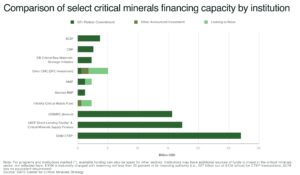
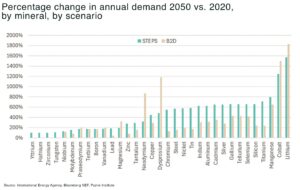
The West needs about US$500 billion in new mining investment by 2040 to meet mineral demand under current policy settings — but the public institutions

Sponsored Post: Empire Metals is developing the Pitfield Project, a unique, district-scale high-grade titanium deposit in Western Australia. With surging investment across aerospace and defence, secure

The US is urging allies to pay more for critical minerals sourced outside China, in a direct challenge to the low-cost supply chains that have

On a rainy Monday morning, mining investors in London watched in disbelief as shares of First Quantum Minerals plummeted. Overnight, Panama’s Supreme Court (on November

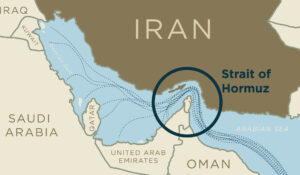
Oil exports through the Strait of Hormuz have cut oil exports from approx 20 mb/d before the war to a “trickle“, driving diesel and petrol
Investment intelligence and in-depth reports on critical minerals, mining, energy and geopolitics — from capital-markets professionals with boardroom and institutional experience.