What is lithium?
Lithium is a soft, silvery-white metal, chemical symbol Li and atomic number 3. It is the lightest metal and the lightest solid element under standard conditions.
Lithium is highly reactive and does not occur naturally as a pure metal. Instead, it is found in minerals, saltwater brines, clays and other geological fluids. Commercial producers convert these resources into compounds such as lithium carbonate and lithium hydroxide.
The name comes from the Greek word lithos, meaning “stone”. Lithium was first identified in a mineral, distinguishing it from alkali metals initially discovered in plant material.
Today, lithium is best known for its role in rechargeable batteries. It is also used in glass, ceramics, lubricating greases, metal alloys, air treatment and medicine.
Why lithium matters
Lithium has a strong electrochemical potential and low atomic weight. These properties help lithium-ion batteries store substantial energy in a compact, relatively lightweight system.
Lithium does not create energy by itself. Within a battery, lithium ions move between the cathode and anode during charging and discharging, allowing electrical energy to be stored and released repeatedly.
This makes lithium important across:
- electric vehicles
- smartphones and laptops
- stationary energy storage
- power tools
- consumer electronics
- industrial machinery
- aerospace and defence systems
Unlike nickel or cobalt, lithium is present in all mainstream lithium-ion battery chemistries, including lithium iron phosphate and nickel-based batteries.
Lithium-ion batteries
Batteries are the largest source of lithium demand.
A lithium-ion cell typically contains:
- a lithium-bearing cathode
- a graphite or other carbon-based anode
- an electrolyte that carries lithium ions
- a separator
- current collectors and a protective casing
During charging, lithium ions move from the cathode towards the anode. During discharge, they return to the cathode, releasing electricity through the external circuit.
The amount of lithium required depends on battery capacity, chemistry, cell design and manufacturing efficiency.
Lithium in electric vehicles
Lithium-ion batteries dominate the electric-vehicle market because they provide a strong combination of energy density, efficiency, lifespan and rechargeability.
Lithium is used across several EV battery chemistries, including:
- lithium iron phosphate, or LFP
- lithium nickel manganese cobalt oxide, or NMC
- lithium nickel cobalt aluminium oxide, or NCA
- lithium manganese-rich chemistries
- emerging solid-state designs
Changes in cathode chemistry can significantly alter demand for nickel, cobalt, manganese or phosphate. They have less effect on whether lithium is needed because lithium remains the charge-carrying element.
Lithium requirements per vehicle vary with battery size. Larger and longer-range vehicles generally require more battery material than smaller vehicles, although improvements in cell and vehicle efficiency can reduce material intensity.
Grid and renewable energy storage
Lithium-ion batteries are widely used to store electricity for power networks, businesses and homes.
Storage systems can:
- balance short-term changes in electricity supply and demand
- shift solar generation from daytime to evening
- provide backup power
- support grid frequency and stability
- reduce pressure on congested networks
- help integrate variable wind and solar generation
LFP batteries are widely used for stationary storage because they offer a strong combination of cost, safety, lifespan and frequent cycling.
Lithium-ion systems compete with pumped hydropower, flow batteries, compressed-air storage, thermal storage and other technologies. The preferred technology depends on duration, location, scale and system requirements.
Consumer electronics and portable power
Lithium-ion batteries power smartphones, tablets, laptops, cameras, headphones, watches and other portable devices.
Their high energy density allows manufacturers to produce smaller and lighter products with longer operating times than many earlier rechargeable battery technologies.
Rechargeable lithium batteries are also used in:
- cordless power tools
- medical equipment
- drones
- electric bicycles
- scooters
- garden equipment
- industrial robots
Portable electronics provided the early commercial market for lithium-ion batteries before electric vehicles became the main source of growth.
Glass and ceramics
Lithium minerals and compounds are used in specialist glass and ceramic products.
They can:
- lower processing temperatures
- improve thermal-shock resistance
- reduce thermal expansion
- increase strength
- improve surface quality
Applications include heat-resistant cookware, glass-ceramic cooking surfaces, industrial ceramics, optical glass and specialist construction materials.
Some producers use lithium mineral concentrates directly, while others require refined lithium compounds.
Lubricating greases
Lithium compounds are used to manufacture high-performance lubricating greases.
Lithium-based greases can remain stable across a broad range of temperatures and resist water, making them useful in vehicles, industrial machinery, bearings and other mechanical equipment.
This is a mature market that competes with greases based on calcium, aluminium and other chemical systems.
Aerospace, alloys and other uses
Lithium can be alloyed with aluminium and other metals to create lightweight materials for aerospace and specialist engineering.
Lithium compounds also have uses in:
- air treatment and dehumidification
- continuous steel casting
- polymers and chemical synthesis
- pharmaceuticals
- nuclear technologies
- specialist batteries
- scientific research
Certain lithium compounds are used as prescription medicines. Medical lithium should be understood as a regulated pharmaceutical application, distinct from industrial battery materials.
Where does lithium come from?
Commercial lithium is produced mainly from hard-rock minerals and lithium-rich brines.
Other potential sources include sedimentary clays, geothermal fluids and brines associated with oil and gas production.
A large lithium resource is not automatically an economic reserve. Commercial viability depends on concentration, mineralogy, impurities, water and energy requirements, processing recovery, infrastructure, product quality and market prices.
Hard-rock lithium mining
The most important hard-rock source of lithium is spodumene, a lithium-bearing mineral commonly found in pegmatite deposits.
Hard-rock operations generally use open-pit or underground mining. Ore is crushed and processed to produce a mineral concentrate, which is then converted into lithium chemicals.
A typical route can include:
- mining
- crushing and grinding
- dense-media separation or flotation
- concentration
- high-temperature conversion
- chemical leaching
- purification
- crystallisation into lithium carbonate or hydroxide
Hard-rock mines can be brought into production more quickly than some conventional brine projects, but their processing can require significant energy and chemical inputs.
Australia has been a major source of spodumene concentrate, while much of the downstream conversion into battery-grade chemicals takes place in China.
Lithium from brines
Lithium also occurs in salty underground fluids known as brines.
Traditional continental-brine projects pump brine to the surface and place it in large evaporation ponds. Solar evaporation concentrates the dissolved salts over an extended period before chemical plants separate and purify the lithium.
Important brine resources are found in South America, particularly in the high-altitude salt flats of Chile, Argentina and Bolivia.
Brine operations can have lower energy requirements than some hard-rock processing routes, but they can involve:
- large evaporation areas
- lengthy production cycles
- complex brine chemistry
- significant water-management challenges
- potential effects on local hydrology and ecosystems
Project impacts vary considerably by basin. Water use should be assessed within the local hydrological system rather than relying on a single industry-wide figure.
Direct lithium extraction
Direct lithium extraction, or DLE, refers to a group of technologies designed to separate lithium from brine without relying primarily on long-duration evaporation ponds.
Methods can include:
- adsorption
- ion exchange
- solvent extraction
- membranes
- electrochemical separation
DLE could improve recovery rates, shorten processing times and reduce the land occupied by evaporation ponds. It may also allow production from brines that are unsuitable for conventional evaporation.
However, DLE is not a single technology and does not automatically eliminate environmental impacts. Commercial performance depends on brine chemistry, energy use, water requirements, reagents, waste management and the ability to reinject or dispose of processed brine safely.
Clay, geothermal and oilfield resources
Lithium-bearing clays and sedimentary deposits could provide additional sources of supply. These resources often require new processing routes because lithium may be held tightly within complex minerals.
Geothermal brines offer the possibility of producing lithium alongside geothermal energy. Oilfield brines and other mineral-rich wastewaters may also contain recoverable lithium.
These sources could diversify supply, but most projects must still demonstrate commercial recovery, product quality and acceptable environmental performance at scale.
Lithium carbonate versus lithium hydroxide
Lithium is commonly traded and used in chemical forms rather than as pure metal.
Lithium carbonate
Lithium carbonate is used in LFP batteries, selected nickel-based cathodes, glass, ceramics and other applications.
It is a common product from brine operations, although it can also be made from hard-rock feedstock.
Lithium hydroxide
Lithium hydroxide is commonly associated with high-nickel cathode chemistries. It is also used in lubricating greases and other industrial products.
Hard-rock spodumene can be converted directly into lithium hydroxide or processed through an intermediate carbonate stage.
Battery-grade quality
Battery manufacturers require tight controls on purity, particle characteristics and trace impurities.
Lithium chemical capacity should not therefore be assessed solely by total tonnes. The ability to consistently produce qualified battery-grade material is a separate and important part of the supply chain.
Why lithium supply is strategically sensitive
Lithium resources are geographically widespread, but production and refining are concentrated.
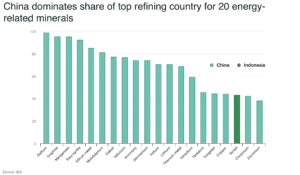
Australia is a major hard-rock producer. Chile and Argentina are important brine producers. China has domestic mining operations and holds a leading position in lithium chemical conversion, cathode production and battery manufacturing.
Supply-chain exposure can occur at several stages:
- mining or brine extraction
- mineral concentration
- chemical conversion
- battery-grade purification
- cathode manufacturing
- battery-cell production
- recycling
A new mine does not by itself create a complete domestic battery supply chain. It must connect to processing capacity, infrastructure, qualified customers and downstream manufacturing.
Environmental and social considerations
Lithium production can have significant environmental and community impacts, although they differ by deposit and processing route.
Potential issues include:
- freshwater use
- changes to brine and groundwater systems
- land disturbance
- energy consumption
- mine waste and tailings
- chemical handling
- air emissions
- Indigenous and community rights
- biodiversity
- project closure and rehabilitation
Brine projects are often located in arid regions where water is already scarce. Hard-rock projects may require more mining, crushing and high-temperature processing.
Responsible development requires site-specific environmental assessment, transparent water monitoring, community participation and effective waste management.
Lithium recycling
Lithium-ion battery recycling can recover lithium, nickel, cobalt, copper and other materials from manufacturing scrap and end-of-life batteries.
The main processing approaches include:
- Pyrometallurgy: uses high temperatures to recover selected metals, although lithium may require additional treatment
- Hydrometallurgy: uses chemical solutions to separate and recover battery materials
- Direct recycling: seeks to preserve or restore cathode materials rather than breaking them down completely
Manufacturing scrap currently provides an important source of recycling feedstock. Larger volumes of end-of-life electric-vehicle batteries will become available as the installed vehicle fleet ages.
Recycling can improve supply security and reduce waste, but it cannot immediately replace primary production. Many batteries remain in use for years before becoming available for recycling, while total battery demand continues to grow.
Substitution and alternative battery technologies
Lithium-ion batteries compete with several alternative storage technologies.
Sodium-ion batteries replace lithium with more abundant sodium and may be suitable for lower-cost vehicles, stationary storage and other applications where energy density is less critical.
Other alternatives include:
- flow batteries
- lead-acid batteries
- metal-air systems
- thermal storage
- hydrogen
- pumped hydropower
These technologies could reduce lithium demand in selected markets. However, lithium-ion batteries benefit from established manufacturing capacity, improving performance and a large global supply chain.
Solid-state batteries are often described as an alternative to current lithium-ion cells, but many solid-state designs still use lithium and may use lithium metal. Their commercial effect on lithium intensity will depend on the final chemistry and cell architecture.
What drives lithium demand?
The principal sources of lithium demand include:
- Electric vehicles: used across mainstream rechargeable battery chemistries
- Stationary storage: used to balance electricity networks and renewable generation
- Consumer electronics: used in smartphones, laptops and portable devices
- Power tools and light mobility: used in cordless equipment, bicycles and scooters
- Glass and ceramics: used to improve strength and thermal performance
- Lubricating greases: used in vehicles and industrial machinery
- Aerospace and alloys: used in lightweight specialist materials
- Medicine and chemicals: used in regulated pharmaceuticals and industrial processes
What affects lithium prices?
Lithium prices are influenced by:
- electric-vehicle sales
- battery-storage deployment
- mine and brine production
- chemical conversion capacity
- inventories
- battery-manufacturer purchasing
- project delays and production cuts
- product quality and specification
- government policy
- exchange rates
- recycling
- technological change
There is no single lithium price. Spodumene concentrate, lithium carbonate and lithium hydroxide are different products with separate specifications, contracts and regional markets.
The lithium market can move between shortage and surplus because mine supply, refining capacity and battery demand do not expand at the same rate.
What to watch in the lithium market
Lithium sits at the centre of the global battery supply chain.
Key trends to watch include:
- Electric-vehicle demand: vehicle sales, battery size and efficiency determine lithium requirements
- Stationary storage: growth in grid batteries provides an additional source of demand
- Battery chemistry: LFP, nickel-based and solid-state technologies use lithium differently
- New supply: hard-rock, brine, clay and geothermal projects have different costs and timelines
- Chemical conversion: battery-grade refining capacity may be a greater constraint than resources
- Chinese processing: China’s role across refining, cathodes and batteries shapes global trade
- Direct lithium extraction: commercial performance will determine whether new brine resources become viable
- Recycling: secondary supply will grow as more batteries reach end of life
- Sodium-ion batteries: adoption could reduce lithium demand in selected applications
- Environmental performance: water, energy, waste and community impacts can determine whether projects receive approval
- Price volatility: prolonged low prices can delay investment, while high prices can encourage new supply and substitution
The strategic takeaway
Lithium is a critical-minerals story because it is embedded across the modern rechargeable battery economy.
Its importance extends beyond access to deposits. The supply chain also requires concentration, chemical conversion, battery-grade purification, cathode manufacturing and recycling.
For investors, manufacturers and policymakers, the central question is not whether the world contains enough lithium. It is whether commercially viable projects and processing capacity can deliver qualified material at the speed, cost and environmental standard required by the battery industry.
———————–
What is lithium used for?
Lithium is used primarily in rechargeable batteries for electric vehicles, energy storage, electronics and power tools. It is also used in glass, ceramics, lubricating greases, alloys, air treatment, chemicals and medicine.
Why is lithium used in batteries?
Lithium is lightweight and has strong electrochemical properties, allowing rechargeable batteries to store substantial energy in a compact system.
Where is lithium found?
Lithium is found in hard-rock minerals such as spodumene, underground brines, salt flats, sedimentary clays, geothermal fluids and some oilfield waters.
Is lithium a rare-earth element?
No. Lithium is an alkali metal and a critical mineral, but it is not part of the rare-earth group.
What is the difference between lithium carbonate and lithium hydroxide?
Both are refined lithium chemicals. Lithium carbonate is widely used in LFP and other batteries, as well as glass and ceramics. Lithium hydroxide is commonly used in high-nickel battery cathodes and lubricating greases.
Can lithium-ion batteries be recycled?
Yes. Lithium and other materials can be recovered from battery-manufacturing scrap and end-of-life batteries. Recycling is growing, but primary production remains necessary while the total battery market expands.
Is lithium mining water-intensive?
Lithium production can require significant water, but impacts vary by deposit and extraction method. Brine, hard-rock, clay and direct-extraction projects have different water, energy, chemical and waste profiles.