







America’s $27 billion push to break China’s minerals grip
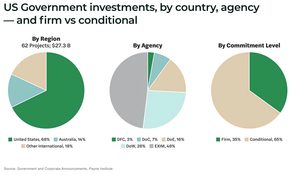
The US has committed or conditionally committed at least US$27.3 billion to 62 critical minerals projects since the start of 2025, according to the Payne
Platinum and palladium are strategically important metals used in catalytic converters, industrial processes, electronics and jewellery, with platinum also playing a growing role in hydrogen technologies.
Supply is highly concentrated in South Africa and Russia, leaving both markets exposed to operational and geopolitical disruption.
Platinum and palladium are rare, silvery-white metals valued for their catalytic properties, resistance to corrosion and ability to perform under extreme temperatures.
Platinum (Pt), atomic number 78, is a dense, durable metal with a melting point of approximately 1,768°C. It is used in vehicle emissions systems, jewellery, chemical manufacturing, glass production, petroleum refining, hydrogen technologies and investment products.
Palladium (Pd), atomic number 46, is lighter and has a lower melting point of approximately 1,555°C. Its largest use is in vehicle catalytic converters, with additional applications in electronics, chemical production, dentistry, jewellery and hydrogen purification.
Both belong to the platinum-group metals, or PGMs. This group also includes rhodium, ruthenium, iridium and osmium. The metals commonly occur together in the same deposits and are often produced alongside nickel, copper and gold.
Platinum and palladium are highly effective catalysts. A catalyst accelerates a chemical reaction without being permanently consumed by it.
This allows relatively small quantities of either metal to support high-value applications across:
Their importance is magnified by concentrated supply chains. Platinum production is strongly linked to South Africa, while palladium supply is concentrated in Russia and South Africa.
Platinum and palladium share many chemical properties, but their markets are not identical.
Platinum has a more diversified demand base across automotive, industrial, jewellery and investment markets. Palladium demand is more heavily concentrated in vehicle catalytic converters.
Platinum is denser and has a higher melting point. Palladium is lighter and can absorb significant amounts of hydrogen under certain conditions.
The metals can substitute for one another in some catalysts, but substitution is neither immediate nor universal. Manufacturers must consider performance, durability, emissions standards, engineering requirements and the prices of the complete PGM mixture.
The automotive industry is the largest consumer of platinum-group metals.
Catalytic converters use platinum, palladium and rhodium to transform harmful exhaust gases into less harmful emissions.
The principal reactions include:
The exact metal combination depends on engine type, fuel, emissions regulations, vehicle design and operating conditions.
Platinum has historically been associated particularly with diesel emissions systems, where its oxidation performance and heat resistance are valuable.
It is also used in petrol, hybrid and heavy-duty vehicle systems. Manufacturers may increase platinum use when it offers a technical or economic alternative to palladium.
Palladium is widely used in three-way catalysts for petrol-powered vehicles. These systems simultaneously control carbon monoxide, hydrocarbons and nitrogen oxides.
Palladium is also used in hybrid vehicles because they retain an internal-combustion engine and require emissions-control equipment.
Battery-electric vehicles do not have combustion engines or tailpipe catalytic converters. Their adoption reduces demand for automotive platinum, palladium and rhodium relative to an equivalent combustion vehicle.
The transition is not immediate, however. Conventional vehicles, hybrids, heavy trucks and other combustion-powered equipment will remain part of the global fleet for years.
PGM demand will depend on the balance between:
Platinum has an emerging role in parts of the hydrogen economy.
Proton exchange membrane, or PEM, electrolysers use electricity to split water into hydrogen and oxygen. Platinum is used on the hydrogen-producing side of many PEM systems, while iridium is commonly used on the oxygen-producing side.
Platinum is also used in PEM fuel cells, where it helps combine hydrogen with oxygen to produce electricity and water.
Potential applications include:
Hydrogen could create an additional source of platinum demand, but the scale remains uncertain. It depends on electrolyser deployment, fuel-cell adoption, government policy, infrastructure, metal intensity and efforts to reduce or replace precious-metal catalysts.
Alkaline electrolysers generally use nickel-based materials rather than platinum-group metals, creating competition between technologies.
Palladium can absorb hydrogen and allow it to pass selectively through thin membranes.
This property makes palladium and palladium alloys useful in:
Palladium has also been researched for hydrogen storage, although large-scale commercial use faces cost, engineering and material-performance challenges.
Hydrogen is therefore a more established strategic demand theme for platinum than for palladium.
Platinum and palladium are used as catalysts in chemical reactions that would otherwise require more energy, produce lower yields or proceed too slowly.
Platinum catalysts support the manufacture of nitric acid, which is an important input for fertilisers, explosives and industrial chemicals.
Palladium catalysts are widely used in organic chemistry, including reactions that form carbon-carbon bonds. These processes support the production of:
Catalysts can often be recovered and recycled within industrial facilities because of their value.
Platinum catalysts are used in petroleum refining to improve fuel quality and produce chemical feedstocks.
Applications include catalytic reforming, which increases the octane rating of petrol and produces aromatic compounds used by the petrochemical industry.
Palladium can also be used in refining, hydrogenation and purification processes.
Demand depends on refinery investment, fuel standards, operating rates and changes in global petroleum consumption.
Platinum and platinum-rhodium alloys resist heat, oxidation and corrosion from molten glass.
They are used in equipment that manufactures:
Platinum-containing components may include crucibles, bushings, stirrers and channels that guide molten material through a production process.
Glass manufacturers often operate closed-loop systems in which platinum is recovered from worn equipment and returned for refining.
Platinum and palladium are used in selected electronic components where reliability, conductivity and corrosion resistance are important.
Applications include:
Manufacturers continually reduce precious-metal use where possible because of cost. Total demand therefore depends on both electronics production and the amount of metal used per component.
Palladium was historically important in multilayer ceramic capacitors, although base-metal alternatives have replaced it in many mass-market applications.
Platinum is used in fine jewellery because it is dense, durable and resistant to tarnishing.
Its natural white colour does not require rhodium plating to maintain its appearance. It is commonly used in:
Jewellery demand is influenced by metal prices, consumer income, fashion, cultural preferences and competition from gold and other white metals.
Platinum jewellery is often alloyed with ruthenium, cobalt, iridium or other metals to improve manufacturing and wear properties.
Palladium can also be used in jewellery. It is naturally white, corrosion-resistant and less dense than platinum.
It may appear in:
Its jewellery market is much smaller than platinum’s and can be sensitive to price volatility and the availability of fabrication expertise.
Platinum is used in medical devices because selected platinum alloys offer corrosion resistance, radiopacity and stable electrical performance.
Applications include:
Platinum compounds such as cisplatin, carboplatin and oxaliplatin are used in the treatment of certain cancers. These are pharmaceutical compounds and should be distinguished from metallic platinum.
Palladium is used in some dental alloys, medical components and diagnostic applications. Palladium-103, a radioactive isotope, has also been used in selected cancer treatments.
Platinum and palladium are traded as precious and industrial metals.
Investors can gain exposure through:
Neither metal plays the same central-bank reserve role as gold. Their prices are generally more closely tied to industrial demand, mine supply and automotive production.
Platinum has a larger physical investment and jewellery market than palladium. Palladium investment demand is smaller and can be overshadowed by changes in automotive consumption.
Both markets are relatively small compared with gold, which can contribute to sharp price movements when supply, demand or investor positioning changes.
Platinum-group metals occur in a limited number of large geological systems.
Major producing regions include:
Smaller quantities are produced elsewhere.
South Africa is the dominant source of mined platinum and an important producer of palladium and rhodium. Russia is a major source of palladium, much of it produced alongside nickel and copper.
This creates different supply exposures for the two metals even though they are members of the same group.
PGM mines can be open-pit or underground, although many important South African operations are deep underground mines.
Ore is generally:
The process is technically complex because ore grades are low and platinum-group metals occur together in small quantities.
Producing a single ounce of platinum or palladium may require processing a substantial amount of ore and separating several valuable co-products.
PGM mines rarely produce only platinum or only palladium.
Their revenues may come from a basket containing:
A mine’s economics therefore depend on the combined value of several metals.
A high platinum price may not lead quickly to more production if palladium and rhodium prices are weak. Similarly, Russian palladium output may be influenced by the economics and operating decisions of a larger nickel-copper business.
This can make supply less responsive to the price of any single PGM.
Platinum and palladium supply is highly concentrated geographically.
Potential disruptions include:
South African mining can be affected by power availability, deep-mine costs and labour-intensive operations.
Russian palladium supply creates exposure to sanctions, trade rules, payment systems and geopolitical relationships.
Because there are few major producing regions, disruptions can affect global availability even when the underlying geological resource is substantial.
PGM mining and processing can have significant environmental and social impacts.
Potential issues include:
The carbon intensity of production depends heavily on ore grade, mine depth, processing efficiency and the electricity supply.
PGMs can reduce pollution when used in catalysts, but their production still carries an environmental footprint. Full life-cycle assessments should consider both mining impacts and the benefits delivered during use.
Recycling is an important source of platinum, palladium and rhodium.
The largest source is end-of-life catalytic converters. PGMs can also be recovered from:
A typical autocatalyst recycling chain includes vehicle collection, converter removal, dismantling, sampling, smelting and refining.
Collection is often the main constraint. Once PGM-bearing material reaches a specialised refinery, high recovery rates can be achieved.
Industrial users frequently operate closed-loop systems in which spent catalysts or equipment are sent for refining and the recovered metal is returned to the same customer.
Platinum and palladium can substitute for one another in some vehicle and industrial catalysts.
Substitution becomes more attractive when the price difference between them is large. It still requires:
Rhodium is also part of many automotive catalyst systems, particularly for controlling nitrogen oxides. Its role cannot always be replaced directly by adding more platinum or palladium.
Substitution therefore changes demand gradually rather than creating an immediate response to daily price movements.
The principal sources of platinum demand include:
The principal sources of palladium demand include:
Prices are influenced by:
Platinum and palladium do not necessarily move together. Their different demand profiles and producing regions can cause one metal to rise while the other falls.
Platinum and palladium sit at the intersection of transport policy, industrial technology and geopolitics.
Key trends to watch include:
Platinum and palladium are critical materials because small quantities enable important chemical reactions, emissions controls and high-performance technologies.
Their near-term markets remain closely tied to internal-combustion and hybrid vehicles. Over the longer term, battery-electric adoption creates a structural challenge for autocatalyst demand, particularly for palladium. Platinum has a more diversified demand base and potential exposure to hydrogen technologies, but the scale and timing remain uncertain.
For investors, manufacturers and policymakers, the central question is how vehicle technology, emissions standards, recycling, hydrogen deployment and concentrated mine supply will reshape two closely related—but fundamentally different—markets.
———————–
Platinum is used in vehicle catalytic converters, jewellery, chemical and petroleum catalysts, glass manufacturing, medical devices, cancer medicines, electronics, hydrogen electrolysers, fuel cells and investment products.
Palladium is used primarily in vehicle catalytic converters. It is also used in chemical catalysts, electronics, hydrogen purification, dental alloys, jewellery and investment products.
Platinum is denser, has a higher melting point and has more diversified demand across automotive, industrial, jewellery and investment markets. Palladium is lighter and more dependent on catalytic converters for petrol and hybrid vehicles.
No. They are platinum-group metals, not rare-earth elements. The six PGMs are platinum, palladium, rhodium, ruthenium, iridium and osmium.
Battery-electric vehicles do not require tailpipe catalytic converters, removing the largest established use of PGMs in conventional vehicles. Small quantities may still appear elsewhere in electronics or components. Hydrogen fuel-cell vehicles use platinum catalysts.
Platinum can replace palladium in some catalyst formulations, but substitution requires redesign, testing and regulatory approval. Technical performance and the availability of rhodium must also be considered.
Yes. Both metals can be recovered from catalytic converters, industrial catalysts, jewellery and electronics. Recycling is an important part of global supply.
Yes. Both can be held through physical products, funds and derivatives. Their prices are generally more exposed to industrial and automotive conditions than gold, and neither metal is a major central-bank reserve asset.
The US has committed or conditionally committed at least US$27.3 billion to 62 critical minerals projects since the start of 2025, according to the Payne

President Donald Trump has announced more than US$2 billion in government support for critical mineral and mining-related projects, alongside more than US$180 million for the
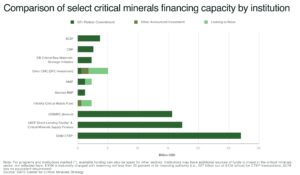
The West needs about US$500 billion in new mining investment by 2040 to meet mineral demand under current policy settings — but the public institutions

Within days of its IPO, SpaceX’s market value was pushing toward US$3 trillion, putting a public-market valuation on reusable rocket launches as the infrastructure layer

The US is urging allies to pay more for critical minerals sourced outside China, in a direct challenge to the low-cost supply chains that have

On a rainy Monday morning, mining investors in London watched in disbelief as shares of First Quantum Minerals plummeted. Overnight, Panama’s Supreme Court (on November
Investment intelligence and in-depth reports on critical minerals, mining, energy and geopolitics — from capital-markets professionals with boardroom and institutional experience.