
China is planning to halt sulphuric acid exports from May, tightening an already stressed market for one of mining’s most important industrial chemicals, according to Argus Media — increasing risks for copper, nickel and fertilizer supply chains.
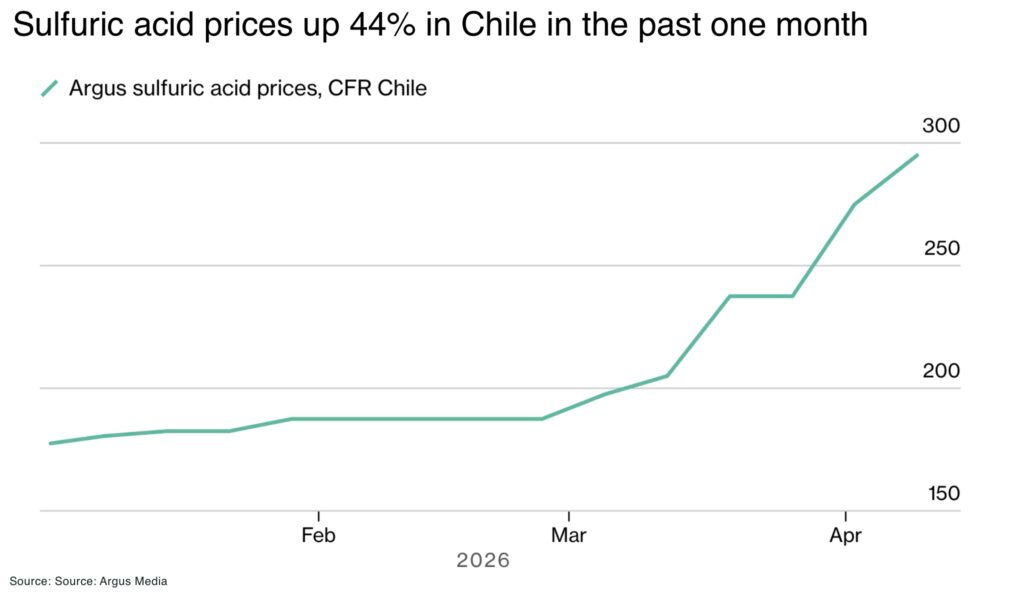
Since the start of the Middle East crisis and closure of the Strait of Hormuz, sulphur prices have increased approx 70%; and, for example, sulphuric acid prices in Chile, which buys over 1 million tons of Chinese sulfuric acid every year where a fifth of the copper output in Chile — the world’s No. 1 producer — involves a type of processing that depends on sulfuric acid, have increased 44% in just one month.
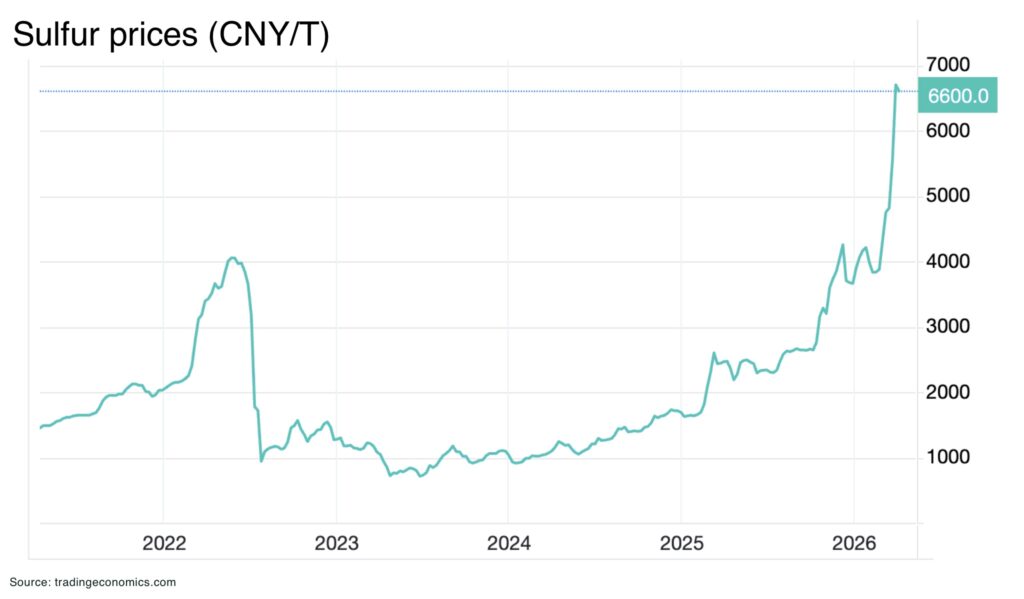
The problem, as we highlighted in our recent analysis — Strait of Hormuz is chokepoint for sulphuric acid and critical metal processing — the Middle East accounted for around 24% of global sulphur production at 83.87 million metric tons last year; including 50% of seabourne trade of sulphur, which must be exported via the Strait of Hormuz.
And, the sulphuric acid market was already tight before the latest Middle East disruption, increasing 500% before the latest conflict in Iran started.
Sulphuric acid is a core input across hydrometallurgy, especially for acid-intensive processing routes such as HPAL nickel and oxide copper leaching. For example, Indonesia has the clearest exposure to the tightening sulphur supply — the country now accounts for more than 60% of global nickel production — and imports around 75% of its sulphur from the Middle East.
The loss of Chinese volumes will be difficult to offset, given the parallel shortage of sulfur feedstocks, according to Peter Harrisson, an acid analyst at consultancy CRU told Bloomberg.
Bloomberg also reports that Beijing’s planned export halt will cover sulphuric acid produced as a byproduct of copper and zinc smelting, cutting another source of supply to overseas buyers just as war disruption has already squeezed the market.
A tighter acid market threatens higher costs and possible bottlenecks for miners and processors in major producing regions, including African copper belts and Indonesia’s nickel sector, both of which depend heavily on reliable sulphur and acid supply.
For a market already discovering that sulphuric acid can become a strategic choke point, China’s planned ban is another sign that this crisis is spreading far beyond oil.
Read our latest analysis: