
Or, how a recession could be bullish for copper this time.
- copper fell approx 10% the US and Israel launched strikes on Iran in late February, as markets priced in recession and inflation risk
- but higher oil prices, freight and mining costs, as well as tighter financing all raise the costs
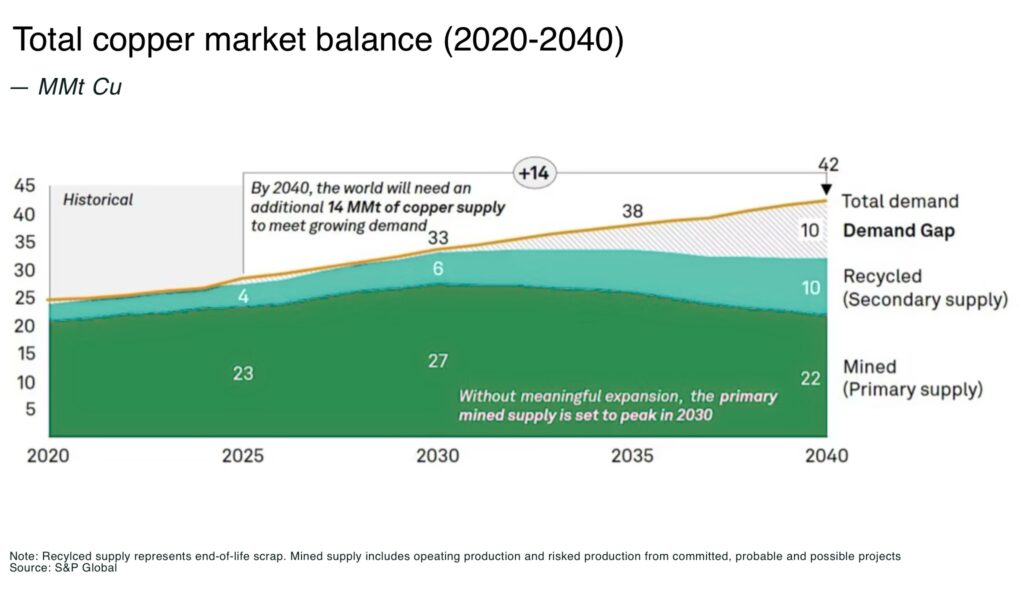
- copper already structurally tight before Hormuz, with estimated supply deficit of approx 30% by 2035
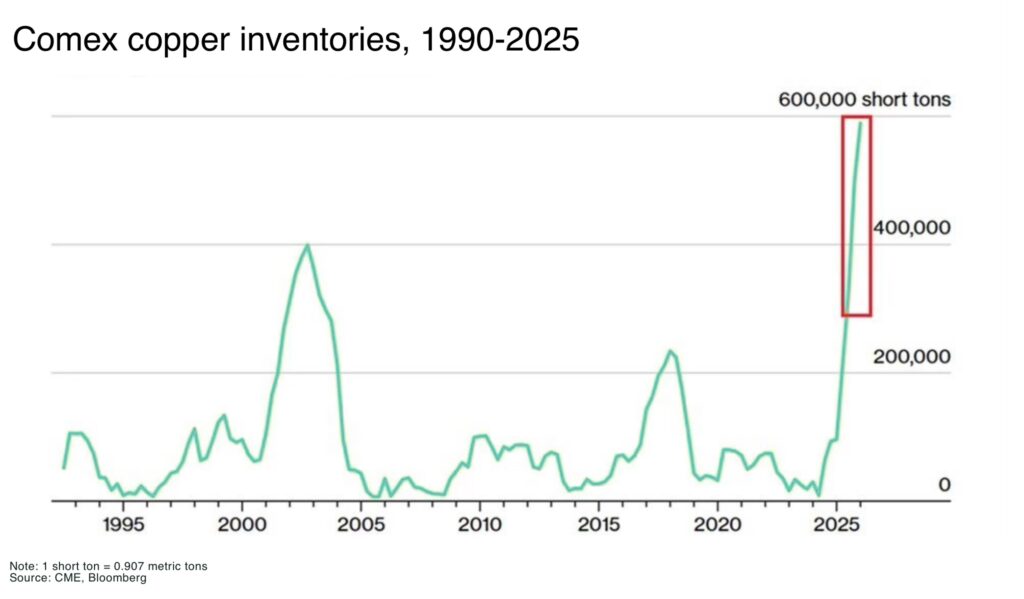
- US stockpiling copper at record levels — Comex inventories hit a record 589,081 short tons in February — highlight nervousness in the market
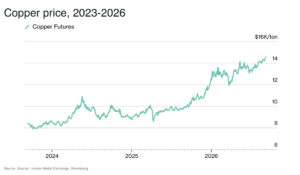
Copper fell nearly 10% on the London Metal Exchange in the immediate aftermath of the US and Israel launching airstrikes on Iran on February 28, and the subsequent closure of the Strait of Hormuz.
But, considering the scale of the shock — “the largest supply disruption in the history of the global oil market”, according to the IEA — the limited pullback in copper’s price looks surprisingly contained.
The reason: copper supply is extremely fragile just as demand remains stronger than recession expectations suggest. In a copper market already headed into deficit, the crisis in the Strait of Hormuz counter-intuitively threatens to instead push the copper price higher:
- raise the cost of new supply
- push up freight and energy inputs
- delay project financing
- as well as, increase the strategic premium to secure tonnes
The market’s first instinct to sell copper in a crisis risked global growth may be repriced quickly if investors decide this is not just a recession scare, but a break in the system that makes real, hard-to-replace materials worth more, not less.
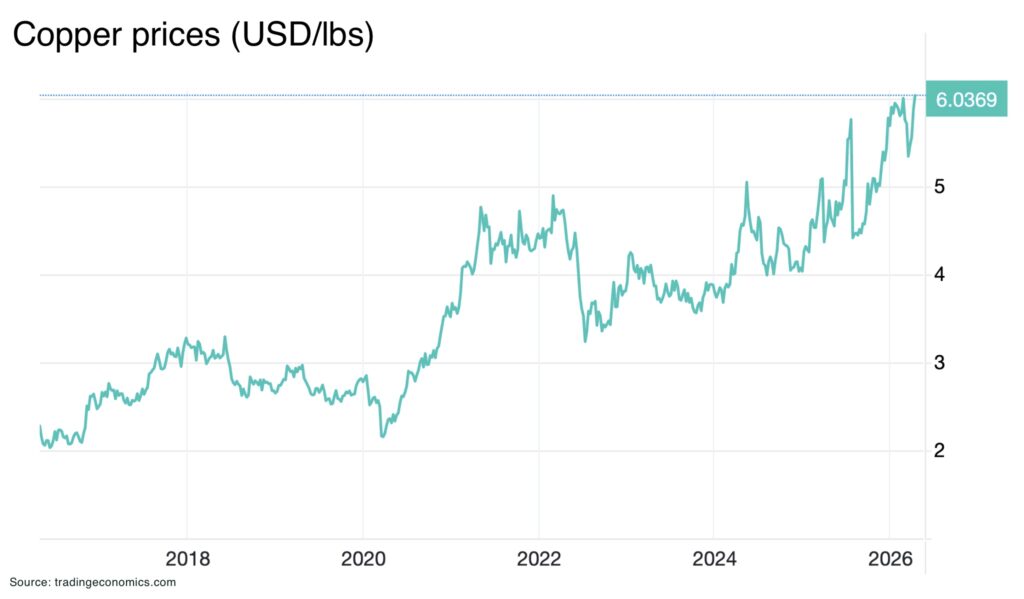
In that respect, the resilience of the copper price (still up 70-90% in the last ten years) in the face of this crisis is more understandable.
Oil price, Dr Copper, supply, hoarding and debasement
+US$100 oil
Higher oil prices raise the marginal cost of producing copper.
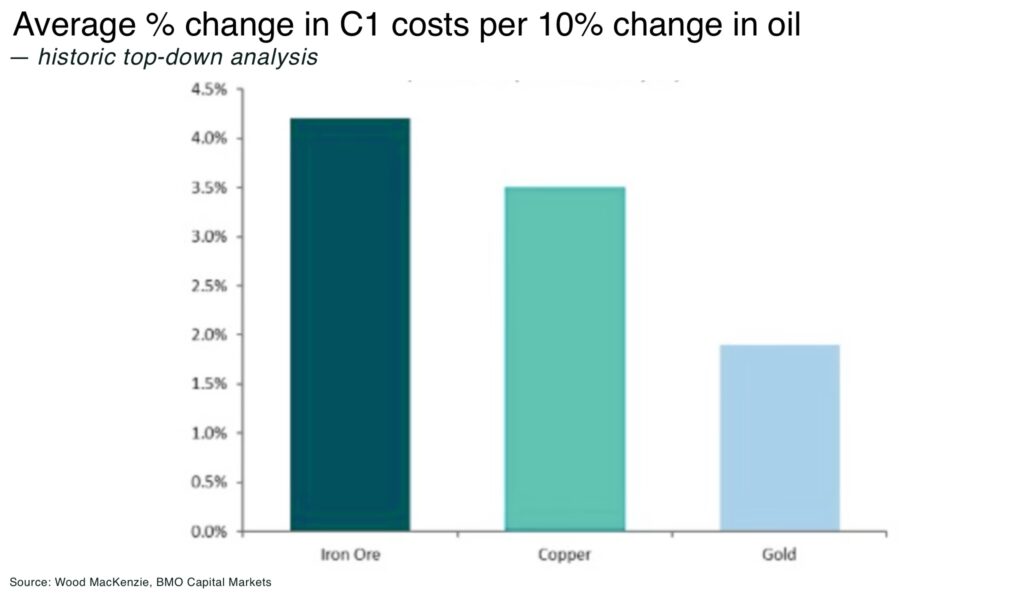
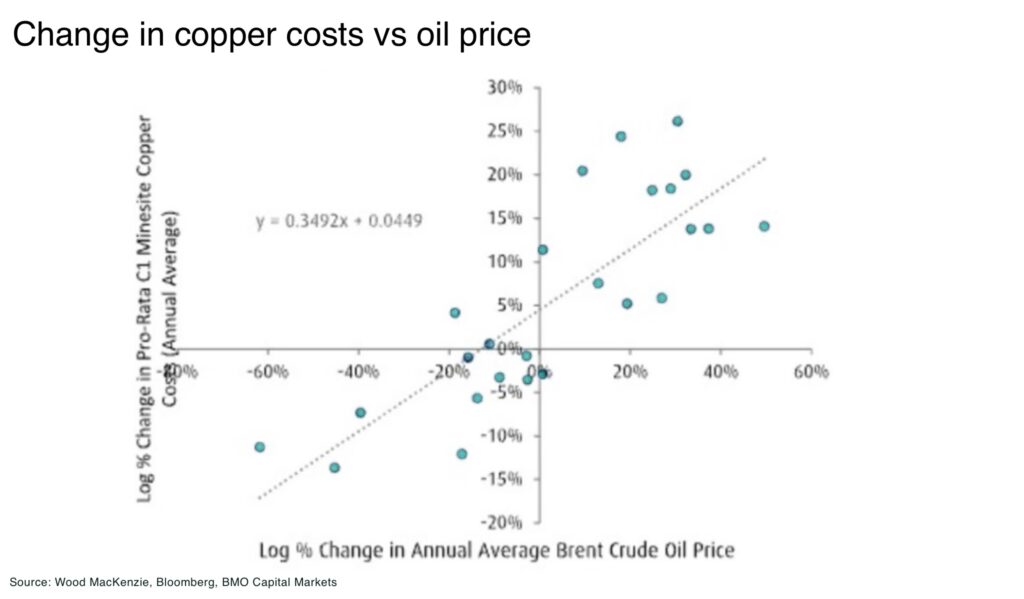
Recent analysis by BMO based on Wood Mackenzie data reports that if crude reaches $100 a barrel, mining costs could rise around 16% for copper. The same analysis found copper mining costs rise roughly 3.5% for every 10% increase in oil prices.
In other words, an energy shock increases the incentive price needed to bring on new copper units — just as copper supply was already projected to be in deficit (eg JP Morgan estimated deficit of 330,000 tons by 2026)
This is not to say there won’t be volatility. Concerns over recession would likely weaken sentiment — but, as we highlighted in our recent analysis, Strait of Hormuz diesel shock threatens mining industry — if the same shock also makes diesel, power, freight and processing more expensive, then the supply side is unlikely to respond cleanly: it retreats; marginal operations see pressure; expansions become harder to finance; new projects need a higher copper price.
Tight supply
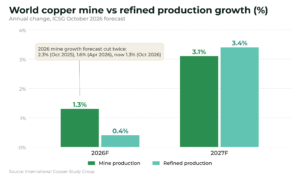
The copper supply pipeline was already tight, in both the short and long-term:
- average copper grades have fallen from 1.02% in 2022 to 0.66% in 2025 across the Codelco (the state-owned mine and largest copper producer in the world) aging portfolio; output from the world’s third-largest copper producer saw a sharp 12% year-on-year decline in 2025 in Peru; Indonesia’s Grasberg mine, the world’s second largest copper mine formerly responsible for 3% of global mined copper, remains under force majeure after a catastrophic mudslide in 2025 that killed seven workers
- global copper consumption is projected to increase by 8.2 million metric tons annually by 2035, driven by four primary disruptors: the energy transition, AI-driven data centers, defense spending, and rapid (re-)industrialization
- an estimated 6.4 million tonnes of copper production capacity, equal to more than 25% of global mine output, is stalled or suspended due to environmental, social, and governance (ESG) issues
- the IEA warns that announced copper projects fall short of projected demand in 2035 by around 30% in its stated policies scenario
The problem is that new copper mines take, on average, up to 17 years to build, but during war, inflation and tighter financial conditions, long duration projects often struggle to find investment — another delay to a future supply response.
Dr Copper
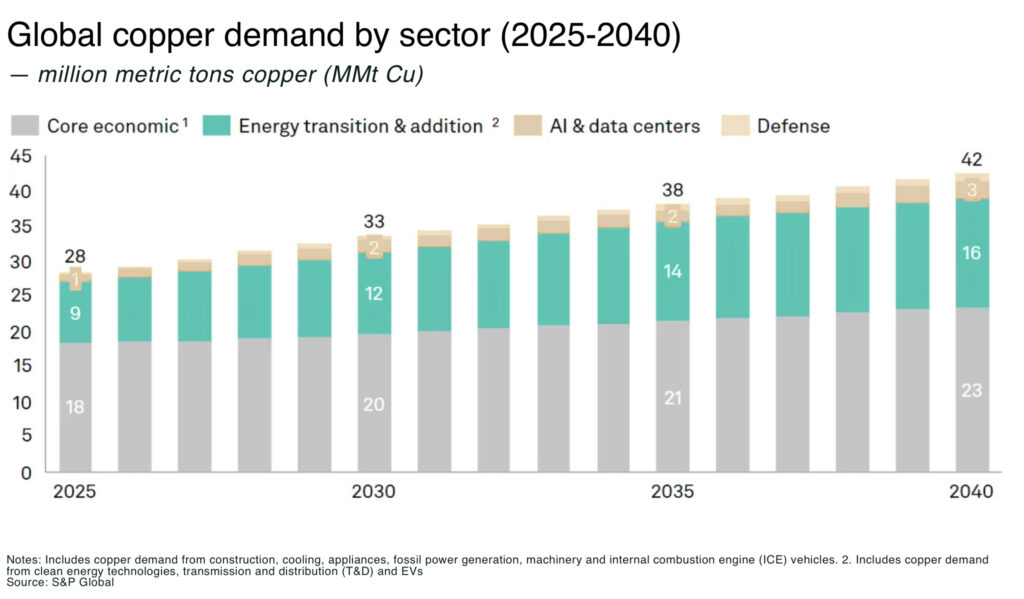
Copper prices are still driven heavily by construction and manufacturing in China, but that is no longer the whole story: with electric grid expansion, power transmission, AI data centres, defence industrial capacity and reindustrialisation now adding major new demand drivers.
S&P Global projects a 50% increase in demand from 28 million metric tons in 2025 to 42 million metric tons by 2040, but with potential 10 million metric ton copper shortfall by 2040 without meaningful supply expansion, driven by, for example:
- global investment in power grids is set to top US$400 billion in 2025, up from a record $390 billion in 2024
- copper demand for grid infrastructure to rise from 12.52 million tonnes in 2025 to 14.87 million tonnes by 2030
- copper demand from data centres to hit 260,000 tonnes in 2025, up from 78,000 tonnes in 2020 and above 650,000 tonnes by 2030
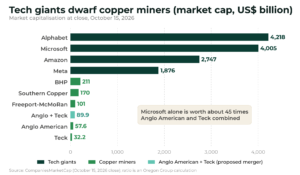
Despite any downturn triggered by the Middle East crisis, the broader strategic logic suggests the AI buildout will continue with significant tech company, government and national security investment. In Washington, for example, the AI race is framed less as a cyclical investment theme than as a national security priority with long-term investment. As President Donald Trump put it in July 2025:
“It is a national security imperative for the United States to achieve and maintain unquestioned and unchallenged global technological dominance” — Donald J. Trump, Winning the Race, America’s Action Plan
Hoarding
To highlight the dynamics at play, America is pulling copper out of the global system at record levels:
- Comex inventories climbed to a record 589,081 short tons by early February, up from almost nothing in mid-2024
- estimated total US copper inventories, including off-exchange stocks, reached about 1.1 million short tons, in
- in March 2026, an estimated 500,000 tons of copper were headed to the US, against normal monthly imports of roughly 70,000 tons
“Years of underinvestment and ongoing mine disruptions have left the market with little buffer, while tariff policy uncertainty and stockpiling are intensifying the squeeze on available metal,” said Ewa Manthey, commodities strategist at ING Groep NV, told Bloomberg.
Ostensibly this was ahead of potential new copper tarrifs by Trump, but the enduring nature of the stockpile suggests companies and governments are looking to protect supply chains from scarce supply, volatile prices and overreliance on imports from China.
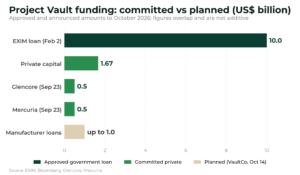
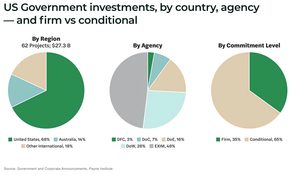
Of course, there are a variety of reasons for rising inventories, from increased Chinese copper production, a potential downturn in the economy, but also because buyers no longer trust frictionless supply — a sentiment underpinned by the Trump administration’s plans to create a $12 billion stockpile of critical minerals, known as “Project Vault,” via a public–private partnership.
And any stockpiling tightens the market everywhere.
“In a more volatile world, secure mining jurisdictions are becoming strategic assets in their own right. Investors and end users increasingly want exposure not just to copper, but to copper that can be produced in places with political stability, infrastructure, rule of law and long-term supply-chain reliability.
In a market increasingly defined by a structurally constrained copper supply Troilus Mining Corp. stands out as a large scale copper-gold project with strong fundamentals and a defined development path toward near-term production in a Tier-1 jurisdiction.
The company’s flagship copper-gold Troilus Project located in north-central Quebec, Canada, is one of the largest undeveloped gold-copper systems in North America, with a substantial resource of 13.0 million ounces of gold equivalent (AuEq) (11.21 Moz AuEq indicated and 1.80 Moz AuEq inferred) and 7.3 million ounces ofoz AuEq in reserves. The mine is expected to produce 135.4 million pounds of copper equivalent annually over 22 years, including ~75,000 wet metric tonnes of high quality copper concentate, according to a positive feasibility study published in May 2024.
Given its scale, long-life profile, and significant copper output, Troilus is emerging as an important future source of critical minerals within secure, long-term supply chains. The company has secured preliminary offtake arrangementsgreements with leading European smelters, including Aurubis AG in Germany and Boliden AB in Sweden, which also support its th broader financing strategy as it advances toward a construction decision.
“In our current environment, a large-scale project in Québec is not just another mining story. It is potential leverage to the growing premium the market is putting on safe, scalable and politically reliable sources of supply”
— Justin Reid, President & CEO, Director, Troilus Mining Corporation (TSX: TLG; OTC: CHXMF)
Debasement
Copper has also been riding the same debasement trade that has driven gold higher. Not because it is a classic monetary metal, but because in a world of persistent deficits, fiscal expansion, geopolitical shocks and repeated supply-chain stress, investors are being pushed toward hard assets with real scarcity value.
And inflation was already rising before the crisis in the Middle East, rising by the most since 2022 due to the trade war, the AI boom, and a depreciating US dollar.
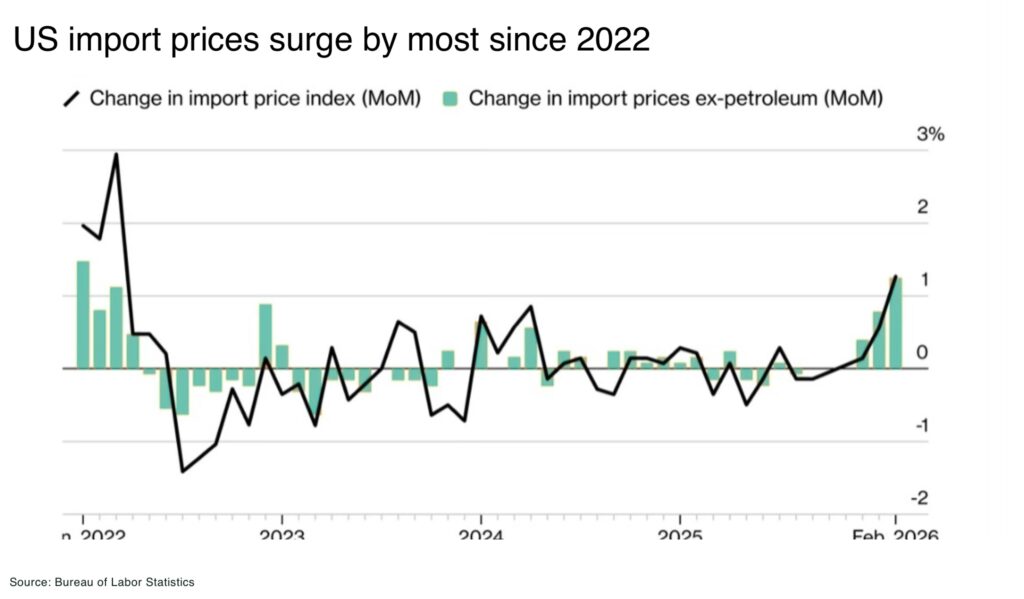
In that sense, copper may start to ride part of the same wave as gold — not as a classic safe haven, but as a hard asset being repriced by inflation, scarcity and a global supply chains that are increasingly fragile.
Copper will not become “the next gold”, but it only needs investors to decide that claims on the system look less reliable than ownership of the materials the system cannot function without.
Conclusion
This is not an argument for lazy, short-term bullishness — unless diesel costs start to push copper miners out of business.
A thesis where copper may rise, not because the world economy is healthy, but because it is fragile, inflationary and strategically short of materials will see a lot of volatility.
That is not a normal cyclical copper setup. It is a scarcity setup. And scarcity markets do not need perfect growth. They just need supply that cannot keep up with what the system now treats as non-negotiable.