
- Russia has imposed helium export controls through the end of 2027, requiring special approval for shipments outside the Eurasian Economic Union
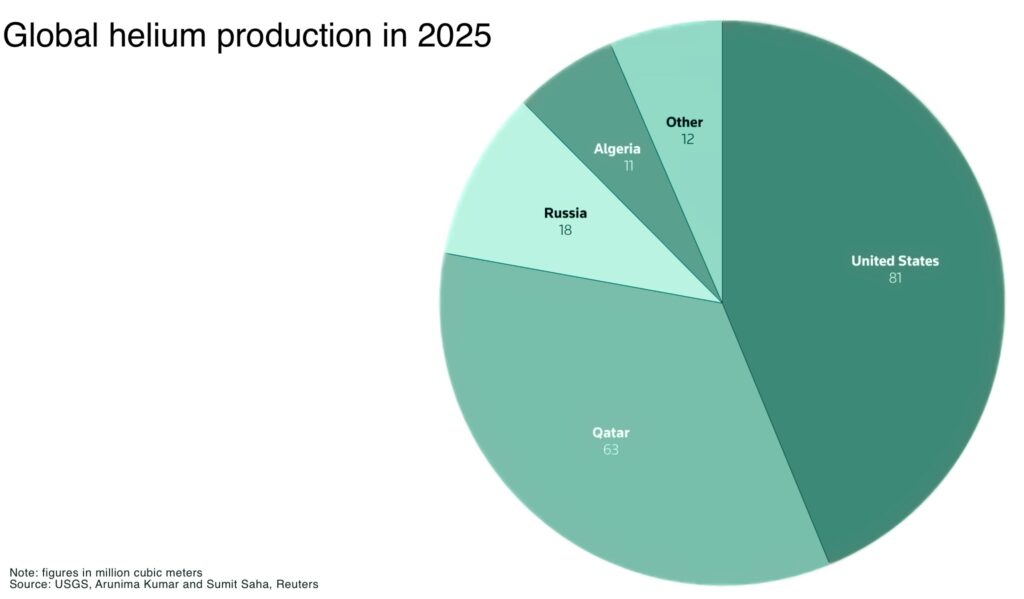
- Qatar produced about 63 million cubic meters of helium in 2025, close to one-third of global supply
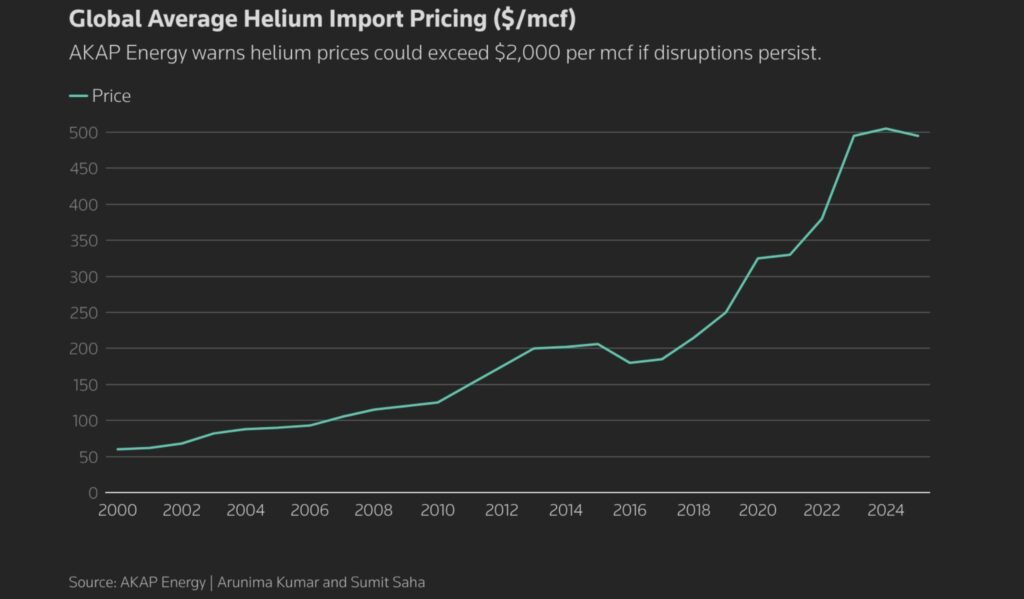
- helium spot prices have doubled since the Middle East crisis began
- Russia is the world’s third-largest helium producer and accounts for around 8% of global output
Russia has imposed helium export controls through the end of 2027, requiring special approval for shipments outside the Eurasian Economic Union, just as the global helium market is already under strain from Middle East disruption.
This is no niche gas story: helium sits inside semiconductor manufacturing, MRI systems, aerospace, welding and leak detection.
But, the conflict in the Middle East has disrupted up to a third of global helium supply after attacks on Qatar’s gas processing facilities, putting helium at the top of global headlines. Helium spot prices have doubled since the Middle East crisis began, with warnings that spot helium prices could spike by 50%–200% in severe shortage scenarios.
Buyers, particularly in Asia, are scrambling for supply after Qatar halted LNG production and associated helium output. Because helium is extracted as a byproduct of natural gas processing, damage to gas infrastructure translates directly into lost helium volumes.
Why do Russia’s helium export controls matter now?
Qatar produced about 63 million cubic meters of helium in 2025 out of roughly 190 million cubic meters globally, or close to one-third of world supply.
Russia is the world’s third-largest helium producer and accounts for around 8% of global production, adding another shock to global helium supply.
Who is exposed?
Chipmakers are near the front of the line, with reports that helium shortages are already starting to affect parts of the tech supply chain, with executives warning that tightening supply was forcing companies to seek alternatives. Helium is used in cooling, leak detection and precision manufacturing in semiconductors, and there are few easy substitutes in the most demanding applications.
Medical imaging is another pressure point, with almost no substitutes for helium in cryogenic applications requiring extremely low temperatures, even if some superconducting systems are being designed to use less of it over time.
Conclusion
Russia’s export controls land at a moment when helium moves from a “background industrial gas” to a strategic priority, fitting a broader pattern already visible across critical material chains: once supply concentration meets war, sanctions or state intervention, “non-core” industrial inputs can turn strategic very quickly.
And the biggest global beneficiary at the moment is the USA: