
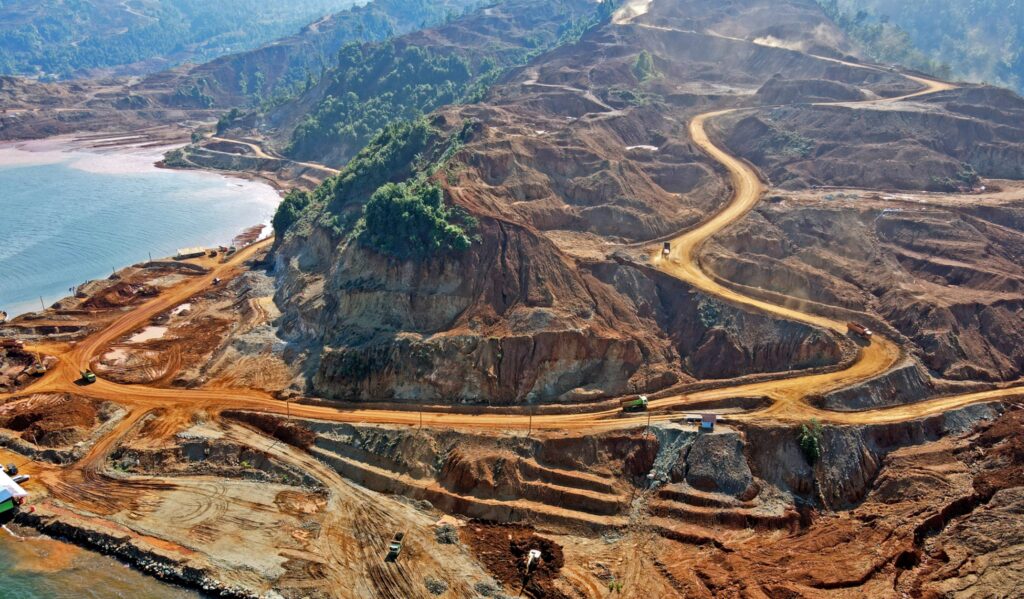
- Indonesia’s nickel boom comes at cost: Indonesia now produces nearly two-thirds of the world’s refined nickel – up from just 6% a decade ago – but this rapid growth is fueled by coal-fired smelters and rainforest destruction
- Global Demand Soaring Amid Supply Risks: nickel demand projected to increase 45–65% by 2030, reaching 5–6 million tonnes driven by long-term strength in stainless steel & alloys with additional demand from defense applications and EV production, yet supply highly concentrated in Indonesia and Chinese-controlled processing
- West fast-tracking “Net-Zero” nickel mines: Western governments accelerating permits and investment in domestic critical mineral projects to secure supply and improve environmental footprint
- Canada’s giant Crawford nickel project in Ontario: among the world’s largest nickel sulfide deposits and just designated a strategic “nation-building” mine, with projected CO₂ emissions 90% below the global average and plans to store 1.5 Mt CO₂ annually in tailings
In June 2025, Indonesia revoked four nickel mining licenses in Raja Ampat, an archipelago known as the “last paradise”, after a public outcry, a rare intervention by the world’s top nickel producer — and admission on the growing importance of environmental constraints on its nickel industry.
The move comes after the president pledged to phase out coal power plants that are powering high-emissions nickel smelters and replace with renewable energy by 2040.
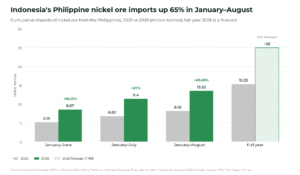
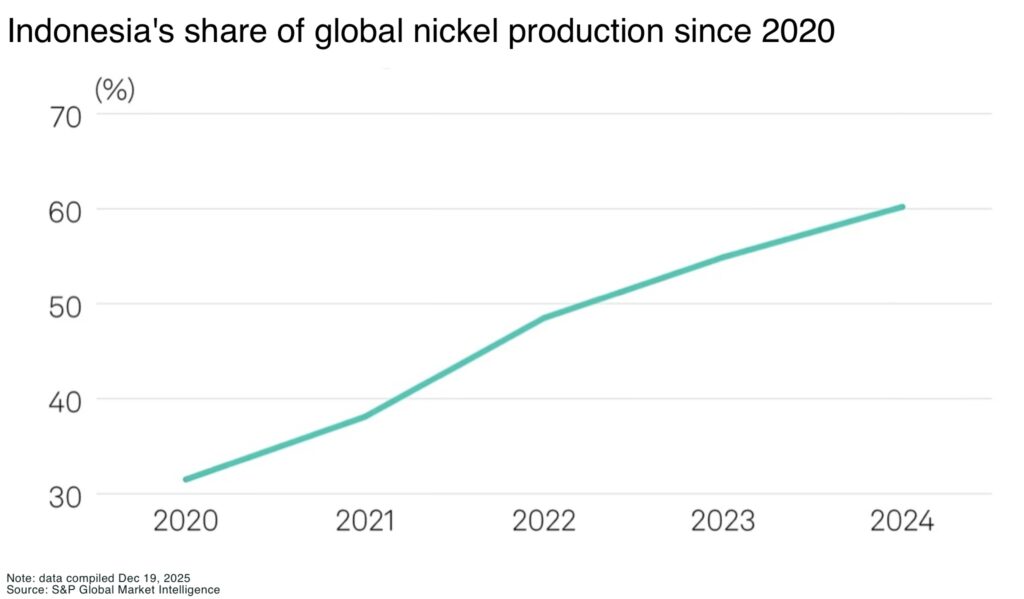
Indonesia’s nickel output exploded after banning raw ore exports to spur domestic refining in 2020, increasing from 31.5% in 2020, to 60% in 2024, and forecast to reach more than 75% by 2030.
Indonesia’s energy sector released more than 650mn tonnes of carbon dioxide in 2022, (up 165% between 2000-2023 — as the country’s nickel sector took off), making it the world’s seventh-largest carbon emitter.
Coal-fired power was the quick-and-dirty way to run energy-intensive nickel smelters and vast rainforest regions were cleared for mines and waste ponds. For example, producing a tonne of nickel in an Indonesian blast furnace (nickel pig iron) can emit 90 tonnes of CO₂. The trade-off was clear: Indonesia gained industry and investment, but at a steep environmental cost.
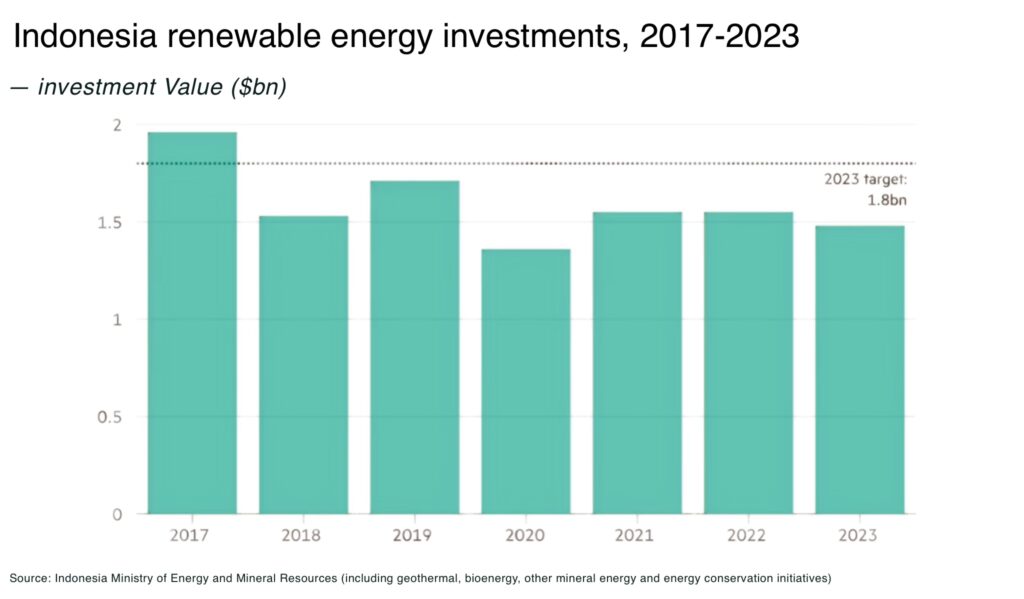
And there’s no easy fix. Fabby Tumiwa, executive-director at the Institute for Essential Services Reform (a Jakarta-based think-tank), told the told the Financial Times, that Indonesia needs investments of at least US$1.2tn between now and 2050 for clean energy, storage and transmission networks, on top of an estimated $28bn in costs for early retirement of coal plants. Government data shows investment in Indonesia’s renewable energy sector totalled $1.5bn in 2023.
Meanwhile, local pressure on Indonesia’s mining sector has only increased, and now seen success in Raja Ampat.
But, the environmental concerns are not just local. Internationally, pressure is also being applied through trade policy and investor scrutiny — in particular, via carbon emissions taxes. Nickel is not yet on the European Union’s Carbon Border Adjustment Mechanism (CBAM) (putting a price on CO₂ emissions), but Brussels has not ruled out including nickel in future updates, potentially from 2028.
And Europe’s new Battery Regulation will also require EV battery makers to disclose the carbon footprint of their supply chain and, by 2027, comply with a maximum CO₂/kg threshold. This means automakers building cars in Europe will be under pressure to source low-carbon nickel, and other minerals, or risk failing sustainability rules.
Tesla’s Elon Musk famously urged nickel miners in 2020: “Tesla will give you a giant contract for a long period of time if you mine nickel efficiently and in an environmentally sensitive way.”
That wasn’t just talk: in 2022, Tesla signed a long-term deal with Vale to supply nickel from Vale’s Canadian operations, which run on hydroelectric power. Nickel rounds from Vale’s Long Harbour refinery in Newfoundland carry a carbon footprint of 4.4 tonnes CO₂ per tonne Ni, roughly one-third the industry average for Class 1 nickel.
And this is not just a one-off deal, for example:
- in 2021, Tesla agreed to buy nickel for its batteries from BHP, the world’s largest miner, as it looked to secure non-China supply
- in 2022, automaker Stellantis signed an agreement with GME Resources to secure supplies of nickel and cobalt sulphate for EV batteries
- in 2022, General Motors (GM) partnered with Queensland Pacific Metals in Australia for long-term nickel and cobalt supply
The West now hopes to leverage environmental concerns to fix another problem — national security.
Building a clean, secure nickel supply chain in the West
Nickel was added to the US critical mineral list in 2022, due to its importance in making stainless steel, superalloys (for aerospace), as well as in electric batteries.
The concern is the concentration of supply and processing increasingly anchored in one country. That risk was exposed during The Great Nickel Trade War, which led to the suspension of at least eight nickel operations outside Indonesia (largely in Australia) and reinforced by China’s subsequent export restrictions on other critical minerals, from rare earths to antimony, in its escalating trade conflict with the US.
So, Western nations are racing to develop their own sources of secure, “clean” nickel with a raft of policy adn investment measures, including:
Canada
- in 2022, the 30% Critical Mineral Exploration Tax Credit (CMETC) was introduced to pull capital into exploration for minerals, including nickel
- in 2025, launched the Major Projects Office (MPO) to fast-track big projects (including critical minerals) to final investment decisions faster via coordination and regulatory certainty
- a critical mineral strategy under Canada’s Defence Production Act guarantees buyers for domestic producers and hints at government-backed price floors to counter China’s supply chain dominance, as well as CAD$6.4 billion investment in 26 mining projects
- in 2025, Ontario launched the One Project, One Process (1P1P), provincial permitting coordination to compress timelines for strategic mines
Australia
- Western Australia’s Nickel Financial Assistance Program (royalty relief) with 50% royalty rebate for an 18-month window when prices are below US$20,000/t, repayable over 24 months (a de facto price-linked support mechanism)
- the Critical Minerals Production Tax Incentive (CMPTI) with 10% refundable tax offset on eligible processing/refining expenditure for critical minerals processed in Australia
- in 2026, a Critical Minerals Strategic Reserve (AUS$1.2bn) of government-backed offtakes/forward contracts and stockpiling mechanics to de-risk projects and strengthen supply chains
United States
- Executive Orders from the President Trump to accelerate domestic mineral production (March 2025): White House directive aimed at faster permitting and expanded federal support tools for domestic mining/processing
- in 2023, the Pentagon directly funded nickel exploration and supply chain work in Talon Metals Corp to expand domestic feedstock with investment via the Defense Production Act
And, in international cooperation (despite recent volatile geoplitics), the West has agreed to a series of partnerships for investment and supply, such as the G7 Critical Minerals Action Plan, the USA-Australia Framework for Securing Supply in the Mining and Processing of Critical Minerals, the Minerals Security Partnership (MSP), and the Canada-US Joint Action Plan on Critical Minerals Collaboration.
All of these moves anticipate an acceleration in nickel demand, in particular in electric vehicles.
Canada Nickel: where climate policy meets national security
One project increasingly sits at the centre of this environment-geopolitics shift:Canada Nickel, TSXV: CNC OTCQX: CNIKF
Canada Nickel’s Crawford project in Ontario is among the largest undeveloped nickel sulphide resources globally and has become a focal point for both federal and provincial critical minerals strategy.
- in November 2025, the project was named a federal “priority project” under Canada’s new Major Projects Office, explicitly framed as a nation-building asset tied to clean industrial supply chains and energy transition security
- in January 2026, Ontario designated Crawford under its One Project, One Process (1P1P) framework, fast-tracking permitting coordination to compress timelines toward construction
Strategically, Crawford addresses two problems at once:
National security: Nickel is essential for EV batteries, stainless steel, and aerospace superalloys, and the US and its allies are actively seeking supply chains outside Indonesia and China. Crawford sits inside a trusted jurisdiction, with downstream processing planned in North America.
Environmental credibility: Canada Nickel plans to leverage the natural carbon-sequestration properties of ultramafic tailings, targeting net-zero, and potentially net-negative, nickel production, with plans to permanently store up to 1.5 million tonnes of CO₂ annually once in operation.


Critically, Crawford’s timeline aims to align with the expected nickel supply crunch late in the decade. Canada Nickel plans to start construction and ramp up to 30,000+ tonnes of nickel annually by the end of the decade, just as EU carbon rules might bite. Further expansion can take production close to 50,000 tonnes per year, making it the largest nickel sulfide operation in the Western world if successful.
Crawford is not just a mining project. It is a test case for whether the West can rebuild a clean, strategically-placed nickel supply chain — and do so fast enough to matter.
Nickel demand
Nickel demand is forecast to double over the period to 2050, driven by the rapid deployment of EV batteries. The IEA suggests 60 new nickel mines will be needed to meet the world’s net zero goals.
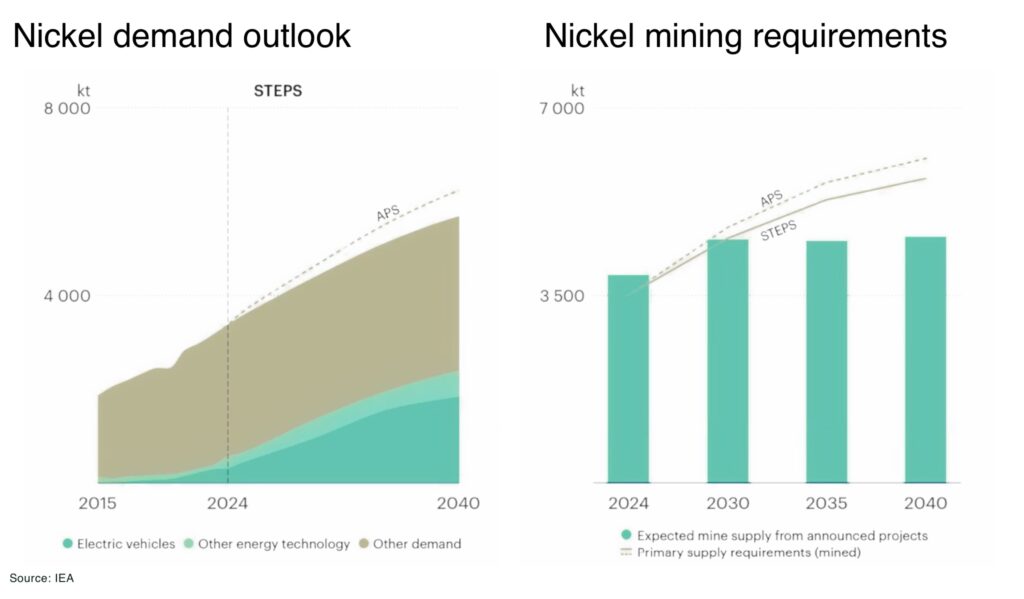
This demand is coming online just as Indonesia’s dominant role as primary global nickel producer is under threat with falling ore grades, an illusory nickel “surplus”, and strategic shift to from disruptor to price guardian. Read our full analysis here: Can nickel prices hit $25,000 in 2026?
Conclusion
The nickel market is at an inflection point where environmental sustainability and supply security are as pivotal as cost curves and ore grades.
Indonesia delivers at scale, but at rising environmental and political risk. At the same time, demand from EVs, defense, and industrial decarbonisation continues to accelerate.
What is changing is the very real shift in Western governments no longer relying on rhetoric alone, and deploying investment, tax credits, permitting reform, strategic offtakes, and trade policy to tilt the market toward secure, low-carbon, allied supply.
Indonesia still provides “more” nickel. But it does not yet provide cleaner or more secure nickel at scale. That gap is becoming the opportunity.