

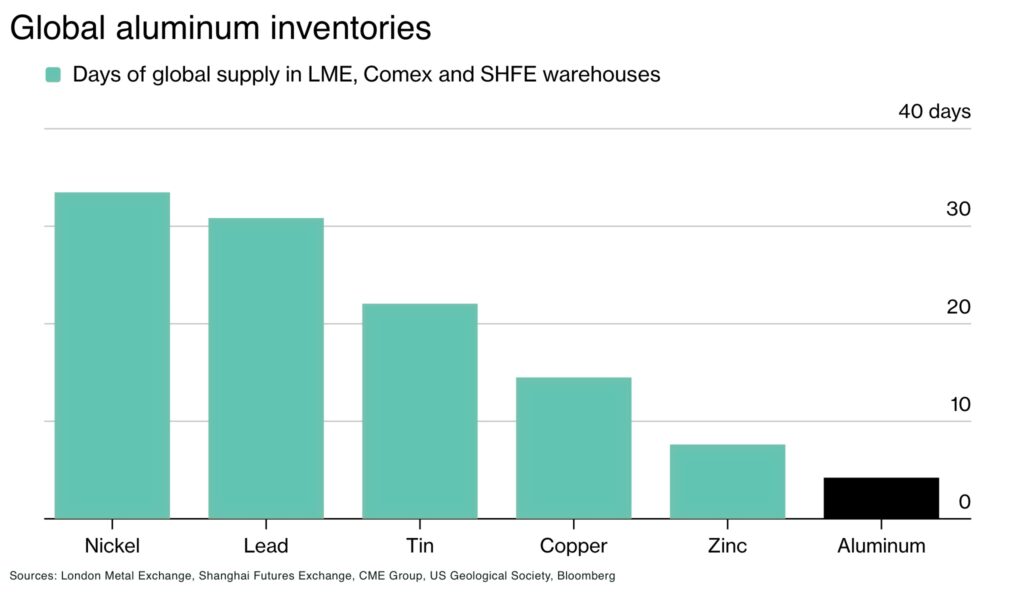
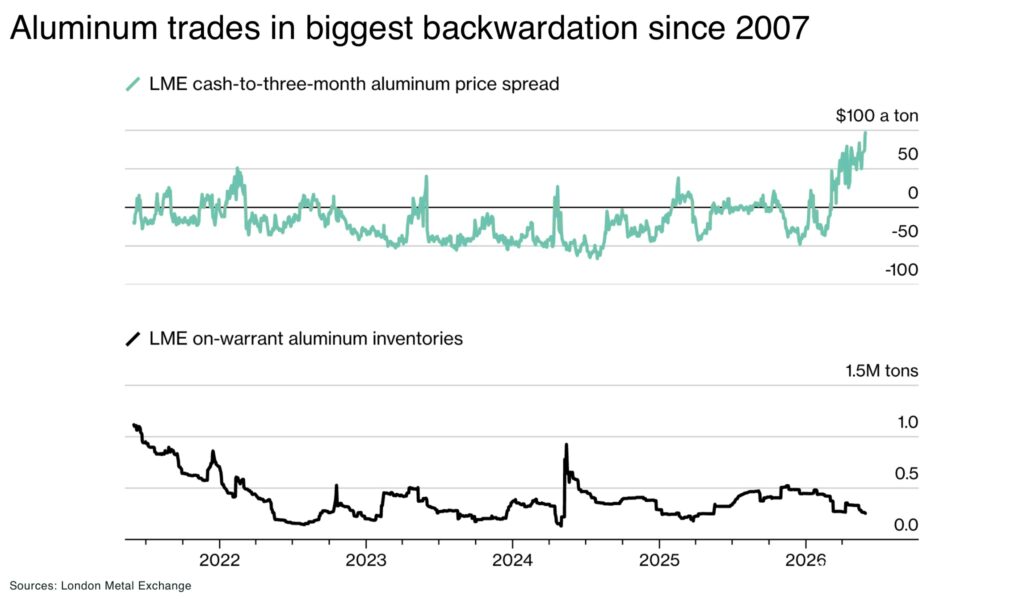
Visible aluminium inventories have fallen to less than five days of global supply, spiking spot aluminum prices to a US$97-a-ton premium to three-month futures — the highest level since 2007.
The fall in aluminium inventories is the lowest cover among the six main metals traded on the London Metal Exchange after the conflict in the Middle East has tightened supply. The region accounts for nearly 10% of global aluminium supply, and the closure of the Strait of Hormuz has disrupted a key route for metal moving into the US, Europe and Japan.
Aluminum on the LME (London Metal Exchange) is trading at its steepest premium to Shanghai futures since March 2022 — no longer trading like a metal with a comfortable inventory buffer, leaving the market exposed to any further disruption in supply, shipping or smelter output.
The pressure is already showing in prices. Spot aluminium on the LME surged to a $97-a-ton premium over three-month futures on Friday, the highest since 2007, according to Bloomberg. That kind of backwardation is a classic sign of buyers paying up for metal now, not later.
This matters beyond the metals market. Aluminium is used in power cables, vehicles, aircraft, packaging, solar frames, buildings and defence supply chains. As inventories fall this low, risk shifts from price volatility to physical availability.
China’s aluminium exports rose 15% in April to 598,000 tonnes, the highest since November 2024. Analysts cited by Bloomberg said exports could rise above 680,000 tonnes in coming months, which would be a record. But China is not a limitless backstop. The International Aluminium Institute estimates China produced 3.68 million tonnes of primary aluminium in April 2026, out of global production of 5.92 million tonnes. That means China already accounts for more than 60% of global primary output.
Falling inventories, tight nearby spreads and rising physical premiums all point to the same problem: the market’s buffer is shrinking. And when a metal used across energy, transport, construction and defence drops below five days of visible supply, the shock does not stay inside the exchange warehouse system for long.