What is graphite?
Graphite is a soft, grey-to-black crystalline form of carbon valued for its electrical conductivity, thermal stability and lubricating properties.
Its carbon atoms are arranged in stacked hexagonal layers. Strong bonds hold the atoms together within each layer, while weaker forces allow the layers to slide over one another. This structure explains why graphite conducts electricity, works as a dry lubricant and leaves a mark when used in pencils.
The name comes from the Greek word graphein, meaning “to write”.
Today, graphite is used in lithium-ion batteries, steelmaking, refractories, foundries, lubricants, electrical equipment and high-temperature industrial components. Its role as the dominant anode material in lithium-ion batteries has also made graphite an important part of electric-vehicle and energy-storage supply chains.
Why graphite matters
Graphite combines properties that are difficult to reproduce in a single material.
It can:
- conduct electricity and heat
- withstand very high temperatures
- resist many chemical reactions
- reduce friction
- store lithium ions between its atomic layers
- be formed into powders, coatings, foils and solid components
These properties give graphite both traditional industrial uses and a growing role in advanced energy technologies.
Graphite in lithium-ion batteries
Graphite is the dominant active material used in lithium-ion battery anodes.
During charging, lithium ions move from the cathode and are stored between graphite’s carbon layers. During discharge, the ions move back towards the cathode, releasing energy to power the device.
Graphite anodes are used in batteries for:
- electric vehicles
- smartphones and laptops
- power tools
- stationary energy storage
- consumer electronics
- industrial equipment
Although the battery is called “lithium-ion”, its anode can contain substantially more graphite by weight than lithium. The exact amount depends on cell chemistry, design, energy capacity and manufacturing efficiency.
Natural graphite, synthetic graphite or a blend of both can be used. Battery manufacturers select materials according to cost, performance, lifespan, charging speed and supply-chain requirements.
How graphite becomes battery anode material
Mine production is only the first step in the graphite battery supply chain.
Natural flake graphite must undergo several processes before it can be used in an anode:
- Concentration: mined ore is crushed, ground and separated to increase its carbon content.
- Purification: impurities are removed using chemical or high-temperature processes.
- Spheroidisation: graphite flakes are shaped into rounded particles that can be packed efficiently.
- Classification: particles are sorted to achieve the required size distribution.
- Coating: a carbon coating may be applied to improve performance and stability.
- Qualification: battery and vehicle manufacturers test the material for purity, consistency, safety and performance
The resulting product is generally called active anode material.
A graphite deposit may therefore be large and high-grade without necessarily being suitable or economical for battery production. Flake characteristics, impurities, processing yield, energy costs and customer qualification all influence commercial value.
Natural graphite types
Natural graphite is generally classified into three main types.
Flake graphite
Flake graphite occurs as flat particles within metamorphic rock. It can be processed into spherical purified graphite for lithium-ion battery anodes.
Flake size, carbon content and impurity profile influence the markets a deposit can serve.
Amorphous graphite
Despite its name, commercial amorphous graphite has a microcrystalline structure. It generally occurs in deposits formed through the metamorphism of coal.
It is commonly used in steelmaking, foundries, lubricants, brake products and other industrial applications.
Vein or lump graphite
Vein graphite occurs in veins or fractures and can have a naturally high carbon content. It is rarer than flake or amorphous graphite and is associated particularly with deposits in Sri Lanka.
It is used in selected high-value industrial applications, depending on purity and material characteristics.
Natural versus synthetic graphite
Natural graphite is mined from geological deposits. Synthetic graphite is manufactured from carbon-rich feedstocks, commonly petroleum coke and coal-tar pitch, which are treated at extremely high temperatures.
Both can be used in lithium-ion battery anodes.
Natural graphite
Potential advantages include:
- lower production energy requirements than conventional synthetic graphite
- potentially lower cost
- high capacity for storing lithium
- access to a mined mineral resource
Potential challenges include:
- variation between deposits
- impurities that must be removed
- losses during shaping and purification
- dependence on mining and chemical processing
Synthetic graphite
Potential advantages include:
- consistent material properties
- high purity
- strong cycle life
- the ability to tailor particles for specific applications
Potential challenges include:
- high energy consumption
- exposure to petroleum-based feedstocks
- potentially higher production costs
- significant emissions where manufacturing relies on carbon-intensive energy
Battery manufacturers may blend natural and synthetic graphite to balance performance, cost and availability.
Steelmaking and electric-arc furnaces
Graphite has several important roles in steel production.
Large synthetic graphite electrodes conduct electricity into electric-arc furnaces, where intense heat melts scrap steel and other metallic feedstocks.
Natural and synthetic graphite products are also used to:
- adjust the carbon content of steel
- protect furnace linings
- lubricate moulds and equipment
- support continuous casting
- improve selected foundry processes
The growth of electric-arc steelmaking can support demand for graphite electrodes, although the market is distinct from battery-anode graphite.
Refractories and foundries
Graphite withstands high temperatures and resists thermal shock, making it useful in refractory materials.
Refractories line furnaces, kilns, ladles and other equipment exposed to molten metal and extreme heat. Graphite can be combined with materials such as magnesia or alumina to improve performance.
It is also used in:
- crucibles
- casting moulds
- furnace linings
- foundry facings
- continuous-casting components
- high-temperature seals and gaskets
Steel production remains an important source of traditional graphite demand.
Lubricants and friction materials
Graphite’s layered structure allows it to reduce friction without melting or flowing like a conventional oil.
It is used as a dry or solid lubricant in equipment operating under high temperatures, heavy loads or conditions where liquid lubricants may be unsuitable.
Graphite is also found in:
- brake linings
- clutch materials
- bearings
- seals
- metal-forming compounds
- drilling and industrial lubricants
Alternative lubricants include molybdenum disulphide and other solid materials, but their performance varies by temperature and operating environment.
Electrical and thermal applications
Graphite conducts electricity while tolerating heat and corrosive environments.
Applications include:
- electrical motor brushes
- electrodes
- heat exchangers
- heating elements
- conductive coatings
- thermal-management materials
- electrical contacts
- fuel-cell components
Expanded graphite can be compressed into flexible sheets and foils used in gaskets, seals, heat spreaders and fire-resistant products.
Specialised graphite is also used in nuclear reactors, although nuclear-grade material must meet strict purity and performance specifications.
Graphite, graphene and advanced materials
Graphene consists of a single layer of carbon atoms arranged in the same hexagonal pattern found within graphite.
Graphite can serve as a starting material for producing graphene and related carbon products. Potential applications include electronics, sensors, coatings, composites, energy storage and thermal management.
Commercial adoption varies significantly by application. Graphene may create additional graphite demand, but many technologies remain at the research, pilot or early-commercial stage.
Graphite is also being combined with silicon in some advanced battery anodes. Silicon can increase energy-storage capacity, while graphite helps control swelling and maintain stability.
Why graphite supply is strategically sensitive
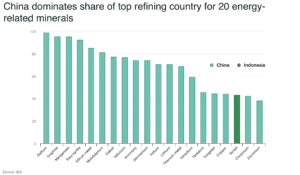
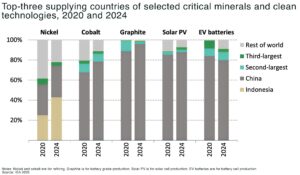
China is the dominant producer of natural graphite and holds an even stronger position in the processing of battery-grade graphite and production of active anode material.
Other natural graphite producers include countries in Africa, South America and Asia. New mining and processing projects are also being developed in North America, Europe and Australia.
The supply-chain challenge extends beyond access to graphite ore. Producing battery-ready material requires:
- purification capacity
- spheroidisation equipment
- coating technology
- reliable energy and chemical inputs
- waste-management systems
- technical expertise
- customer qualification
Building a mine without developing these downstream stages may do little to reduce dependence on established processing centres.
Graphite supply can also be affected by export controls. China requires permits for exports of selected high-purity natural and synthetic graphite products, demonstrating how trade policy can influence battery supply chains.
Mining and processing graphite
Natural graphite can be mined using open-pit or underground methods, depending on the depth, shape and grade of the deposit.
A typical processing route may include:
- crushing
- grinding
- flotation
- drying
- screening
- purification
- shaping and coating for battery applications
Producers generally try to preserve flake size during processing because larger flakes can receive higher prices in some industrial markets.
Recovery is also important. Spheroidisation removes part of the original flake material, creating fine graphite by-products that must find another market or be recycled to improve project economics.
Environmental considerations
The environmental footprint of graphite depends on its source, energy supply and processing method.
Natural graphite mining can involve:
- land disturbance
- dust
- water consumption
- tailings
- chemical use
- waste-rock management
Chemical purification can require strong acids or alkalis. High-temperature purification may reduce chemical use but require more energy.
Synthetic graphite production is also energy-intensive because its carbon feedstock must be heated to extremely high temperatures. Its emissions depend heavily on the energy source and production process.
Comparisons between natural and synthetic graphite should therefore consider the full supply chain rather than assuming one route is always environmentally preferable.
Graphite recycling
Graphite can be recovered from manufacturing scrap, spent batteries, refractory materials and machined graphite products.
Battery recycling has historically focused on metals such as lithium, nickel and cobalt. Recovering anode graphite is receiving greater attention as battery volumes grow and governments seek more resilient supply chains.
Challenges include:
- contamination from other battery materials
- restoring graphite’s structure and performance
- achieving consistent purity
- competing with low-cost primary material
- qualifying recovered graphite for new batteries
Recycling could become an important secondary source, but it is unlikely to remove the need for new natural and synthetic production while battery demand grows.
Substitution and future battery technologies
Graphite faces competition from alternative anode materials.
Silicon can store more lithium by weight but expands considerably during charging, creating durability challenges. It is therefore often added to graphite rather than used as a complete replacement.
Other alternatives include lithium titanate, hard carbon and lithium-metal anodes. These materials offer different combinations of energy density, charging speed, safety, lifespan and cost.
Sodium-ion batteries commonly use hard-carbon anodes rather than graphite. Growth in sodium-ion technology could reduce graphite demand in some applications, although lithium-ion batteries are expected to remain important across transport and energy storage.
What drives graphite demand?
The principal sources of graphite demand include:
- Lithium-ion batteries: used as the dominant active anode material
- Steelmaking: used in electric-arc furnace electrodes, carbon additives and casting
- Refractories: used in furnace linings, crucibles and high-temperature components
- Foundries: used in moulds, coatings and carbon control
- Lubricants: used where conventional liquid lubricants cannot perform effectively
- Friction materials: used in brakes, clutches and industrial components
- Electrical equipment: used in motor brushes, electrodes and conductive products
- Thermal management: used in heat spreaders, foils, seals and gaskets
- Fuel cells and nuclear energy: used in specialised components requiring high purity and thermal stability
What to watch in the graphite market
Graphite sits at the intersection of batteries, steelmaking and supply-chain security.
Key trends to watch include:
- Electric-vehicle production: battery manufacturing is a major source of incremental graphite demand
- Stationary storage: lithium-ion storage systems also require anode material
- Chinese production and trade policy: mining, processing and export rules can affect global availability
- Processing diversification: purification and active-anode-material capacity outside China may be more strategically important than mine development alone
- Natural versus synthetic graphite: energy costs, performance and customer preferences determine the balance
- Project qualification: new producers must demonstrate consistent performance before supplying battery manufacturers
- Electric-arc steelmaking: steel recycling supports demand for synthetic graphite electrodes
- Anode technology: silicon blends, hard carbon and lithium-metal designs may change graphite intensity
- Recycling: recovery from manufacturing scrap and spent batteries could expand secondary supply
- Environmental performance: energy, chemical use, emissions and waste management will influence project competitiveness
The strategic takeaway
Graphite is both a traditional industrial material and a critical battery input.
Its use in steel, refractories and lubricants provides an established demand base, while lithium-ion batteries are creating a faster-growing market for high-purity active anode material.
For investors, manufacturers and policymakers, the central question is not simply whether enough graphite can be mined. It is whether natural and synthetic material can be processed, purified, qualified and delivered at the scale, cost and consistency required by battery manufacturers.
———————–
What is graphite used for?
Graphite is used in lithium-ion battery anodes, steelmaking, furnace electrodes, refractories, foundries, lubricants, brake products, electrical motor brushes, fuel cells and thermal-management materials.
Why is graphite used in batteries?
Graphite can store lithium ions between its carbon layers while remaining relatively stable through repeated charging and discharging. It also offers a strong balance of performance, cost and manufacturing maturity.
Is graphite a critical mineral?
Natural graphite is classified as a critical or strategic material in several major economies because it is essential to lithium-ion batteries and has a highly concentrated mining and processing supply chain.
What is the difference between natural and synthetic graphite?
Natural graphite is mined from mineral deposits. Synthetic graphite is manufactured from carbon-rich feedstocks at very high temperatures. Both are used in batteries and industry, but they differ in cost, consistency, energy consumption and environmental footprint.
Is graphite the same as graphene?
No. Graphite consists of many stacked carbon layers. Graphene is a single carbon layer with a hexagonal atomic structure. Graphite can be used as a raw material for producing graphene.
Can graphite be recycled?
Yes. Graphite can be recovered from manufacturing scrap, industrial products and spent batteries. Battery-grade recycling remains an emerging industry because recovered material must be purified and restored to consistent performance.
What affects graphite prices?
Graphite prices are influenced by product type, purity, flake size, battery demand, steel production, Chinese policy, processing capacity, energy costs, freight, customer qualification and competition between natural and synthetic material.