What is oil?
Oil—also known as petroleum—is a naturally occurring fossil fuel composed mainly of hydrocarbons. In its unrefined state, it is called crude oil: a liquid mixture found in underground rock formations and beneath the seabed.
Crude oil formed over millions of years as organic material was buried beneath layers of sediment and transformed by heat and pressure. Producers extract it through onshore or offshore wells before transporting it to refineries, where it is converted into fuels, chemical feedstocks and other petroleum products.
Oil remains central to the global economy. It powers cars, trucks, aircraft and ships while providing raw materials for plastics, fertilisers, pharmaceuticals, synthetic fibres, lubricants, asphalt and thousands of everyday products.
What is the difference between crude oil and petroleum?
The terms are closely related but not identical:
- Crude oil is the unprocessed liquid extracted from geological formations.
- Petroleum is a broader term that can include crude oil and the products made from it.
- Petroleum products are fuels and materials produced through refining, such as petrol, diesel, jet fuel, heating oil, lubricants and asphalt.
Crude oil is normally measured in barrels. One standard barrel contains 42 US gallons, or approximately 159 litres.
Why oil matters: strategic applications
Transportation
Transportation is oil’s most important end market because petroleum fuels combine high energy density with established global infrastructure.
- Petrol: primarily fuels cars, motorcycles and light commercial vehicles.
- Diesel: powers trucks, buses, trains, agricultural equipment, construction machinery and some ships.
- Jet fuel: remains essential for commercial aviation, air freight and military aircraft.
- Marine fuels: support international shipping and global trade.
Electric vehicles are reducing oil demand in parts of road transport, but aviation, shipping and heavy-duty transport are generally more difficult to electrify.
Petrochemicals and manufacturing
Oil is more than an energy source. Refineries and petrochemical plants convert petroleum fractions into feedstocks used to manufacture:
- plastics and packaging;
- synthetic rubber;
- polyester, nylon and other fibres;
- paints, coatings and adhesives;
- detergents and solvents;
- cosmetics and personal-care products;
- medical equipment and pharmaceuticals;
- electronic components and insulation;
- fertilisers and agricultural chemicals.
These non-fuel applications could become increasingly important as transport systems shift towards electricity and alternative fuels.
Industry and construction
Petroleum products are used throughout manufacturing, mining, agriculture and construction.
- Lubricants: reduce friction and protect engines, turbines and industrial machinery.
- Asphalt and bitumen: provide durable surfaces for roads, roofing and waterproofing.
- Petroleum coke: is used in metals processing, cement production and other industrial applications.
- Process heat: fuel oil and other products provide heat for facilities without access to suitable alternatives.
Heating and electricity generation
Heating oil and liquefied petroleum gases are used in buildings, particularly in areas without natural-gas networks. Oil-fired electricity generation is less common in large interconnected power systems but remains important on some islands, in remote communities and as backup capacity.
Energy security
Reliable oil supplies are strategically important because transportation, defence, agriculture and international trade remain heavily dependent on petroleum fuels.
Governments and companies maintain commercial inventories and strategic petroleum reserves to help manage temporary disruptions. These stocks can provide emergency supply but cannot permanently replace lost production.
How the oil supply chain works
Exploration and appraisal
Producers use geological surveys, seismic imaging and exploratory drilling to locate potential oil-bearing formations. If a discovery appears commercially viable, additional wells are drilled to estimate the reservoir’s size, quality and production characteristics.
Not every discovery becomes a mineable—or, more accurately, producible—reserve. Economics depend on oil prices, development costs, regulation, infrastructure, geology and access to markets.
Production
Oil is produced from conventional reservoirs, shale and other tight formations, heavy-oil deposits and offshore fields.
Reservoir pressure may initially push oil towards the surface. As pressure declines, operators can use pumps or inject water, gas or steam to increase recovery. Hydraulic fracturing and horizontal drilling are commonly used to produce oil from low-permeability rock.
Transportation
Crude oil moves from producing regions to refineries through:
- pipelines;
- ocean-going tankers;
- railways;
- barges;
- road tankers.
Pipelines are efficient for established routes, while tankers allow oil to be traded globally. This transportation network makes the oil market more internationally connected than many pipeline-dependent energy markets.
Refining
Refineries separate and transform crude oil into usable products through three broad stages:
- Separation: distillation divides crude oil into fractions according to their boiling points.
- Conversion: processes such as cracking turn heavier fractions into lighter, higher-value products.
- Treatment: sulphur and other impurities are removed so products meet performance and environmental standards.
Refinery configurations differ. Some are designed for light, low-sulphur crude, while more complex facilities can process heavier, higher-sulphur grades.
Distribution
Finished products move through pipelines, ships, railways and trucks to storage terminals, airports, industrial customers and retail fuel stations. The price paid by consumers reflects more than crude oil alone: refining costs, transport, distribution, taxes, regulations and local competition also matter.
Types and grades of crude oil
Crude oils differ substantially in density, sulphur content and chemical composition.
Light and heavy crude
- Light crude oil contains a larger proportion of hydrocarbons that can be converted relatively easily into petrol, diesel and jet fuel.
- Heavy crude oil is denser and generally requires more complex processing to produce the same high-value fuels.
Sweet and sour crude
- Sweet crude has relatively low sulphur content.
- Sour crude contains more sulphur and requires additional treatment during refining.
Light, sweet crude is often easier and less expensive to process. However, its market value also depends on regional demand, transport availability and refinery capabilities. U.S. Energy Information Administration
Oil supply-and-demand dynamics
Demand drivers
Oil demand is influenced by:
- economic and industrial activity;
- road traffic and vehicle efficiency;
- aviation and shipping volumes;
- petrochemical production;
- population and urbanisation;
- fuel prices and taxation;
- electric-vehicle adoption;
- public transport and mobility patterns;
- energy and climate policy.
Demand is also seasonal. Travel patterns, agricultural activity, winter heating and refinery maintenance can affect the consumption of particular products at different times of year.
Supply landscape
Oil is produced across North America, South America, the Middle East, Africa, Eurasia and Asia-Pacific. Supply comes from national oil companies, international energy companies and independent producers.
Production can respond at different speeds. Some shale wells can be developed relatively quickly, while deepwater fields, oil sands and large conventional projects may require years of investment before producing their first barrel.
OPEC and OPEC+
The Organization of the Petroleum Exporting Countries coordinates production policy among its members. OPEC+ brings those producers together with additional oil-exporting countries.
Their production decisions can influence the balance between global supply and demand. However, prices are also shaped by output from producers outside the group, inventory changes, consumption, financial markets and unexpected disruptions.
Spare capacity and inventories
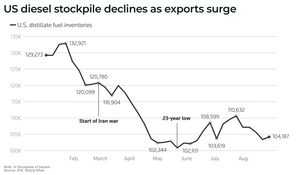
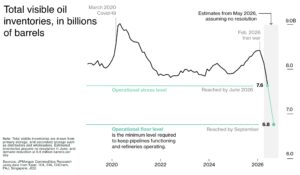
Spare production capacity can provide additional supply during disruptions. Commercial stocks and government-controlled reserves can also cushion temporary shortages.
Low inventories and limited spare capacity tend to make markets more sensitive to unexpected events. Ample inventories and available production can reduce—but not eliminate—volatility.
How oil prices are determined
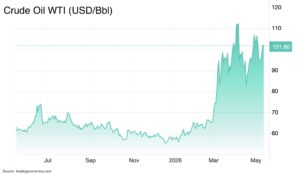
Crude oil is traded through physical markets and financial contracts. Widely followed benchmarks include:
- Brent: a key reference for oil traded internationally;
- West Texas Intermediate: the principal US crude benchmark;
- Dubai and Oman: important references for Middle Eastern crude sold into Asian markets.
Individual crude grades trade at premiums or discounts to these benchmarks based on quality, location, transport costs and refinery demand.
Oil prices respond to:
- global economic growth;
- production decisions;
- geopolitical conflict and sanctions;
- weather and natural disasters;
- refinery outages;
- pipeline and shipping disruptions;
- inventory levels;
- spare production capacity;
- currency movements;
- expectations about future supply and demand.
Crude prices strongly influence fuel costs, but changes do not always pass through immediately or proportionately. Refining margins, taxes, distribution expenses and local market conditions also affect retail prices.
Environmental considerations
Greenhouse-gas emissions
Burning petroleum fuels releases carbon dioxide. Additional emissions occur during exploration, production, processing, transport and refining.
The lifecycle footprint varies by field and product. Energy-intensive extraction, routine flaring, methane leakage and complex refining can increase emissions per barrel.
Methane, venting and flaring
Oil production can release associated natural gas. Where infrastructure is unavailable—or for operational and safety reasons—gas may be flared or vented.
Flaring converts much of the gas into carbon dioxide but can also release methane when combustion is incomplete. Venting releases methane directly. Capturing associated gas, improving equipment and limiting routine flaring can reduce both emissions and wasted energy.
Oil spills
Spills can occur during production, pipeline transport, shipping, refining or distribution. Their impacts depend on the amount and type of oil released, the affected environment and the speed of the response.
Prevention measures include well-control systems, pipeline monitoring, double-hulled tankers, maintenance programmes and emergency-response planning. Even with safeguards, major spills can cause long-lasting ecological and economic damage.
Air pollution and water impacts
Refineries, engines and industrial facilities can emit nitrogen oxides, sulphur compounds, particulate matter and other pollutants. Fuel-quality standards and emissions-control technologies have reduced many of these emissions, although impacts vary among regions.
Oil production can also require significant quantities of water and generate contaminated wastewater. Offshore development, roads and associated infrastructure may disturb habitats and communities.
Plastics and waste
Petrochemicals provide useful and sometimes essential materials, but plastic waste has become a major environmental challenge. Priorities include reducing unnecessary consumption, designing products for reuse and recycling, improving waste collection and limiting pollution.
Market trends shaping oil’s future
Transport electrification
Electric vehicles are beginning to reduce petrol and diesel consumption, particularly in passenger transport. The speed of this shift will depend on vehicle costs, charging infrastructure, government policy and consumer adoption.
Oil may prove more persistent in aviation, shipping, heavy transport and specialised machinery, where alternatives face technical or economic constraints.
Petrochemical demand
Growing demand for plastics, synthetic materials and chemicals may support oil consumption even as its use as a road fuel declines. This makes recycling, material efficiency and alternative feedstocks increasingly important to the industry’s outlook.
Refinery transformation
Refiners are adapting to changing fuel demand, tighter product standards and competition from large integrated facilities. Some sites are being converted to produce renewable diesel, sustainable aviation fuel or petrochemical feedstocks.
Supply security and geopolitics
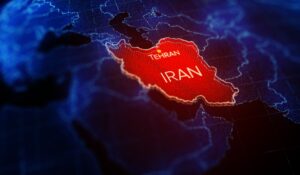
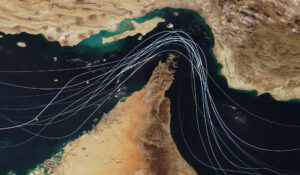
Oil production and major shipping routes are concentrated in strategically important regions. Sanctions, conflicts, trade restrictions and maritime disruptions can rapidly affect prices and availability.
Countries may respond by diversifying suppliers, maintaining emergency inventories, improving efficiency or accelerating the adoption of alternative energy sources.
Investment uncertainty
Oil projects often require substantial capital and long development periods. Producers must balance the risk of insufficient investment against the possibility that energy-transition policies and new technologies reduce future demand.
This uncertainty could contribute to periods of both oversupply and tight supply rather than producing a smooth, predictable transition.
What to watch in the oil market
Important indicators include:
- global economic and transport activity;
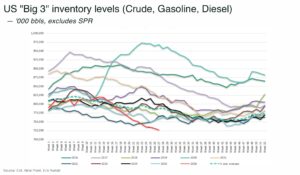
- crude and refined-product inventories;
- OPEC+ production decisions;
- spare production capacity;
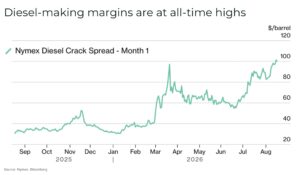
- refinery utilisation and margins;
- geopolitical and shipping disruptions;
- electric-vehicle adoption;
- aviation and petrochemical demand;
- climate policy and fuel-efficiency standards;
- upstream investment and new project development.
Strategic outlook
Oil remains fundamental to transportation, industry, petrochemicals and modern supply chains. Its high energy density, global infrastructure and range of non-fuel applications make it difficult to replace across every sector at the same pace.
At the same time, oil is a major source of greenhouse-gas emissions and creates environmental risks throughout its lifecycle. Electrification, efficiency, alternative fuels and changing materials use are likely to reshape demand, although the direction and speed will differ by sector and region.
Oil’s future will therefore be defined by two competing realities: continued dependence in many essential applications and mounting pressure to reduce emissions, pollution and exposure to volatile global markets.