What is tin?
Tin is a soft, silvery-white metal, chemical symbol Sn and atomic number 50. It is valued for its low melting point, corrosion resistance and ability to bond with other metals.
Tin melts at approximately 232°C, allowing it to form joints and coatings without exposing surrounding materials to the higher temperatures required by many other metals. It also develops a protective oxide layer that resists corrosion.
The chemical symbol Sn comes from the Latin word stannum. Tin has been used for thousands of years, most famously in bronze—an alloy of copper and tin that helped define the Bronze Age.
Today, tin’s largest use is solder, which connects electronic and electrical components. It is also used in protective coatings, chemicals, glass manufacturing, alloys, solar equipment and selected battery technologies.
Why tin matters
Tin connects the components inside modern electronics.
Solder may represent only a small share of a product’s weight, but without reliable solder joints, electricity and data cannot move between components.
Tin is used across:
- smartphones and computers
- vehicles
- data centres
- telecommunications equipment
- power electronics
- renewable energy systems
- industrial machinery
- household appliances
- medical devices
This makes tin a strategic enabling material for electrification and the digital economy.
Tin solder and electronics
Solder is the largest source of global tin demand.
A solder is a metal alloy melted to join components without melting the components themselves. Tin’s low melting point, ability to wet metal surfaces and electrical conductivity make it well suited to this role.
Tin solder is used to attach components to printed circuit boards and connect wires, terminals and electronic assemblies.
Applications include:
- smartphones
- computers and servers
- vehicles
- industrial control systems
- power converters
- telecommunications networks
- data-centre equipment
- household appliances
- medical electronics
- defence and aerospace systems
Each joint may contain very little tin, but a complex device can contain thousands of soldered connections.
Lead-free solder
Traditional electronics solder was commonly made from tin and lead.
Health and environmental regulations have encouraged manufacturers to replace lead in many products. Lead-free solders generally contain a high proportion of tin combined with metals such as silver, copper or bismuth.
Tin-silver-copper alloys are widely used in electronics, although formulations vary according to cost, operating temperature, reliability and manufacturing requirements.
The transition to lead-free solder increased the amount of tin required in many solder alloys. It also introduced new engineering challenges, including higher processing temperatures and the management of tin whiskers.
Tin whiskers are small conductive filaments that can grow from some tin-plated surfaces and potentially cause electrical short circuits. Manufacturers manage this risk through alloy design, coatings, process control and component qualification.
Electric vehicles and transport
Electric vehicles contain extensive electronic, electrical and power-control systems.
Tin solder is used in:
- battery-management systems
- inverters
- onboard chargers
- control units
- sensors
- infotainment systems
- lighting
- charging equipment
- electric motors and associated electronics
Conventional and hybrid vehicles also use substantial electronics, so tin demand is influenced by vehicle production as well as electrification.
Manufacturers continually reduce solder use through miniaturisation and improved assembly methods. The eventual demand effect depends on whether the growth in components and vehicles outweighs lower tin intensity per connection.
Solar panels and renewable energy
Tin supports solar manufacturing in several ways.
Solder is used to connect cells and electrical components within many photovoltaic modules. Tin-containing coatings may be applied to copper ribbons used to carry current between cells.
Tin oxides can also be used in transparent conductive coatings. Fluorine-doped tin oxide is found in selected thin-film solar cells, coated glass products and other electronic applications.
Emerging perovskite solar cells may use tin-containing materials in specific layers or as part of lead-reduction research. Many of these designs are still developing and should not be treated as established sources of large-scale demand.
Tin is therefore relevant to solar energy, but no single tin coating is essential to every type of solar panel.
Data centres and communications
Data centres contain large quantities of servers, networking equipment, storage devices and power electronics.
Tin solder connects components throughout:
- processors and circuit boards
- power supplies
- cooling controls
- networking hardware
- backup-power equipment
- data-storage systems
AI infrastructure may increase the number and power density of electronic systems, but tin demand will also depend on equipment design, component miniaturisation and solder efficiency.
Fibre-optic networks, telecommunications systems and satellite equipment also rely on soldered electronic assemblies.
Tinplate and protective coatings
Tin can be applied as a thin coating over steel to protect it from corrosion.
Tin-plated steel, commonly called tinplate, is used in:
- food cans
- beverage containers
- aerosol containers
- closures
- chemical packaging
- selected electrical components
The steel provides strength, while the tin layer protects the surface and can support safe contact with food.
Modern cans contain only a thin layer of tin. Coating efficiency and competition from aluminium, plastics and alternative packaging materials affect demand.
Tinplate can be recycled through established steel-recovery systems. Tin may also be removed and recovered through detinning processes.
Tin chemicals
Tin compounds are used across manufacturing, coatings, plastics and chemical production.
Applications include:
- catalysts
- PVC stabilisers
- glass coatings
- ceramics
- pigments
- electroplating
- fire-safety products
- polyurethane production
- surface treatments
Organotin compounds have historically been used in products such as marine antifouling coatings, biocides and plastic stabilisers. Some applications have been restricted because of toxicity and environmental persistence.
Regulation can therefore shift demand between individual tin chemicals and encourage alternative formulations.
Float-glass manufacturing
Tin plays a distinctive role in the production of flat glass.
In the float-glass process, molten glass flows across a bath of molten tin. Because the materials do not readily mix, the glass spreads into a smooth, uniform sheet.
Float glass is used in:
- buildings
- vehicles
- mirrors
- furniture
- solar modules
- display applications
The tin bath is reused rather than incorporated fully into the glass, so glass production capacity does not translate directly into an equivalent volume of tin consumption.
Tin compounds may also be used in specialist glass coatings.
Bronze, pewter and other alloys
Bronze traditionally combines copper and tin.
Adding tin can increase copper’s hardness, strength and resistance to wear and corrosion. Bronze is used in:
- bearings and bushings
- marine components
- sculptures
- bells and musical instruments
- coins and medals
- architectural fittings
- industrial equipment
Pewter is a tin-rich alloy commonly combined with antimony, copper or other metals. Modern pewter is generally lead-free and is used in decorative products, tableware and ornaments.
Tin is also found in bearing metals, fusible alloys and specialist engineering materials.
Batteries and energy storage
Tin is used in established and emerging battery applications.
Lead-acid battery grids may contain tin to improve strength, corrosion resistance and manufacturing performance.
Tin compounds and tin-based materials are also being researched for lithium-ion, sodium-ion and other next-generation battery anodes. Tin can store substantial quantities of lithium or sodium, but it expands and contracts significantly during cycling.
This volume change can damage the electrode and reduce battery life. Researchers are exploring nanostructures, composites and alloy designs to manage the problem.
Tin-based next-generation batteries remain an emerging demand theme rather than a major established market.
Semiconductors and advanced electronics
Tin is used in selected semiconductor and electronic materials.
Applications include:
- indium tin oxide transparent electrodes
- tin oxide sensors
- conductive coatings
- semiconductor packaging
- display technologies
- touchscreens
- specialist chip materials
Indium tin oxide, or ITO, combines indium oxide and tin oxide to create a transparent, electrically conductive coating. It is widely used in displays and touch-sensitive surfaces.
Tin is also part of emerging compound-semiconductor materials, including selected applications involving tin telluride, tin sulphide and silicon-germanium-tin systems.
Where does tin come from?
Cassiterite, a mineral composed of tin oxide, is the principal commercial source of tin.
Tin deposits occur in two broad forms:
- hard-rock deposits
- placer deposits
Hard-rock tin deposits
Hard-rock tin is commonly associated with granite-related geological systems.
Cassiterite may occur in:
- veins
- stockworks
- greisen deposits
- skarns
- pegmatites
- complex polymetallic deposits
These deposits may also contain tungsten, copper, zinc, silver, lithium or other metals.
Ore is mined, crushed and processed to separate cassiterite from surrounding rock.
Placer tin deposits
Cassiterite is dense, hard and resistant to weathering. It can survive after the surrounding rock breaks down and become concentrated by rivers, waves or gravity.
These secondary deposits are known as placers.
Placer tin can occur:
- in river sediments
- on land
- in coastal areas
- offshore beneath shallow seas
Alluvial and offshore mining are important in parts of Southeast Asia.
How is tin processed?
Tin ore is generally concentrated using differences in density.
A typical processing route may include:
- crushing and grinding
- gravity separation
- flotation or magnetic separation
- removal of impurities
- smelting
- refining into high-purity tin metal
Cassiterite is reduced at high temperature using carbon to produce crude tin. Further refining removes iron, copper, arsenic, lead and other impurities.
Electronics and chemical customers may require particularly high purity and tight control of trace elements.
Where is tin produced?
Tin mining and refining are spread across several regions, but supply remains concentrated among a relatively small number of countries.
Important producing countries include:
- China
- Indonesia
- Myanmar
- Peru
- Bolivia
- the Democratic Republic of the Congo
- Brazil
- Australia
Mine production and smelting are not always located in the same country. Concentrates may cross borders before being converted into refined tin.
China is a major miner, refiner and consumer. Indonesia is an important exporter of refined tin, while production from Myanmar can materially affect regional concentrate supply.
Peru and Bolivia are established producers in South America. Central Africa supplies tin through both industrial and artisanal mining.
Why tin supply is strategically sensitive
Tin has a relatively small global market compared with copper, aluminium or iron ore.
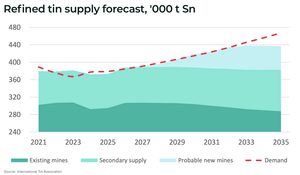
A disruption at a large mine, producing region or smelter can therefore have an outsized effect on availability, inventories and prices.
Supply risks include:
- conflict and political instability
- export restrictions
- mining licence changes
- smelter maintenance
- declining ore grades
- informal or illegal mining
- weather and flooding
- electricity constraints
- shipping disruptions
- limited new mine investment
Tin’s use in countless electronic connections means disruptions can affect industries with much greater economic value than the tin market itself.
Myanmar and Indonesian supply
Myanmar has become an important source of tin concentrate for Chinese smelters. Production can be affected by conflict, local policy, mine suspensions and border controls.
Indonesia’s tin industry includes onshore and offshore mining. Government policy has sought to regulate production, exports and downstream processing.
Operational enforcement, mining licences and illegal activity can influence Indonesian output.
These conditions can create volatility without changing the underlying long-term geological resource.
Responsible sourcing and conflict minerals
Tin is one of the four minerals commonly described as “3TG”: tin, tantalum, tungsten and gold.
The term arose from concerns that mineral extraction and trade in conflict-affected and high-risk areas could finance armed groups or contribute to human-rights abuses.
Tin supply chains can face risks involving:
- forced or child labour
- unsafe artisanal mining
- corruption and smuggling
- financing of armed groups
- illegal taxation
- weak environmental controls
- unclear chain of custody
Responsible sourcing does not necessarily mean avoiding entire countries or artisanal mining communities. Blanket disengagement can remove legitimate livelihoods without addressing underlying problems.
Risk-based due diligence focuses on identifying mine origin, transport routes, traders, smelters and refiners, then addressing risks through monitoring, audits and supplier engagement.
Environmental considerations
Tin mining and processing can affect land, water and communities.
Potential issues include:
- deforestation
- river and coastal disturbance
- sedimentation
- mine waste and tailings
- habitat loss
- water pollution
- offshore seabed disturbance
- worker safety
- abandoned mine sites
Placer mining can alter river systems, while offshore operations can affect marine habitats and coastal livelihoods.
Hard-rock mines require waste-rock and tailings management. Smelting consumes energy and must control dust, slag and air emissions.
Environmental performance varies significantly between large industrial operations, small-scale mines and illegal production.
Tin recycling
Tin can be recovered from manufacturing scrap, solder, tinplate, alloys and electronic waste.
Potential sources include:
- solder dross
- circuit-board manufacturing scrap
- end-of-life electronics
- tin-plated steel
- bronze and bearing alloys
- chemical-process residues
Recycling is easiest where tin is concentrated in clean manufacturing scrap. Recovery from finished electronics can be more difficult because tin is dispersed across thousands of small solder joints.
Some recycled tin returns as refined metal, while other material is recycled within alloys without being separated into pure tin.
Secondary supply can reduce reliance on mining, but growing electronics demand still requires primary production.
Substitution and material efficiency
Tin can be reduced or replaced in selected applications.
Possible substitutes include:
- conductive adhesives or alternative joining technologies
- aluminium or plastic packaging instead of tinplate
- alternative catalysts and stabilisers
- copper, aluminium or other battery materials
- different transparent conductive coatings
Substitution often involves trade-offs in reliability, cost, processing temperature, corrosion resistance or regulatory acceptance.
Electronics manufacturers also reduce tin use by shrinking solder joints and improving deposition accuracy. However, the increasing number of electronic components can offset this material efficiency.
What drives tin demand?
The principal sources of tin demand include:
- Solder: used throughout electronics, vehicles, energy systems and industrial equipment
- Tinplate: used to protect steel packaging and containers
- Chemicals: used in catalysts, plastics, coatings, ceramics and manufacturing
- Alloys: used in bronze, pewter, bearings and specialist materials
- Solar energy: used in solder, interconnect coatings and selected conductive layers
- Glass: used in the float-glass process and specialist coatings
- Batteries: used in lead-acid alloys and researched for advanced anodes
- Electronics: used in transparent conductors, sensors and semiconductor packaging
What affects tin prices?
Tin prices are influenced by:
- electronics manufacturing
- Chinese demand
- production in Indonesia and Myanmar
- smelter output
- exchange inventories
- mine disruptions
- export and licensing policy
- recycling
- currency movements
- shipping costs
- speculative positioning
Because the tin market is small, changes in visible inventories or a single major supply source can produce significant price movements.
There is no guarantee that long-term demand growth will lead to higher prices. High prices can encourage recycling, substitution, efficiency and new mine investment.
What to watch in the tin market
Tin sits at the intersection of electronics, industrial production and responsible sourcing.
Key trends to watch include:
- Electronics production: solder remains the foundation of tin demand
- Electric vehicles: increasing electronic content can support solder consumption
- AI and data centres: server, power and networking equipment require soldered components
- Solar manufacturing: solder and conductive coatings provide exposure to photovoltaic growth
- Miniaturisation: smaller joints reduce tin use per component
- Myanmar supply: conflict, policy and mine suspensions can affect concentrate availability
- Indonesian regulation: export, licensing and enforcement decisions can influence refined supply
- New mine development: project pipelines determine whether primary supply can diversify
- Responsible sourcing: traceability and smelter due diligence affect market access
- Recycling: improved electronic-waste recovery can expand secondary supply
- Emerging batteries: tin-based anodes could create demand if technical challenges are overcome
The strategic takeaway
Tin is an old metal with a thoroughly modern role.
Its historical importance came from bronze and protective coatings. Its present strategic value comes mainly from solder—the metallic connections that allow electronic and electrical systems to function.
For investors, manufacturers and policymakers, the central question is whether responsibly sourced mine production, smelting and recycling can keep pace with increasingly electronic vehicles, infrastructure and consumer products.
———————–
What is tin used for?
Tin is used primarily in solder for electronics. It is also used in tinplate, chemicals, bronze, pewter, glass manufacturing, solar equipment, lead-acid batteries and specialist electronic materials.
Why is tin used in solder?
Tin has a low melting point, bonds effectively with other metals and conducts electricity. These properties allow electronic components to be joined without melting or damaging them.
Is tin used in solar panels?
Yes. Tin is used in solder and coated interconnection ribbons in many solar modules. Tin oxide is also used in selected transparent conductive coatings, although not every solar technology uses the same materials.
Is tin used in batteries?
Tin is used in some lead-acid battery alloys. Tin-based anodes are also being researched for lithium-ion, sodium-ion and other advanced batteries, but these are not yet a major source of demand.
What is cassiterite?
Cassiterite is tin oxide and the principal ore mineral used to produce tin. It occurs in hard-rock and placer deposits.
Is tin a conflict mineral?
Tin is one of the 3TG minerals covered by prominent conflict-mineral due-diligence frameworks. This does not mean all tin is conflict-linked; it means companies may need to assess and manage risks in relevant supply chains.
Can tin be recycled?
Yes. Tin can be recovered from manufacturing scrap, solder, tinplate, alloys and electronic waste. Recovery is most economical when the metal is present in concentrated, well-sorted material.
—
Reference sources for annual review: USGS tin statistics, USGS tin overview, OECD responsible-minerals guidance and the OECD analysis of critical-mineral traceability.