What are natural gas and LNG?
Natural gas is a fossil fuel composed primarily of methane, with smaller amounts of ethane, propane, carbon dioxide, nitrogen and other gases. It forms over millions of years as buried organic material is transformed by heat and pressure beneath the Earth’s surface.
Raw natural gas is extracted from underground reservoirs, including conventional fields, shale formations and deposits associated with oil production. It is then processed to remove water, impurities and valuable natural gas liquids before entering pipelines or being converted into liquefied natural gas.
Liquefied natural gas, or LNG, is not a different fuel. It is natural gas cooled to approximately −162°C (−260°F), turning it into a liquid and reducing its volume by about 600 times. This makes natural gas practical to store and transport by ship when pipelines are unavailable or uneconomic. At its destination, LNG is warmed, returned to a gaseous state and delivered through pipelines. U.S. Energy Information Administration
Natural gas is colourless and naturally odourless. An odorant is generally added before it reaches homes and businesses so leaks can be detected.
Why natural gas and LNG matter: strategic applications
Electricity generation and grid flexibility
Natural gas is widely used to generate electricity in combined-cycle and open-cycle power plants.
- Flexible generation: some gas-fired plants can increase or reduce output relatively quickly, helping electricity systems respond to changes in demand and fluctuations in wind and solar generation.
- Reliable capacity: gas plants can provide dispatchable power during periods of low renewable output, extreme temperatures or unexpected outages.
- Combined heat and power: industrial sites, hospitals and district energy systems can use natural gas to produce electricity and useful heat from the same fuel.
The role of gas in power systems varies by region. Batteries, hydropower, interconnectors, demand response and other flexible resources increasingly compete with gas-fired generation.
Heating and buildings
Natural gas is used for space heating, water heating and cooking in homes and commercial buildings. It is particularly important in regions with established pipeline networks and high seasonal heating demand.
Its long-term role in buildings is less certain as heat pumps, energy-efficiency improvements and building-electrification policies expand.
Industrial energy
Industries use natural gas to produce steam and high-temperature heat for manufacturing steel, glass, cement, ceramics, paper, food and other products.
Gas is attractive to industrial users because it can provide controllable heat at a range of temperatures. Some industrial processes are difficult or expensive to electrify, although electric heating, hydrogen, bioenergy and efficiency improvements may reduce gas consumption over time.
Chemicals, fertilisers and hydrogen
Natural gas is both a fuel and an industrial feedstock.
- Ammonia and fertiliser: methane is a major feedstock for hydrogen used to manufacture ammonia and nitrogen fertilisers.
- Methanol and chemicals: natural gas supports the production of methanol, plastics and numerous chemical intermediates.
- Hydrogen: most conventional hydrogen is produced from natural gas. Carbon capture and storage can reduce some of the resulting emissions, although overall performance depends on capture rates, upstream methane emissions and permanent carbon storage.
Energy security and international trade
Pipeline gas connects producers and consumers through fixed infrastructure. LNG makes gas internationally tradable across oceans, allowing countries to access suppliers beyond neighbouring pipeline systems.
This flexibility can help replace disrupted supplies, meet seasonal demand and diversify sources. However, LNG also creates dependencies on liquefaction plants, import terminals, specialised vessels, shipping routes and global cargo availability.
How the natural gas supply chain works
Production
Natural gas is obtained through onshore or offshore drilling. It may be produced from dedicated gas reservoirs, alongside crude oil or from shale and other low-permeability formations.
Hydraulic fracturing is used in some formations to release gas trapped within rock. Its use and environmental impact depend on local geology, operating practices and regulation.
Processing
Gas emerging from a well can contain water vapour, oil, hydrogen sulphide, carbon dioxide, nitrogen and hydrocarbon liquids such as ethane, propane and butane.
Processing facilities remove these components to produce dry, pipeline-quality gas. Separated natural gas liquids may be sold as fuels or petrochemical feedstocks. U.S. Energy Information Administration
Pipeline transportation and storage
High-pressure transmission pipelines carry processed gas over long distances. Local distribution networks then deliver it to homes, businesses, power stations and industrial facilities.
Underground storage facilities help balance seasonal consumption. Operators inject gas when demand is lower and withdraw it during winter peaks, extreme weather or supply interruptions.
Liquefaction and LNG shipping
Where pipelines cannot efficiently connect producers with customers, natural gas can enter the LNG supply chain:
- Pipeline-quality gas arrives at an export terminal.
- Additional contaminants are removed.
- The gas is cooled to approximately −162°C.
- LNG is stored in insulated cryogenic tanks.
- Specialised LNG carriers transport it to an import terminal.
- The LNG is regasified and delivered into a pipeline network.
Floating storage and regasification units can provide an alternative to permanent onshore import terminals and may be deployed more quickly in some markets.
Natural gas and LNG supply-and-demand dynamics
Demand drivers
Natural gas demand is shaped by several overlapping factors:
- weather: cold winters increase heating demand, while hot summers can raise gas-fired electricity generation for air conditioning;
- electricity markets: renewable output, coal and nuclear availability, hydropower conditions and power prices affect gas consumption;
- industrial activity: manufacturing output and fertiliser production influence industrial gas demand;
- infrastructure: pipeline connections, storage capacity and LNG import terminals determine where gas can be delivered;
- energy policy: carbon pricing, air-quality rules, energy-security measures and electrification policies can either constrain or support demand.
Supply landscape
Natural gas is produced across the Middle East, North America, Eurasia, Asia-Pacific, Africa and Europe. Major LNG supply regions include the United States, Qatar and Australia, alongside established and emerging exporters elsewhere.
Because pipelines connect fixed locations, pipeline gas markets are often regional. LNG links those regional systems by allowing cargoes to move toward markets offering the strongest demand and prices.
Pricing and volatility
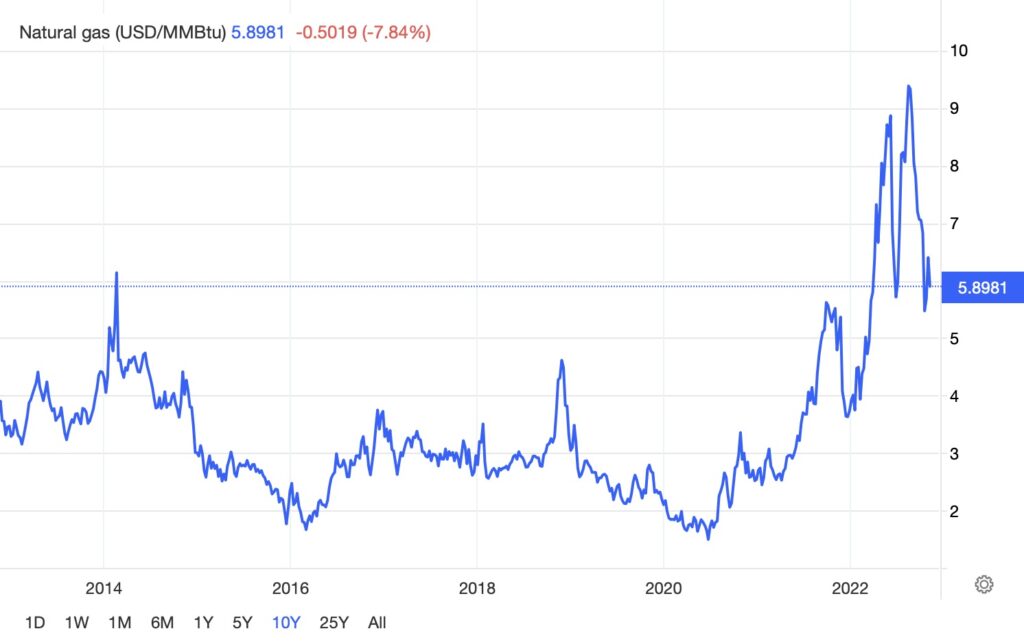
Unlike oil, natural gas does not have a single global price. Major regional benchmarks include Henry Hub in North America, the Title Transfer Facility in Europe and the Japan Korea Marker in Asia.
Prices can differ substantially because of transportation constraints, liquefaction costs, shipping expenses and regional supply conditions. LNG may be sold through long-term contracts, spot transactions or agreements linked to oil or gas benchmarks.
Natural gas and LNG prices are particularly sensitive to:
- temperature and seasonal demand;
- storage levels;
- production or pipeline outages;
- LNG terminal availability;
- shipping costs and maritime bottlenecks;
- geopolitical disruption;
- competing demand for flexible LNG cargoes;
- changes in renewable, nuclear and hydropower generation.
Environmental considerations
Carbon dioxide emissions
Burning natural gas produces carbon dioxide. Its direct carbon emissions per unit of energy are generally lower than those of coal, and efficient gas-fired power stations usually emit less carbon dioxide per unit of electricity than conventional coal plants.
Natural gas is nevertheless a fossil fuel and cannot be considered carbon-free. Its climate impact must be assessed across the full supply chain rather than at combustion alone.
Methane emissions
Methane can escape during production, processing, storage and transportation through leaks, venting, incomplete flaring and equipment failures. It is a powerful greenhouse gas, making the measurement and reduction of these emissions central to the climate performance of natural gas.
Leak detection, equipment replacement, vapour-recovery systems and restrictions on routine venting and flaring can reduce emissions. Actual performance varies considerably among assets and producing regions. International Energy Agency
LNG lifecycle emissions
LNG requires energy for liquefaction, cryogenic storage, shipping and regasification. These stages add emissions beyond those associated with pipeline gas. Methane can also be released along the LNG value chain.
As a result, the lifecycle emissions of LNG depend on:
- the source and methane intensity of the gas;
- the energy used by the liquefaction facility;
- shipping distance and vessel efficiency;
- boil-off gas management;
- regasification technology;
- the efficiency and purpose of final consumption.
Replacing coal with efficiently produced and transported gas can reduce emissions in some circumstances. The benefit becomes smaller when methane losses are high, LNG transport is energy-intensive or gas infrastructure delays lower-carbon alternatives.
Local environmental and safety issues
Natural gas development can affect land, water and nearby communities. Potential concerns include water consumption, wastewater management, air pollution, habitat disturbance and induced seismic activity associated with some injection practices.
LNG is non-toxic and does not behave like an oil spill, but it must be kept at cryogenic temperatures. If released, it rapidly evaporates; the resulting gas can ignite when mixed with air in the appropriate concentration. LNG facilities and carriers therefore use specialised containment, monitoring and emergency systems.
Market trends shaping the future of natural gas and LNG
Expansion of global LNG trade
New liquefaction and import capacity is connecting previously separate gas markets. This can improve supply flexibility, but it also means disruptions in one region can affect prices and cargo availability elsewhere.
Growth of flexible contracting
Long-term contracts continue to support the financing of LNG infrastructure, while spot and shorter-term trading offer buyers greater flexibility. Portfolio suppliers and trading companies increasingly redirect cargoes among regions as market conditions change.
Methane regulation and emissions transparency
Governments, investors and buyers are placing greater emphasis on measured methane emissions. Satellite monitoring, certification schemes and stronger reporting requirements may increasingly differentiate lower-emissions gas from higher-emissions supply.
Carbon capture and lower-carbon gases
Carbon capture, biomethane, renewable natural gas and low-emissions hydrogen could use parts of the existing gas system. Their scalability, cost and climate value depend on production methods, feedstocks, methane management and supporting policy.
Competition from electrification and renewables
Renewable generation, batteries, heat pumps and energy efficiency are reducing the need for natural gas in some markets. Elsewhere, gas and LNG may continue to support industrial development, replace more carbon-intensive fuels or provide electricity-system flexibility.
This creates an uncertain long-term outlook: natural gas could retain strategic value in specific sectors even as overall fossil-fuel use declines under more ambitious climate pathways.
What to watch in the natural gas and LNG market
Important indicators include:
- LNG liquefaction and regasification capacity;
- global storage levels;
- weather and seasonal forecasts;
- pipeline and shipping disruptions;
- methane-emissions standards;
- carbon prices and climate policy;
- renewable generation and battery deployment;
- industrial and fertiliser demand;
- long-term LNG contracting activity;
- progress in carbon capture, biomethane and hydrogen.
Strategic outlook
Natural gas and LNG occupy a complex position in the global energy system. They provide dispatchable electricity, industrial heat, building energy and essential chemical feedstocks, while LNG connects producers and consumers across international markets.
They can contribute to energy security and, in certain applications, reduce emissions when replacing more carbon-intensive fuels. However, natural gas still produces carbon dioxide, and methane leakage can materially weaken its climate advantage. LNG adds further energy use and emissions through liquefaction and transportation.
The sector’s future will therefore depend on more than demand growth alone. Methane control, infrastructure costs, energy security, electrification and climate policy will determine where natural gas remains competitive—and how LNG fits into an increasingly diverse energy system.