
- Chinese state and state-directed institutions committed about US$98 billion to overseas mineral projects between 2000-2023
- IEA estimates mining will require about US$500 billion of new capital investment through 2040 under current policy settings
- Western public-finance commitments more than quadrupled from 2023-2025, reaching US$65 billion, but financing remains divided
The West needs about US$500 billion in new mining investment by 2040 to meet mineral demand under current policy settings — but the public institutions expected to unlock that capital remain fragmented, risk-averse and poorly coordinated, according to a new report.
China, meanwhile, has already deployed more than US$98 billion in state-backed financing for overseas mineral extraction and processing projects across 47 countries.
The figures frame the central warning in SAFE’s new Critical Moves report that the West’s critical minerals crisis is not necessarily a shortage of resources, but an inability to finance mines and processing plants at the speed and scale required to compete with Beijing.
In particular, the problem is deploying it.
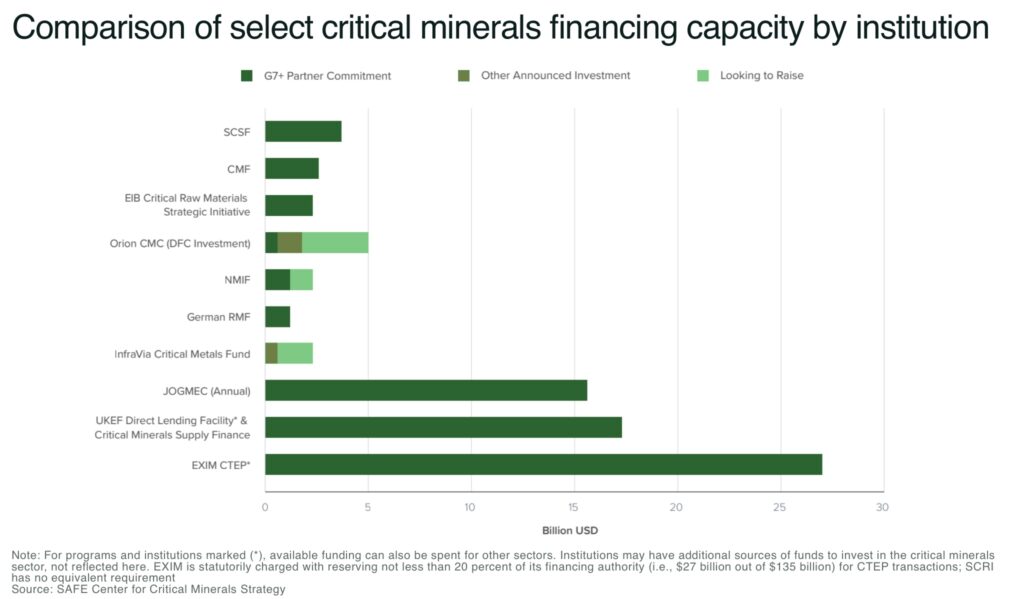
The International Energy Agency estimates that around US$500 billion of new mining capital will be needed through 2040. Western public-finance commitments are rising — more than quadrupling between 2023-2025 to US$65 billion — but, SAFE warns, are not translating efficiently into projects.
“Governments have spent the last several years agreeing that critical minerals dependency is a strategic threat, they have allocated significant sums of money to address the problem. But deploying those funds into actual mines and processing facilities is another matter” — Abigail Hunter, Executive Director of SAFE’s Center for Critical Minerals Strategy.
SAFE identifies three persistent barriers:
- mandates that do not match governments’ mineral-security ambitions
- a gap between the powers institutions hold and the risks they will accept in practice
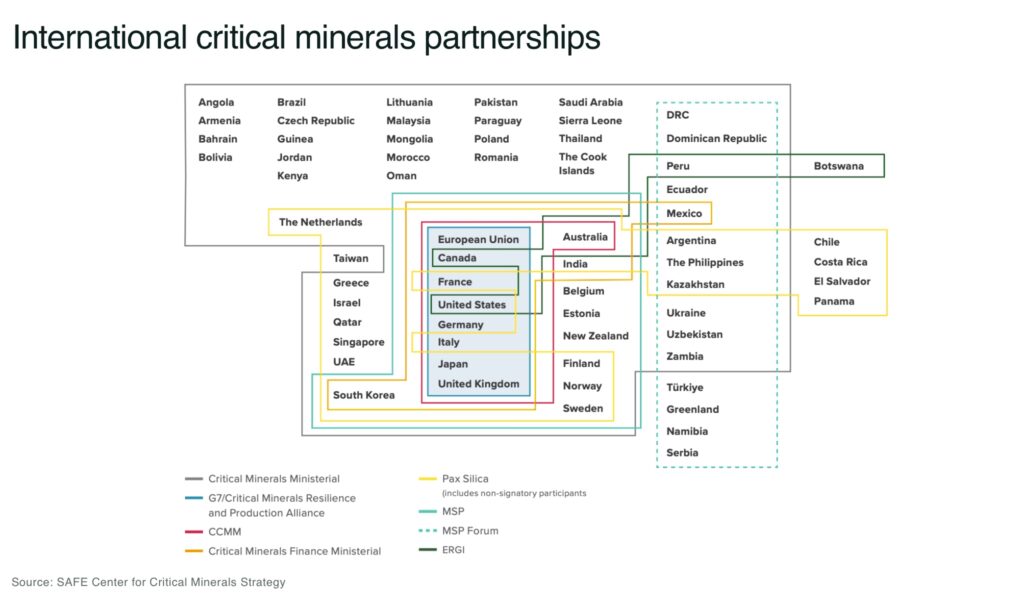
- and poor coordination among government lenders, developers and private investors
Projects can spend months or years repeating due diligence and compliance reviews for different institutions; export requirements can exclude projects that do not directly benefit domestic suppliers; development mandates can limit financing in wealthier mineral-producing countries; few institutions will accept exploration or unproven processing risk.
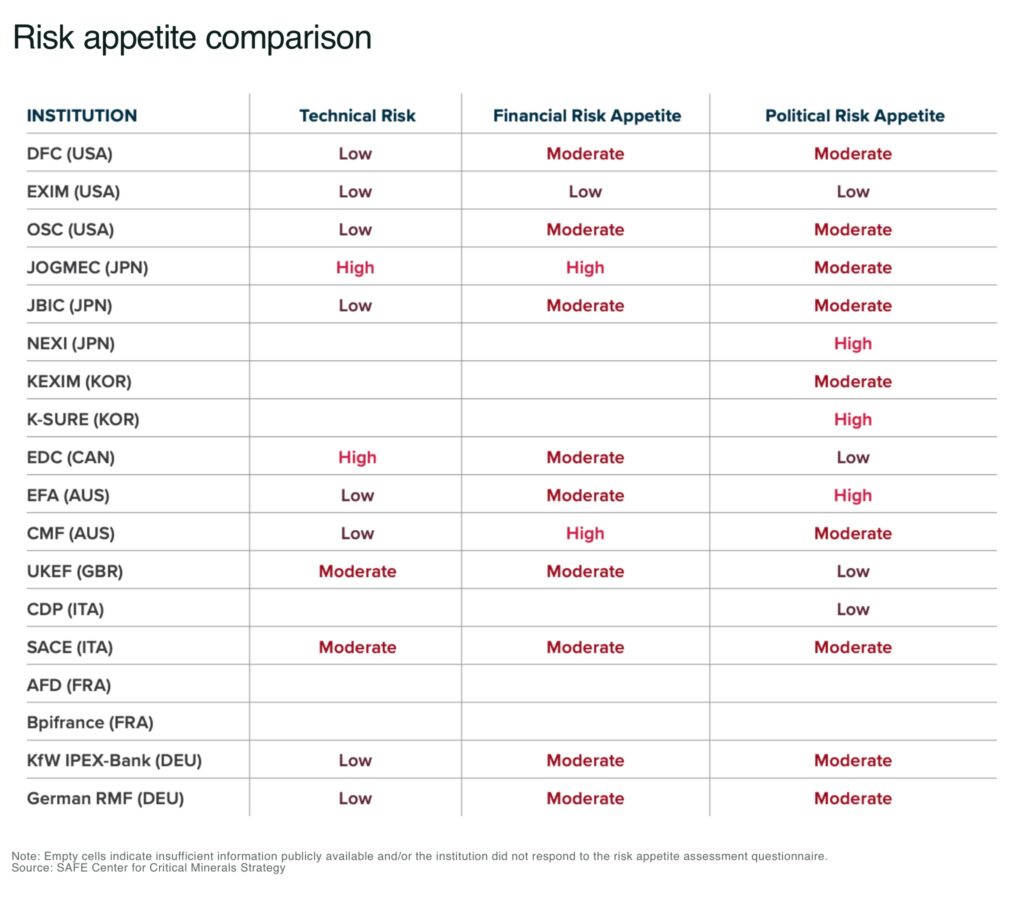
The result is a bias toward mature, lower-risk assets, even though early-stage mines and new refining technologies are where the next supply pipeline must begin. This matters because critical minerals projects can require 20 to 30 years of development and operating certainty. A government programme that changes with the political cycle cannot reliably support an asset expected to operate for decades.
What successful mineral and mining financing looks like
SAFE’s case studies show that coordinated public capital can work when financing, offtake and project risks are addressed together. For example:
- the US$4.7 billion Quebrada Blanca 2 copper expansion in Chile secured a US$2.5 billion project-finance package involving institutions from Japan, Canada, South Korea and Germany. The structure distributed financial exposure while securing copper supply for several allied economies
- South Korea’s Sangdong tungsten mine used a different model. A US$75.1 million senior-debt package was supported by a 15-year offtake agreement and a price floor, reducing the commodity-price risk that had helped close the mine previously. Sangdong is now central to efforts to rebuild tungsten supply outside China
- in Australia, Japan, the US and Australia backed a proposed gallium-recovery facility at Alcoa’s Wagerup alumina refinery. The plant is designed for 100 tonnes a year (equal to about 10% of global demand) by recovering gallium as a byproduct rather than financing a standalone mine
In small strategic markets such as gallium, germanium and scandium, a relatively modest coordinated investment can have an outsized effect on supply security.
Can the West turn private capital into an advantage?
SAFE argues Western economies should not try to reproduce China’s state-directed financing model, that instead their advantage is their capacity to multiply limited public funding with much larger pools of private capital that requires public institutions to take risks selectively, offer reliable policy support and coordinate across borders.
Government loans can reduce construction risk, but projects still need bankable buyers, price protection and confidence that procurement policy will survive long enough to repay the capital.
The strategic point is simple: the West’s mineral problem is becoming an execution test. Governments have created the alliances and allocated the money. The next winners will be the jurisdictions and companies able to assemble public finance, private capital and long-term demand into projects that actually reach production.
Q&A
Why are critical minerals projects difficult to finance?
They require large upfront investment, long development periods and exposure to volatile or highly concentrated markets. SAFE says technical, financial, regulatory and geopolitical risks often exceed what private lenders will accept without government support.
How much has China financed overseas mineral projects?
Chinese official-sector institutions committed more than US$98 billion across 47 countries between 2000 and 2023.
How much critical minerals investment is needed?
The IEA estimates around US$500 billion in new mining capital will be required through 2040 under current policy settings.
What does SAFE recommend?
SAFE recommends coordinated international financing, shared due-diligence processes, secure project-data platforms, stronger local presence in resource-rich countries and greater support for early-stage projects and emerging processing technologies.