
- China halted helium exports on July 10, with no fixed end date
- China had become a re-export hub for Russian helium, including cargoes reaching Europe
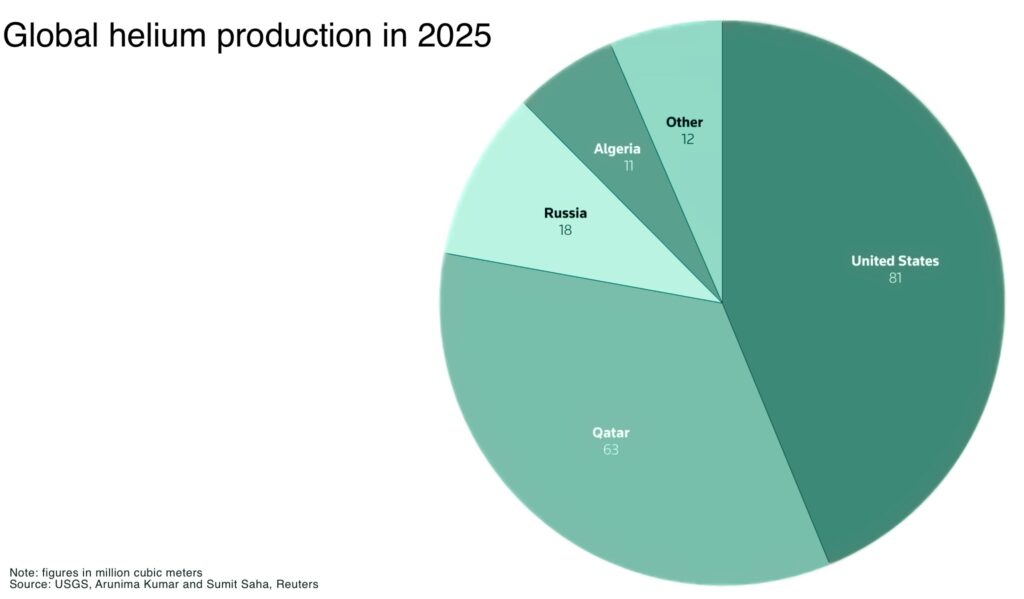
- the ban follows Russian export controls and disruption to Qatar, which supplied roughly one-third of global helium
- semiconductor, medical and aerospace buyers face higher prices and tighter allocations
China has imposed a ban on helium exports, adding another layer of state control to a market already strained by war, sanctions and highly concentrated production — with helium spot prices have roughly doubled since the Middle East conflict began.
The July 10 order from China’s Ministry of Commerce and customs authority gave no expiry date, with Beijing stating the controls will be adjusted as domestic and international supply conditions change.
China depended on imports for 84.4% of its helium supply in 2025, and is seeking to protect its domestic semiconductor, artificial intelligence and medical industries from a supply shock.
But the helium ban’s impact extends beyond China.
China is a conduit, not just a consumer
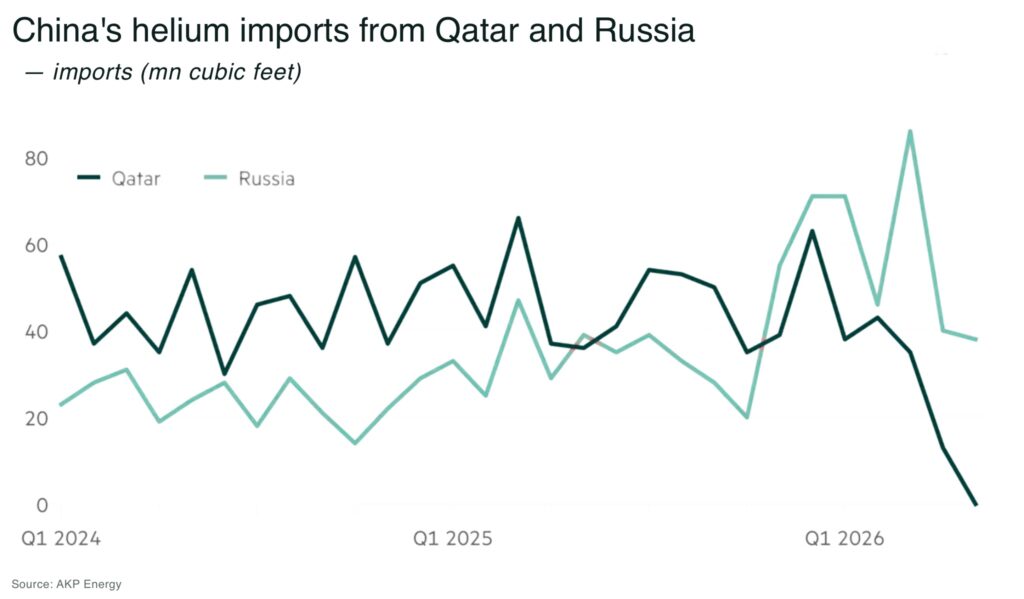
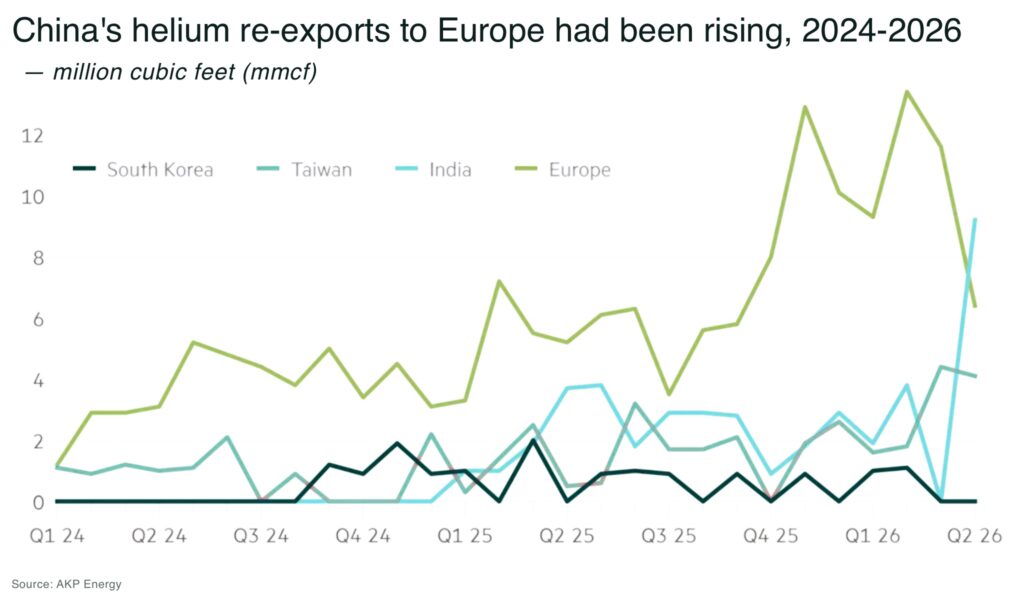
China may not be a major primary helium producer, but its importance comes from its increasing role as a trading and redistribution hub for Russian helium supply.
Russia secured more than half of China’s helium import market in 2025, with some of those lower-cost volumes subsequently re-exported across Asia and into Europe — especially important after the EU banned direct imports of Russian helium in 2024. That route is not closed.
Global helium bans and disruption
The China helium ban is the latest in a sequence of shocks to the industry:
- Qatar, responsible for close to one-third of global production, lost significant output after attacks and disruption at Ras Laffan. A partial restart has remained fragile and well below normal operating levels, especially as conflict reignites across the region
- Russia, the world’s third-largest producer, introduced controls in April requiring government approval for exports outside the Eurasian Economic Union, with the restrictions expected to run through the end of 2027
- in July 2026, China stopped exports entirely, for an unspecified period
The physical helium supply chain makes the shortage harder to solve, as it is lighter than air and very difficult to “trap” for transportation. Liquid helium must travel in scarce cryogenic containers and gradually evaporates during transport.
China’s ban does not remove anything close to Qatar’s share of primary production. Its significance is that it traps supply inside one of the world’s largest consuming markets while cutting off a redistribution channel for Russian helium.
Semiconductors and hospitals
Semiconductor manufacturers are among the most exposed to the series of bans: helium is used in wafer cooling, plasma etching, deposition, lithography support and leak detection, with few viable substitutes in the most demanding processes.
Industry executives were already reporting production and delivery impacts in March 2026.
A prolonged shortage would eventually feed into longer chip lead times, higher manufacturing costs and greater competition between semiconductor plants, MRI operators, aerospace groups, fibre-optic manufacturers and defence users.
Global helium demand is forecast to rise from 176 million cubic metres to 322 million cubic metres by 2035, driven principally by semiconductors, AI infrastructure and data centres.

The United States as the world’s largest helium producer
As we reported in our recent analysis, the global helium crisis puts the US in control of the semiconductor supply chain.
The produced about 81 million cubic metres of helium in 2025, more than 40% of estimated global output, and has the scale to redirect volumes toward premium markets.
China’s move to restrict helium exports is the clearest sign yet that this once obscure gas has become a strategic choke point. For Europe and import‑dependent Asian manufacturers, the era of abundant, freely traded helium is rapidly slipping out of reach.