
The price of liquefied natural gas (LNG) may not (yet) be screaming crisis, but the physical market is at risk of its first contraction in 10 years:
- no LNG carrier transits through the Strait of Hormuz since July 11, according to Kpler data cited by Dow Jones. A Qatari LNG tanker hit in Strait of Hormuz on July 7
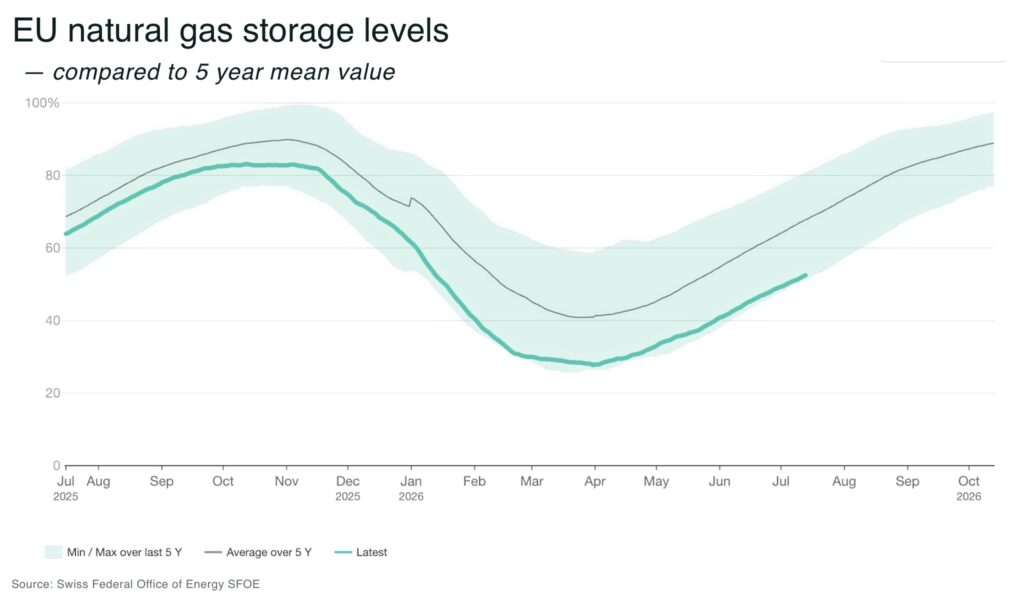
- EU gas storage about 52% full with European gas prices up more than 70% since the Middle East war began
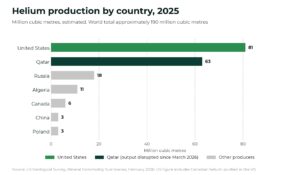
- QatarEnergy force majeure now covers 21 LNG cargoes, or about 2.7 bcm of gas, through early September, with Qatar’s Ras Laffan (the world’s largest LNG export facility) reportedly still largely not operating
- more than 80% of LNG shipped through Strait fo Hormuz in 2024 went to Asia, forcing buyers to lean on contracts, fuel-switching and lower spot demand
- in Texas, Freeport LNG — a 16.5 mtpa export terminal — saw feedgas deliveries fall to about 1 Bcf/d as major maintenance began, suggesting two of its three trains were offline
- US LNG cargoes may be redirected from Europe to Asia through the Panama Canal if Middle East disruption persists
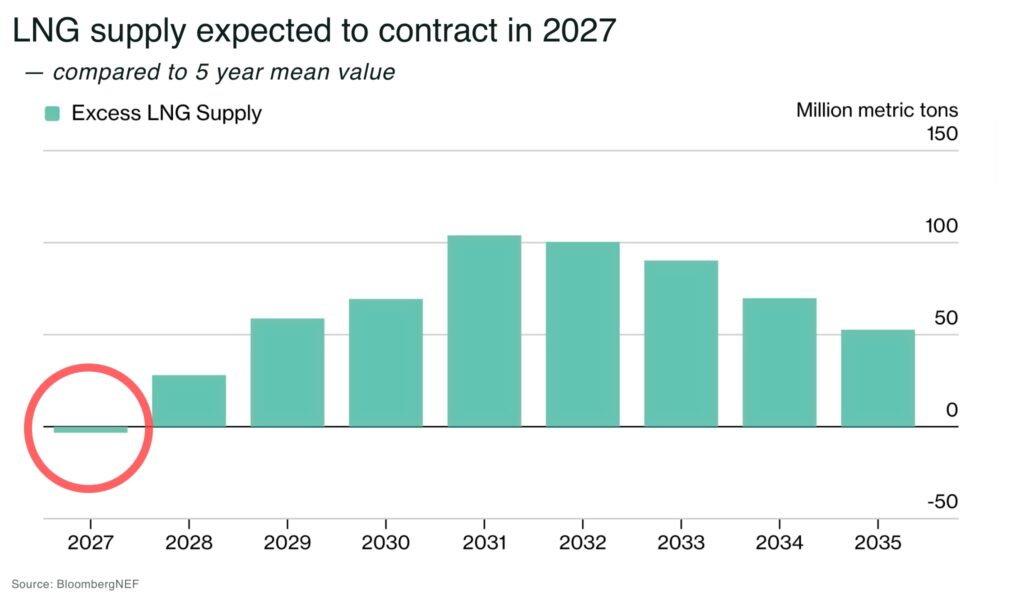
That is not a normal market lull, but a cargo-availability squeeze.
The Middle East war is set to push back an expected LNG “glut” to 2028, with the current market driven by lost access and damaged infrastructure: before the conflict, the Strait of Hormuz carried approx one-fifth of global LNG flows.
“Global supply could see rare annual contraction if [Middle East] disruption persists” — Shell LNG Outlook 2026
The deterioration across the Middle East in July makes that warning harder to treat as a temporary shock.
The LNG market has four clocks now
| Timing | Market force |
| July 2026 | No LNG carrier transits through Hormuz since July 11; QatarEnergy force majeure now covers 21 cargoes, or about 2.7 bcm |
| Winter 2026-27 | Europe enters refill season with gas storage about 52% full |
| January 2027 | EU bans Russian LNG under long-term contracts from Jan. 1, 2027 |
| 2028-2030 | BloombergNEF says the expected glut may be pushed back by a year, while Shell expects 180 mtpa of new supply by 2030 |
Hormuz and Ras Laffan are now two different bottlenecks
The Strait of Hormuz is the immediate bottleneck.
Hormuz is the only maritime export route for Qatari LNG cargoes moving beyond the Gulf and a key route for UAE LNG shipments. LNG traffic had started to recover in June, with 40 carrier transits, after eight in May, four in April and none in March but, in July, the recovery stopped.
And the second bottleneck is Ras Laffan.
QatarEnergy’s facilities at Ras Laffan, the world’s biggest LNG export hub, were hit by Iranian attacks that destroyed an estimated 17% of Qatar’s LNG export capacity, with repairs expected to take up to five years.
This matters because reopening the Strait does not automatically restore the cargoes.
At the contract level, the disruption is already visible. QatarEnergy’s force majeure on deliveries to Italy’s Edison now covers 21 LNG cargoes and about 2.7 bcm of natural gas through early September. Edison has replaced 14 cargoes, but that still leaves the market short of normal Qatari flow.
The market therefore has two recovery tests:
- ships must be able to move through Hormuz safely
- damaged LNG export infrastructure must return to normal service
The risk is therefore not just missing cargoes, but that the cargo system itself becomes unreliable.
Europe’s Russian LNG paradox v Asia demand
Despite efforts by Europe to replace Russian gas after teh invasion of Ukraine, in 2026, it is still buying record volumes from Russia’s flagship LNG plant: in the first half of 2026, EU countries imported a record 9.89 million tonnes of LNG from Russia’s Yamal project, 18% more than the same period in 2025.
However, despite the geopolitical/diplomatic contradiction, Europe’s gas storage sites are only about 52% full in July 2026, while European gas prices have risen more than 70% since the Middle East war began.
And in January 2027, less than six months away, the EU will ban all Russian gas imports, including LNG.
Europe previously replaced lost Russian pipeline gas with American LNG, so that by 2025, the US supplied about 56.6% of EU LNG imports, or roughly 60 million tonnes.
But, with the crisis in the Middle East, Asia is back in the market (more than 80% of LNG shipped through Hormuz in 2024 went to Asia)
In June 2026, Europe bought less than half of all US LNG exports, the lowest share in two years, as Asian buyers paid nearly $4 more per mmBtu.
Kpler estimates Asian LNG imports will hit 23.05 million tonnes in July, a six-month high and the fourth monthly increase in a row. China’s July LNG imports are estimated at 5.62 million tonnes, 55% above April. Japan’s US LNG imports are expected to reach 940,000 tonnes, nearly 15 times February levels. South Korea is also pulling more American supply, with US LNG arrivals expected at 870,000 tonnes in July, compared with just 13,000 tonnes in February.
Across Asia, US LNG imports are expected to reach a record 4.23 million tonnes in July. There are even reports that US LNG cargoes could be redirected from Europe to Asia via the Panama Canal, where shorter routes can cut voyages by 3-15 days.
The result is a three-way squeeze:
- Europe needs to rebuild storage before winter
- replace Russian LNG before the 2027 ban
- and compete with utilities in Asia for flexible US cargoes
If Asian spot prices keep clearing above Europe’s benchmark, cargoes will keep moving east. If Europe bids them back, it imports the price shock instead.
North America is the swing supplier (and another bottleneck)
North America is supposed to be the release valve for the market as two other major suppliers go down.
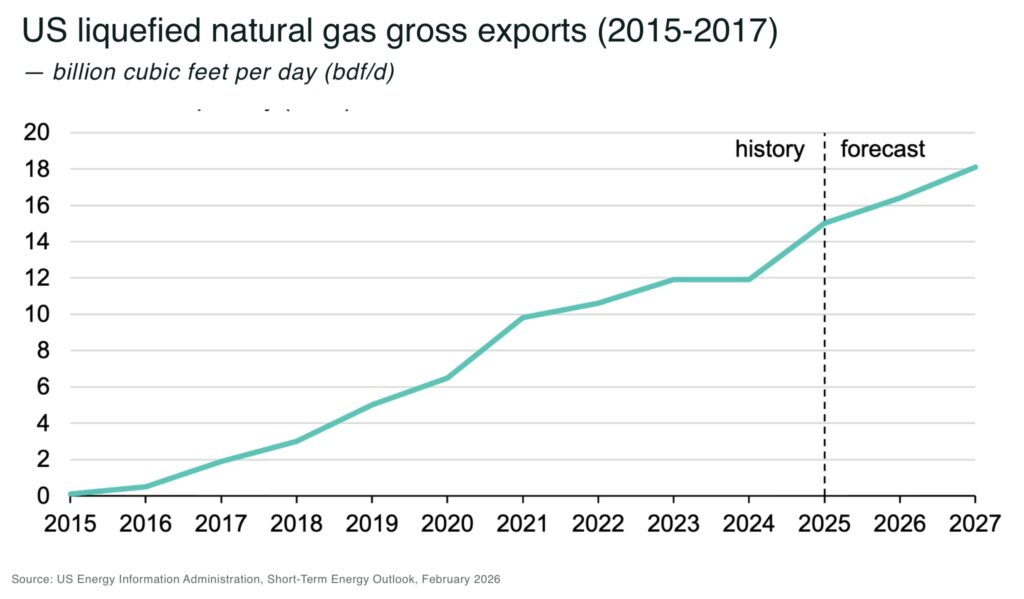
For example, Shell says new North American liquefaction, better plant performance and slower Asian imports have helped offset reduced Middle East supply. The US Energy Information Administration expects US LNG exports to rise from 15.1 Bcf/d in 2025 to 17.4 Bcf/d in 2026 and 18.6 Bcf/d in 2027.
However, in the immediate-term, feedgas deliveries to Freeport LNG, the third largest LNG exporter in the US, are scheduled to fall to about 1 Bcf/d on July 10, down from about 2.5 Bcf/d during the first six days of July (suggesting two of its three trains are offline), as major maintenance begins.
For the US domestic market, lower LNG feedgas demand can push prices down (with Freeport laregly down, Henry Hubb futures traded around US$2.90/MMBtu on July 10) — but for Europe and Asia, it means fewer flexible Atlantic Basin cargoes.
And domestic demand across the USA for Natural Gas is also expected to tighten as well, rising slightly in 2026 and then increase 3% in 2027, in particular due to energy demand from data centers.
The US may be the world’s largest LNG exporter, but it cannot carry the market alone: with Qatari volumes constrained, Russian LNG heading for an EU ban, Freeport under maintenance and Asian demand rising, spare supply is getting stretched.
Can natural gas prices repeat the spike of 2022
The disruption is severe, but the price response also suggests a more resilient market than four years ago, when European gas prices soared by nearly 400% in the crisis that followed Russia’s invasion of Ukraine.
One of the reasons is contract coverage.
Long-term agreements still account for around two-thirds of total LNG trade. The average price paid by buyers in May was approximately US$11-12 per MMBtu, up from US$7-11 in January but below the spot-market headline.
Portfolio suppliers can redirect cargoes, optimise shipping and arbitrage the Atlantic and Pacific basins. Buyers with long-term supply have protection from the full spot spike. Importers that rely on tenders absorb the volatility.
The result is not a single LNG price but a widening gap between contracted security and marginal supply. That gap is why the 2022 scenario has not repeated — yet.
The market has absorbed one shock because buyers still have contracts, US exports are higher and some Asian demand was slower earlier in the year. Shell says new North American liquefaction, better plant performance and slower Asian imports helped offset reduced Middle East supply.
But, the risk in 2026, is that Europe may have to replace both Russian LNG and disrupted Gulf LNG at the same time, just as Asia also competes for supply.
If Europe enters winter with low storage, loses Russian LNG under the 2027 ban, and has to compete for replacement cargoes while Qatari volumes are constrained, the marginal LNG market becomes the pressure point again.
Conclusion
The LNG market is not short on long-term supply forecasts. Instead, it is short on safe, deliverable cargoes before winter. The price may not yet screaming crisis, but the cargo map is.
Winter is coming (faster than the price realises).