
Yttrium oxide prices outside China have risen x140 since Beijing imposed rare earth export controls in April 2025, while dysprosium and terbium oxide prices have climbed x4 to x5, according to Argus data cited by Reuters.
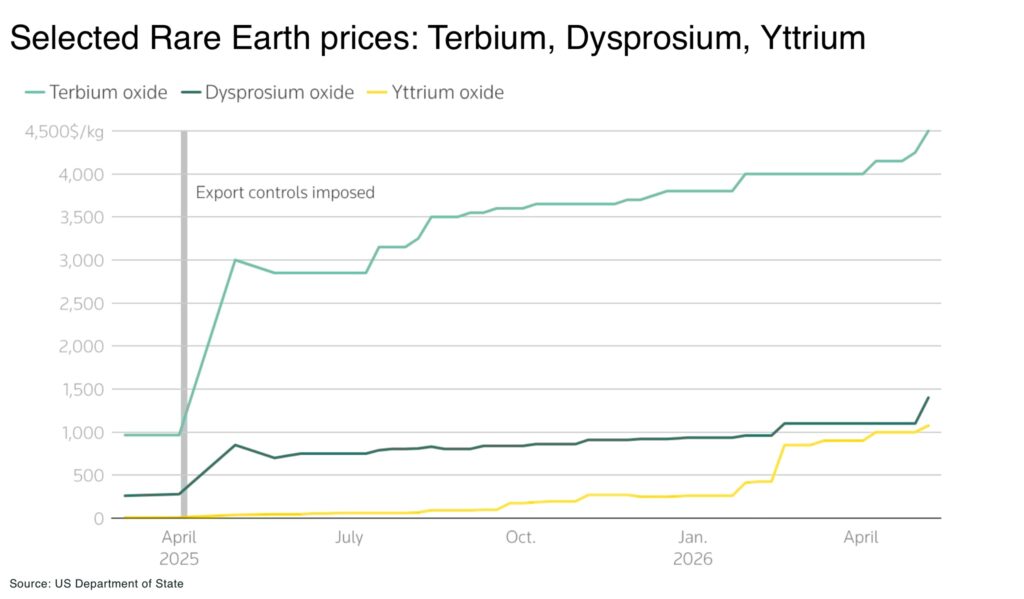
Yttrium oxide prices hit nearly US$1,100/kg by May 2026, up from single digits before the export restrictions. Dysprosium oxide rose to roughly US$1,450/kg, while terbium oxide reached about US$4,500/kg.
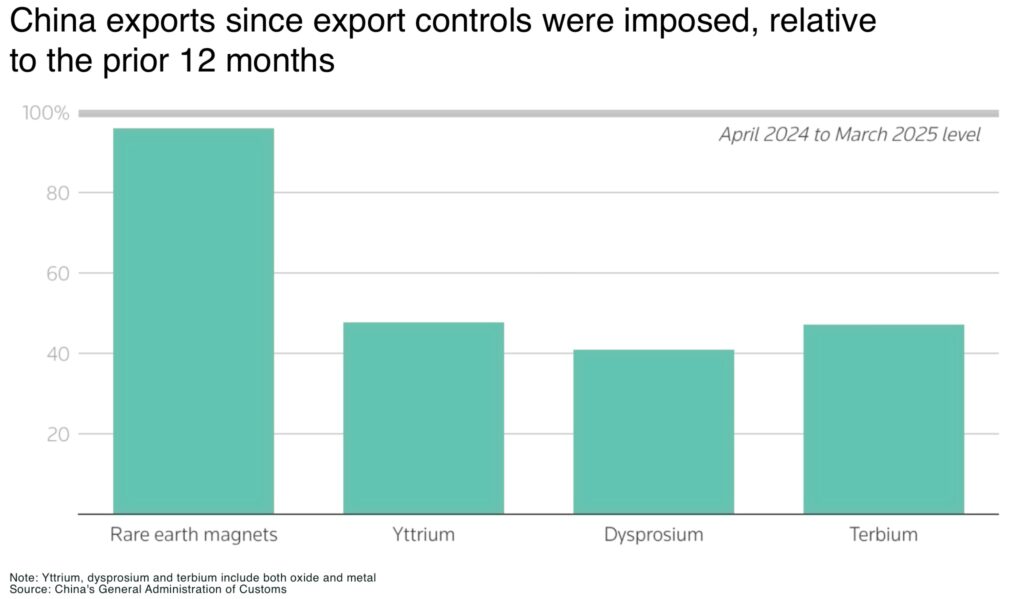
The price increases have followed a sharp fall in exports. Shipments of yttrium, dysprosium and terbium are still down about 50% since China introduced the controls, compared with the 12 months before April 2025, according to Chinese customs data.
China’s controls cover seven heavy rare earths: samarium, gadolinium, terbium, dysprosium, lutetium, scandium and yttrium. The materials are used in aerospace, defense, semiconductors and high-performance magnets.
Beijing rolled back a wider package of restrictions
China announced export restrictions on seven rare earth minerals in response to the recent tariffs by US President Trump in April 2025. The restrictions include:
- Samarium
- Gadolinium
- Terbium
- Dysprosium
- Lutetium
- Scandium
- Yttrium
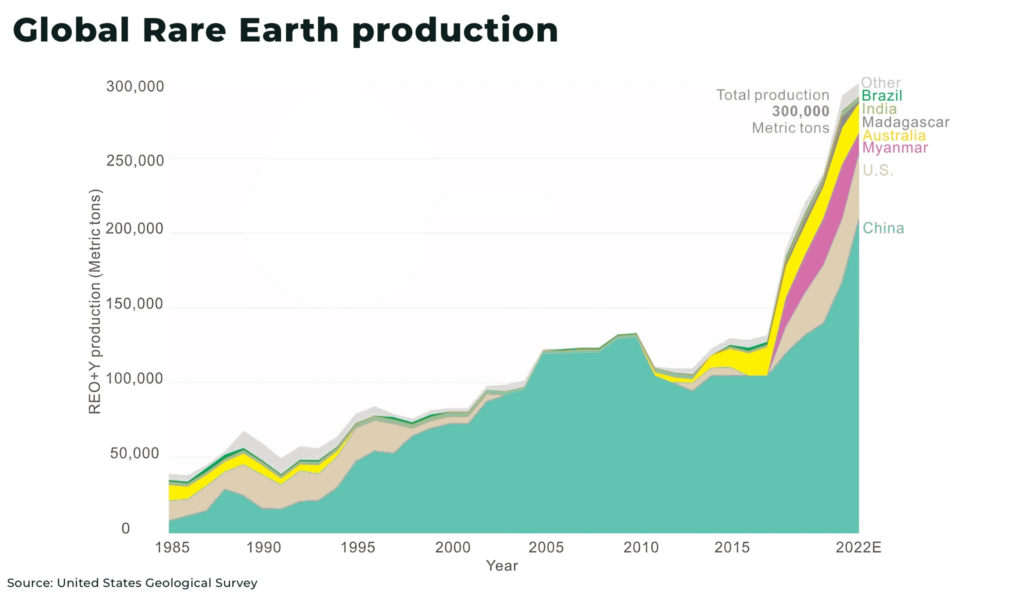
China dominates the rare earth market: it’s responsible for 70% of global production and nearly 90% of processing of global output, as well as 90% of rare earth element permanent magnet production.
The supply squeeze is also hitting US allies. Japan, the largest rare earth magnet producer outside China, received just 4% of the dysprosium it imported in the 12 months before the controls, and Germany received none.
Dysprosium is used to improve magnet performance at high temperatures. Terbium is used in permanent magnets and phosphors. Yttrium is used in thermal barrier coatings, aerospace components and chipmaking applications.
But, magnet manufacturers are reportedly paying up to x3 more than before the restrictions.