

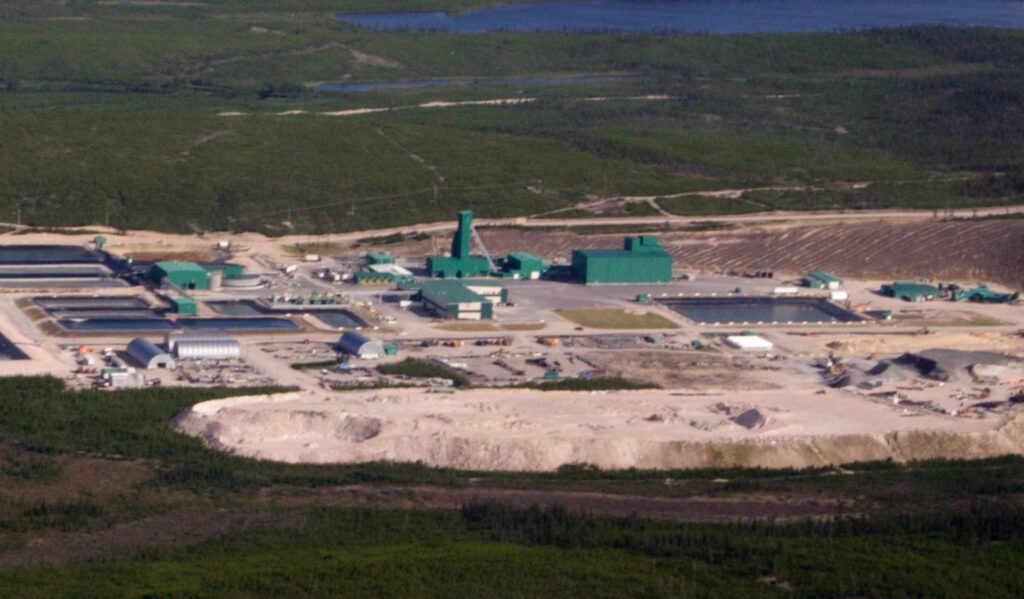
Cameco — the world’s second largest uranium producer — has temporarily halted production activities at its Key Lake mill and reduced activity at the McArthur River uranium mine after flooding damaged transport infrastructure in northern Saskatchewan.
The shut-in raises fresh risk in an already tight global uranium market.
The company said its sites have not been directly hit by flood waters, but the collapse of the Smoothstone River Bridge has cut the primary route used to move supplies to McArthur River and Key Lake. Restrictions are also in place on an alternative road, leaving the timing for normal deliveries “currently unknown.”
McArthur River is part of Cameco’s northern Saskatchewan platform, with Key Lake acting as the processing hub for ore from the mine. In the first quarter of 2026, the operation produced 5.0 million pounds of U3O8 on a 100% basis, or 3.5 million pounds Cameco’s share, and the company had expected 14.0 million to 16.5 million pounds of production from McArthur River/Key Lake in 2026.
Cameco said Cigar Lake continues to operate and its consolidated annual production plan remains unchanged for now. But the company warned that, depending on the duration of road restrictions and its ability to deliver critical operating materials, there is a risk its 2026 production outlook for McArthur River/Key Lake could be affected.
The disruption comes after a difficult production year at McArthur River/Key Lake. Cameco produced 15.1 million pounds on a 100% basis from the operation in 2025, below its earlier ambitions after mine transition issues, delayed development and ground-freezing constraints hit output.

Northern Saskatchewan is one of the West’s most important uranium supply centres. Cameco is one of the largest global providers of uranium fuel, with controlling ownership of some of the world’s largest high-grade reserves and low-cost operations, as well as positions across the nuclear fuel chain through Westinghouse and Global Laser Enrichment.
The immediate market impact will depend on how quickly critical materials can move again. A short disruption may be absorbed. A longer one would add pressure to a market where utilities are already trying to secure long-term supply against rising nuclear demand, Russian fuel-chain risk, Kazakh production uncertainty and slower-than-expected mine restarts.
Our recent analysis on how Canada’s uranium exports have “gone global”: