
China NERIN Engineering will build a copper-recovery plant at the planned Zambian terminus of the Western-backed Lobito Corridor railway — exposing a gap in the strategy to secure African critical minerals.
Konkola Copper Mines has signed a US$498 million contract with China NERIN Engineering to build a tailings-recovery plant at Chingola designed to add 70,000 metric tonnes of annual copper output.
The location matters.
Chingola is also the proposed endpoint of an 830-kilometre railway connecting Zambia with Angola’s Benguela line. The US-backed route is intended to give Zambia and the Democratic Republic of Congo faster access to the Atlantic and provide Western markets with a more secure critical-minerals supply chain.
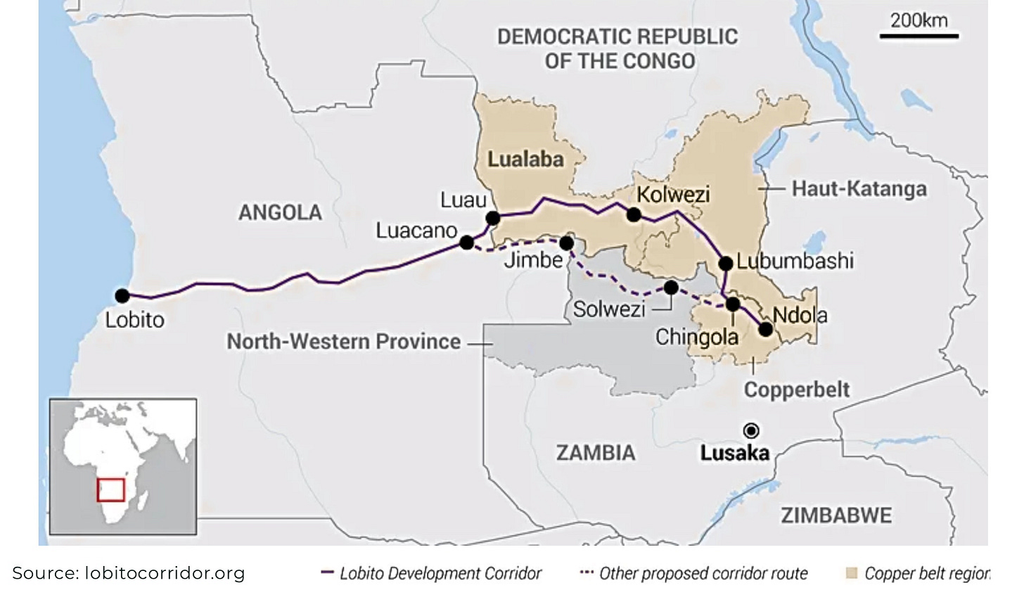
The new financing highlights concerns that the railway itself does not determine who builds the mines, controls the processing technology or buys the metal.
The Konkola Copper Mines project is designed to recover 70,000 metric tonnes of copper annually from tailings at Chingola. China NERIN will provide engineering, procurement and construction services, commissioning support, performance testing and training. The new KCM plant will use leaching technology to extract copper from existing mine tailings. China NERIN will provide engineering, procurement and construction services, as well as commissioning, performance testing and training.
There is no disclosed agreement requiring KCM’s additional copper to travel through Lobito or be sold to a Western buyer. Nor does China NERIN’s construction contract give it ownership of the plant or its output. KCM is 79.4% owned by Vedanta Resources and 20.6% by ZCCM-IH.
That distinction matters — but so does the contradiction. The US and its partners are financing the export infrastructure while Chinese companies continue to secure commercial positions at the production end of the supply chain.
The African Development Bank also approved a US$255 million loan and US$10 million grant in August for the Lobito railway to support Zambia’s participation. The loan represents a first tranche, with the bank planning to mobilise additional resources toward a potential US$500 million contribution. That financing is separate from the existing Angolan section. In July, the Africa Finance Corporation announced financial close on a US$753 million package, comprising US$553 million from the US International Development Finance Corporation and US$200 million from the Development Bank of Southern Africa.
The money will rehabilitate and operate the 1,300-kilometre railway between Lobito and Angola’s border with the Democratic Republic of Congo. The DFC expects the programme to increase transport capacity to 4.6 million metric tonnes annually — around ten times the end-2024 level — and reduce critical-mineral transport costs by as much as 30%.
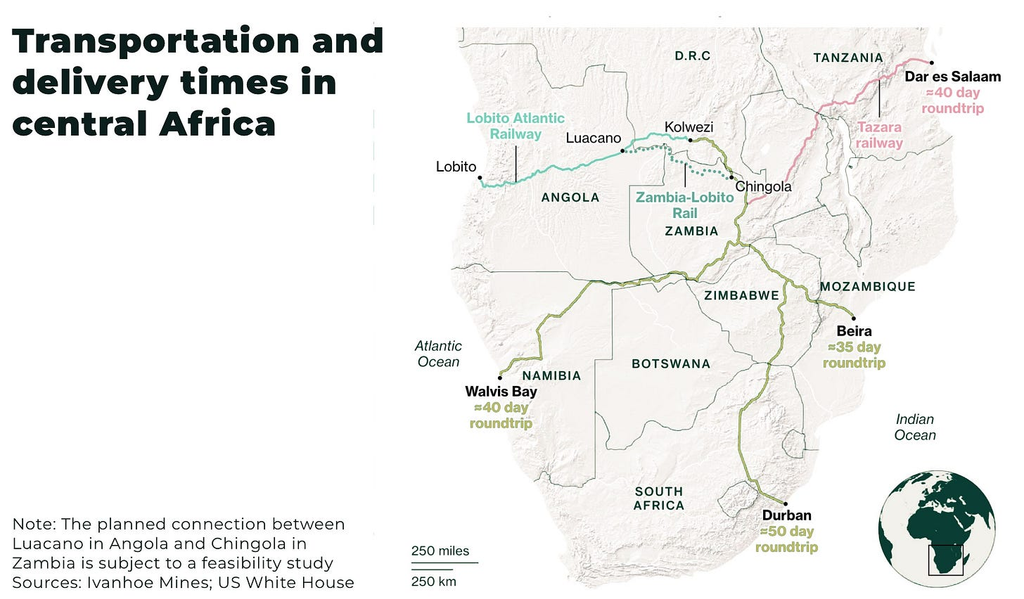
The corridor is already carrying copper. Ivanhoe Mines sent its first shipment of 99.7%-pure Kamoa-Kakula copper anodes to Lobito during the first quarter of 2026. Ivanhoe said the rail journey from the DRC Copperbelt averaged seven days, compared with more than three weeks by truck to Durban or Dar es Salaam.
The new Konkola project places another potential source of copper freight directly beside the proposed Zambian rail connection, with KCM saying the investment forms part of Zambia’s plan to raise national copper production from 890,346 metric tonnes in 2025 to 3 million metric tonnes annually by 2031.
Lobito can reduce transport times and open a western export route. It cannot secure minerals for the West without accompanying investment in mines, processing capacity and offtake agreements. China NERIN’s KCM contract shows that the competition for African copper will be decided before the first wagon reaches the railway.
Our analysis on whether Africa’s “Copper Express” will ever be built: