
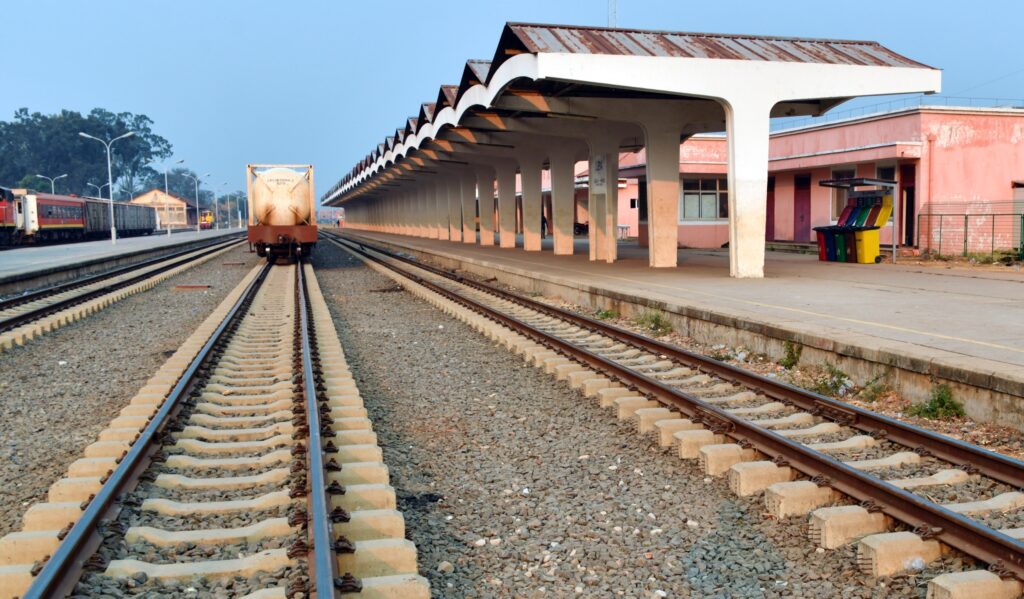
The Democratic Republic of Congo has approved a partnership with Portugal’s Mota-Engil to rehabilitate the Congolese section of the Lobito Corridor, moving the US-backed rail project closer to the copper and cobalt mines it was built to reach.
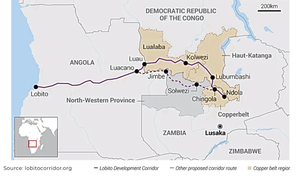
The approval, endorsed by Congo’s government on July 10, covers a “complete rehabilitation” of the rail line linking the Angolan border with mining hubs including Kolwezi, Tenke and Lubumbashi, according to cabinet meeting minutes, with Mota-Engil and the Congolese government are negotiating a 30-year operating agreement.
The decision lands days after the US International Development Finance Corporation and Development Bank of Southern Africa reached financial close on a US$753 million package for Lobito Atlantic Railway, the concessionaire on the Angolan side. The financing includes a US$553 million, 15-year DFC senior secured loan and a US$200 million DBSA facility to upgrade the 1,300km railway from Lobito to Luau, on the DRC border, plus the mineral terminal at Lobito.
“The Lobito Corridor is fast becoming one of the most important trade routes for vital copper metal and other critical minerals required for our planet’s energy transition. The annual export capacity of the Lobito Corridor is expected to reach over 1 million tonnes within 5 years” — Robert Friedland, Founder, Ivanhoe Mines
“Reaching financial close on the Lobito Corridor Railway Project is the culmination of years of work and a defining moment for infrastructure finance in Sub-Saharan Africa. This transaction demonstrates that complex, multi-lender, cross-border project financings can be structured and successfully closed on the continent” — Nuno Gil, Founding Partner of Eaglestone
The Lobito corridor in central Africa is an ambitious project of 2,600km of railway linking copper mines in Democratic Republic of Congo (DRC) and Zambia to Angola’s Lobito port on the Atlantic coast, with an estimated cost of $US6-8 billion.
The latest news means the railway project is moving past diplomacy to financing for the Angolan trunk line and political clearance for the Congolese link.
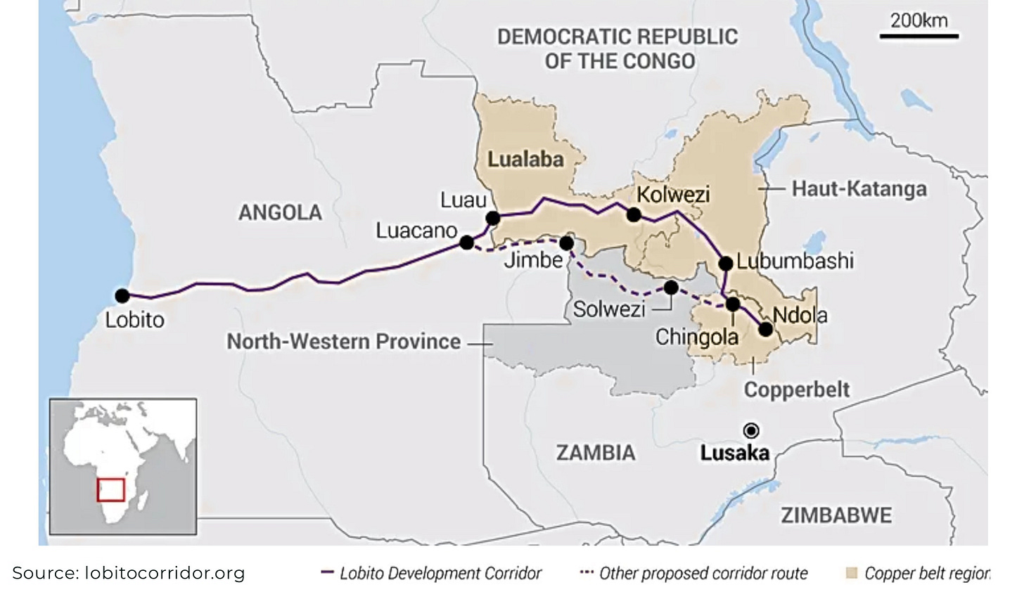
The copper belt in central Africa — about 450km long and 260km wide — runs from Luanshya, Zambia into the Katanga region of DRC. It is estimated to contain more than one tenth of the world’s copper deposits.
The Democratic Republic of Congo, estimated to have the seventh largest reserves of copper, overtook Peru to become the world’s second largest producer of copper in 2023. And Zambia (the ninth largest copper producer in the world and second largest producer in Africa after DRC), found “one of the world’s biggest high-grade large copper mines” earlier this year, according to KoBold Metals, a metals exploration company, who discovered the deposit and is backed by Bill Gates and Sam Altman. The country hopes to increase output to 1 million tons by 2026 and 3 million tons by 2031.
Lobito Atlantic Railway, a Trafigura and Mota-Engil venture, has operated the Angolan corridor under a 30-year concession since 2024 and moved more than 200,000 tonnes of cargo in 2025, GTR reported. Volumes are expected to rise as upgrades proceed.
The Lobito Corridor has been promoted by Washington as a trade-focused model for Africa, with US officials presenting it as a way to tie infrastructure, regional integration and critical minerals together as a counter to Chinese mining investment in the region.
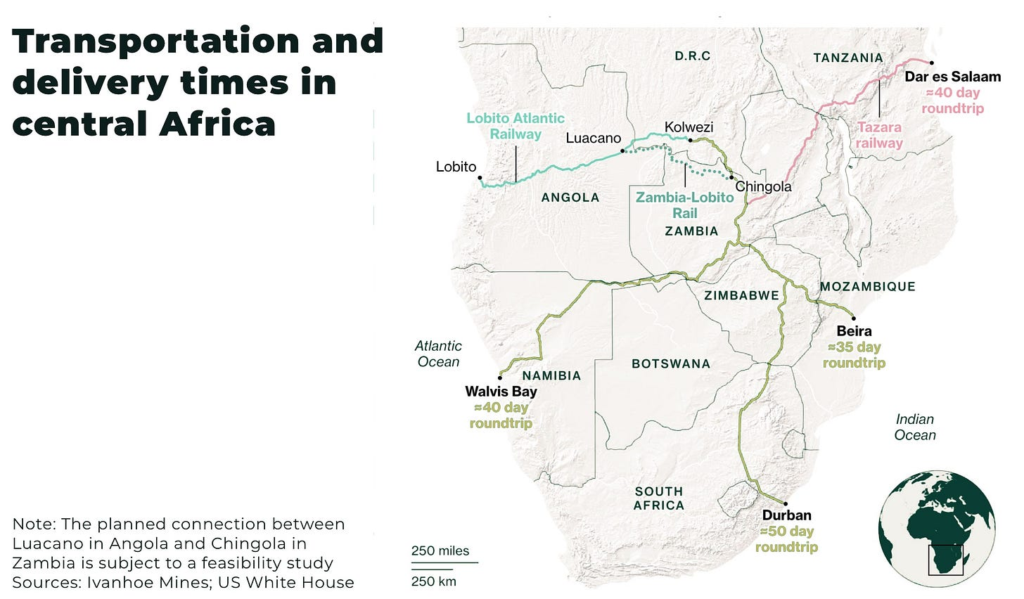
The latest approvals confirm our view that, yes, the “Copper Express” will leave the station. The question is how much copper will it be carrying?
Find out more: