
Copper has hit a new all-time high, with the benchmark three-month London Metal Exchange contract reaching US$14,533 per metric tonne on Monday.
The price surpassed January’s previous record of US$14,527.50 before easing to US$14,505.50 by 1615 GMT. Copper has now gained 16% since the start of 2026.
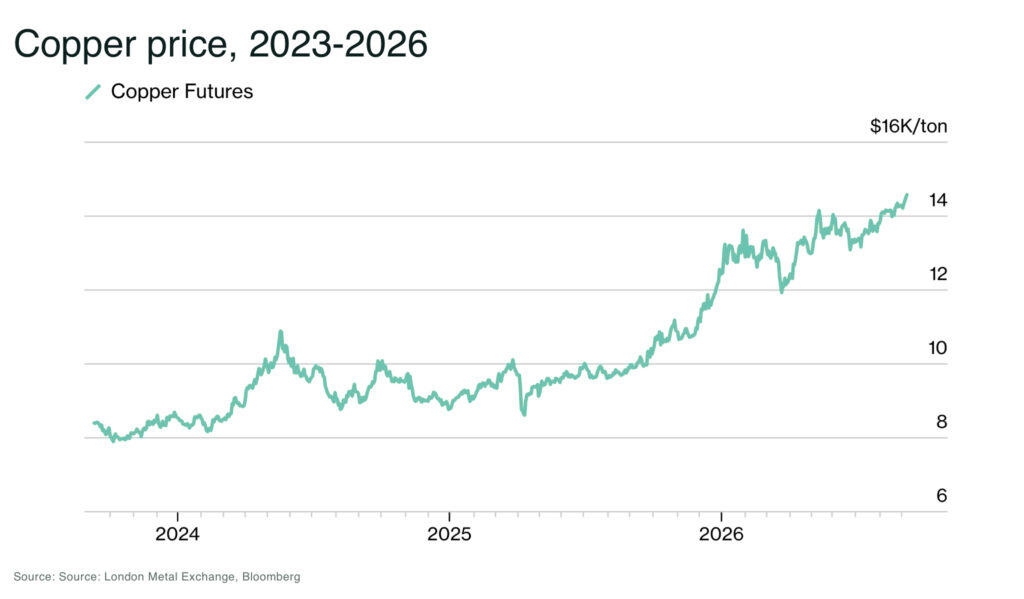
That matters because the LME Official Price is the global copper benchmark, used to price physical contracts across one of the world’s most important industrial metals markets.
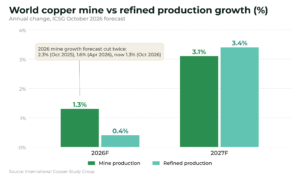
The rally is being driven by weakening mine supply and tightening availability outside the US. The International Copper Study Group’s August update shows global copper mine production fell 1.1% in the first half of 2026, including a 2.6% decline in concentrate output. Production fell in major mining jurisdictions including Chile, Indonesia and the Democratic Republic of Congo, outweighing additional supply from projects ramping up in Peru and Mongolia.
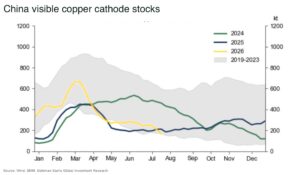
US tariff uncertainty has added another layer of pressure with traders moving copper into American warehouses ahead of potential import duties, reducing the metal available elsewhere. The US imported almost 885,000 tonnes of refined copper cathode during the first half, more than double the comparable 2024 volume.
The market is not yet facing a straightforward global shortage as refined copper production increased 2.4% during the first half of 2026, leaving a preliminary surplus of 131,000 tonnes, according to ICSG, but the record price shows that headline supply figures do not capture where copper is located or whether buyers can access it.
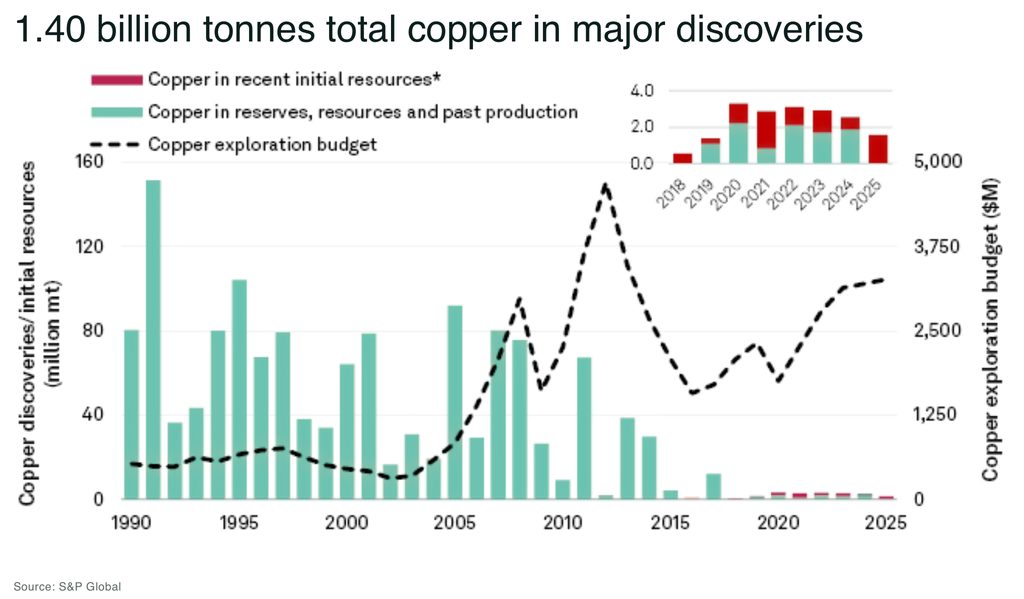
In the immediate term computer-driven fund buying and a softer dollar helped accelerate the move, while a US holiday left trading volumes relatively muted, creating the possibility of a short-term pullback — but, long-term, S&P Global warns no copper deposit discovered in 2025 currently meets the “major discovery” threshold of at least 500,000 tonnes of contained copper.
For investors, copper at an all-time high strengthens the economics of existing production and increases the strategic value of projects capable of delivering new supply. It does not remove permitting, financing or construction risk—but it makes the cost of delayed production increasingly visible.
Copper is no longer approaching a historic threshold. It has broken through it.