
The White House has asked Europe to release emergency diesel stocks just as Russia extends its diesel export restrictions, Chile prepares to reduce refinery output and US President Donald Trump considers a diesel ban.
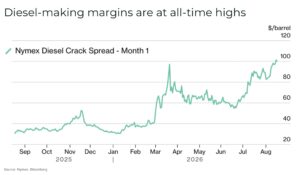
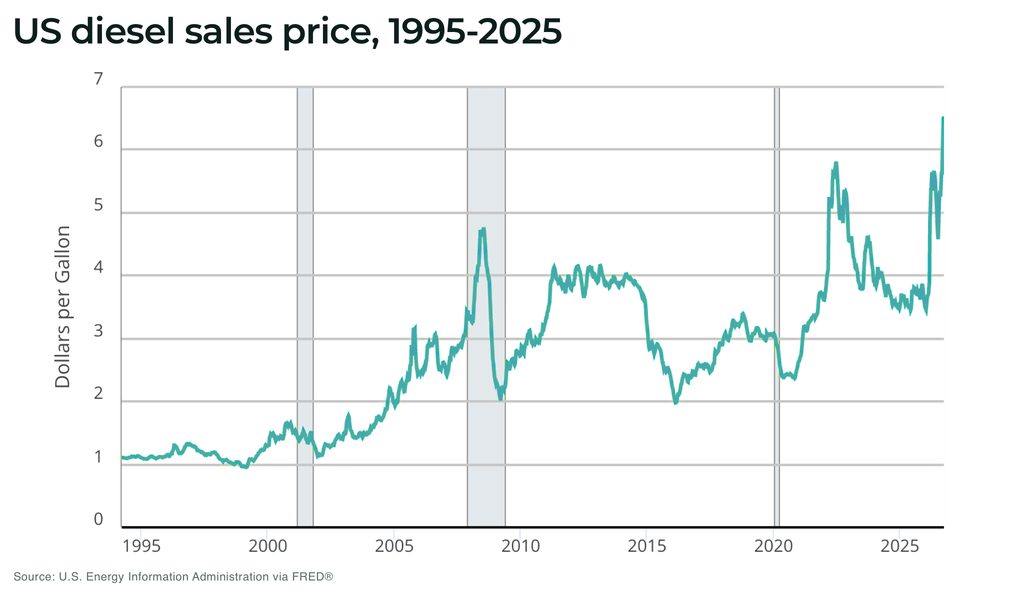
The latest request by the White House reflects a global refining shortage, with diesel and gasoil prices exceeded US$200 a barrel in the US in early September, according to the International Energy Agency, as Russian refinery outages and restricted Middle East exports removed major sources of supply.
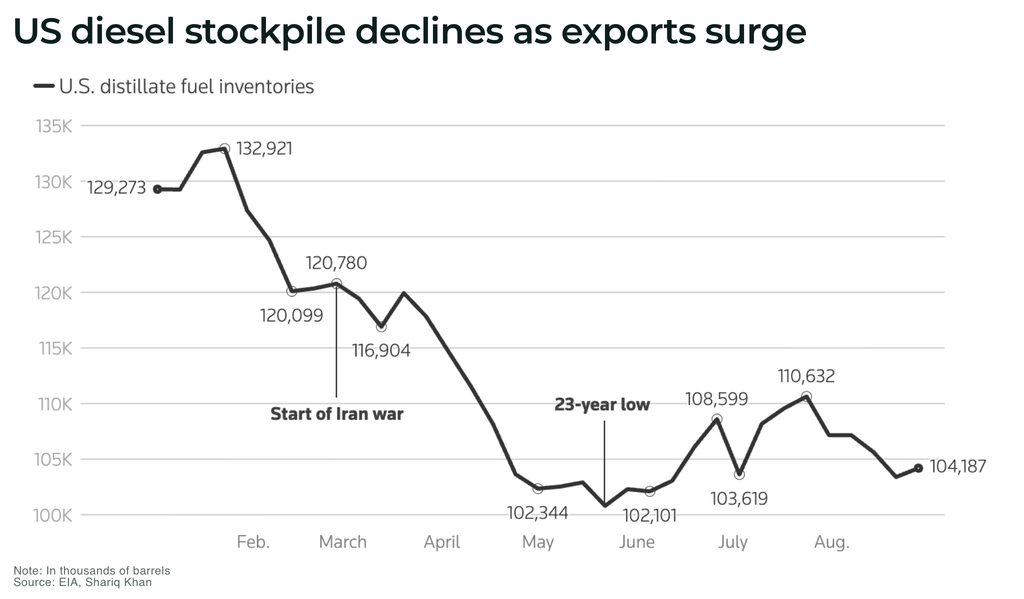
Latest on diesel crisis timeline
- September 14: A power failure shut ExxonMobil’s 264,000-barrel-a-day Joliet refinery, which can produce about 11 million gallons of gasoline and diesel per day for the US Midwest
- September 15: Three of Russia’s six largest diesel-producing refineries had substantially reduced or stopped production following Ukrainian drone attacks, according to Reuters
- September 27: Trump said he was “very seriously” considering a US diesel export ban. No ban has been enacted
- September 28: Texas declared a statewide disaster and allowed expanded use of dyed diesel on public roads. The state also requested federal waivers covering ultra-low-sulphur diesel requirements
- September 29: The White House asked the EU to draw down emergency diesel inventories to lower prices. European officials said no decision had been taken
- September 29: Chile announced approximately 40 days of maintenance beginning October 1 at the Bio Bio refinery, which produces about one-third of the country’s fuel. Diesel from the refinery supplies a mining sector dominated by copper
- September 29: Canada said it had contingency plans for a possible US export restriction. Canada is a net diesel exporter, but its petroleum system is closely integrated with the US
- September 30: Russia extended its diesel export restriction through October, keeping additional Russian barrels away from the international market
Refineries are running harder, but outages keep removing capacity
European refineries are operating at near-maximum capacity, EU supply remains stable and emergency stocks remain available — and global refinery throughput increased by 960,000 barrels a day in August from July.
But August throughput was still 4.2 million barrels a day below the previous year. Combined diesel and gasoil exports from Russia and the Gulf were 1.6 million barrels a day lower than in February.
High utilisation does not prove that refineries are shutting because of “over-use”, however it does mean there is little spare capacity when a power failure, drone strike or planned maintenance removes a plant.
The proposed US export diesel ban could exacerbate the situation significantly with S&P Global estimating that blocking exports could strand around 1.5 million barrels a day of diesel inside the US. Collapsing export margins could then force refiners to cut crude runs by nearly 1.9 million barrels a day — reducing production of diesel, gasoline and jet fuel together.
Australia’s 32-day buffer is not 32 days of mine-site supply
And, when it comes to the mining industry, we’re keeping a close eye on Australia, where the mining industry alone consumes approximately 9.6 billion litres of diesel annually, making imported fuel availability a direct operating-cost and production risk for iron ore, coal, gold and critical-mineral projects. The country held 2,938 million litres of diesel under its Minimum Stockholding Obligation on September 22, equivalent to 32 days of normal consumption.
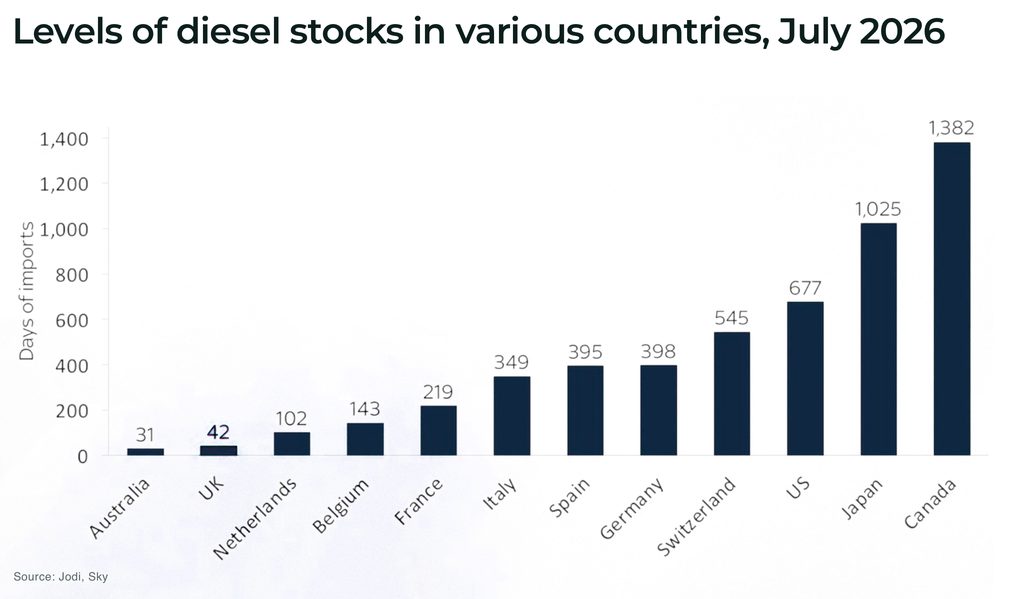
One note on the attached chart reports stocks as “days of imports”, a that metric measures inventories against imports, not total national consumption. It therefore produces very high readings for countries that manufacture most of their own fuel.
Australia also had 37 clean-product tankers approaching the country on September 25, equivalent to 12 days of supply. Those cargoes include petrol and jet fuel as well as diesel, so they should not be presented as 12 additional days of diesel.
National stocks also do not show how much fuel is available at individual mines. Remote operations depend on ports, coastal shipping, rail, road tankers and local storage. A disruption can therefore affect mine-site availability before Australia exhausts its national inventory.
Conclusion
The strategic point is simple: Europe is being asked to consume its emergency insurance while Russia removes exports and the US debates doing the same. Australia has a buffer — but its mining-heavy economy remains exposed to the price, availability and journey time of the next imported cargo.
How the diesel crisis developed
This longer timeline shows the crisis moving through three phases: the initial Middle East supply shock, the depletion of emergency and commercial inventories, and then a second wave of refinery outages and government export controls:
- February 28: The Middle East conflict began disrupting traffic through the Strait of Hormuz. In the opening phase, exports of crude and refined products through the strait fell to less than 10% of pre-conflict volumes
- March 11: The IEA’s 32 member countries agreed to make 400 million barrels of emergency oil stocks available — the largest coordinated release in the agency’s history
- March 17: Australia introduced a temporary 20% reduction in its Minimum Stockholding Obligation for petrol and diesel. The measure allowed suppliers to use more inventory while securing replacement imports and supplying regional markets
- March 24: Australia temporarily relaxed parts of its national diesel-quality requirements, widening the pool of fuel that could be imported during the disruption
- June quarter: Australian companies held an average 3,304 million litres of diesel, equivalent to 36 days of normal consumption. The figure subsequently declined as emergency measures and higher prices reshaped supply
- July 30: Russia announced a temporary restriction on exports of diesel, marine fuel and gasoil, effective from August 1. Direct producers were initially expected to receive an exemption from September, but that reopening was repeatedly delayed
- August 12: Diesel exports from Russia, the Middle East and Asia during July were estimated to be 1.3 million barrels a day below the previous year, equivalent to around one-fifth of global seaborne diesel trade
- Late August: Russia postponed the planned exemption for refinery producers, keeping its producer-level diesel restrictions in place through September
- September 1: US Gulf Coast ultra-low-sulphur diesel reached a record US$4.6973 a gallon. US diesel and gasoil exports had climbed to a record 54.2 million barrels during August as buyers sought replacements for Russian and Middle Eastern supply
- September 11: The IEA reported that global oil inventories had fallen by 95 million barrels during August, taking the cumulative draw since February to 507 million barrels. Gulf diesel and gasoil exports averaged only 390,000 barrels a day—just over one-quarter of their pre-war level
- September 13: Trump asked Ukrainian President Volodymyr Zelenskyy to halt attacks on Russian diesel infrastructure, arguing that the refinery strikes were worsening the global shortage
- September 14: A power failure shut ExxonMobil’s 264,000-barrel-a-day Joliet refinery. The refinery supplies the US Midwest and can produce approximately 11 million gallons of gasoline and diesel per day
- September 15: Three of Russia’s six largest diesel-producing refineries had substantially reduced or stopped production, according to Reuters. Kirishi had shut completely, while Volgograd and NORSI were reportedly operating at around one-quarter of capacity
- September 16: Northwest European diesel reached US$1,608.25 per metric tonne, one day after setting a record in the Platts assessment
- September 22: Trump publicly supported keeping more diesel inside the US. Analysts warned that a full export restriction could strand around 1.5 million barrels a day and ultimately force US refiners to reduce crude processing by nearly 1.9 million barrels a day
- September 25: European officials warned that a US export ban could damage both economies. The US was on course to supply Europe with 360,000 barrels a day of diesel during the third quarter, up from approximately 250,000 barrels a day before the Middle East conflict
- September 27: Trump said his administration was “very seriously” considering a diesel export ban. No ban, implementation date or exemption framework had been announced
- September 28: Texas issued a statewide disaster proclamation, allowing expanded use of dyed off-road diesel on public roads and heavier fuel, agricultural and timber loads
- September 29: The White House asked the EU to draw down emergency diesel inventories to increase market supply and reduce prices. European governments had not agreed to a release
- September 29: The European Commission said regional supply remained stable despite high prices. European refineries were operating near maximum capacity, emergency stocks remained available and commercial inventories at the Amsterdam-Rotterdam-Antwerp hub had stabilised below their five-year average
- September 29: Chile confirmed maintenance affecting diesel-processing units at the Bio Bio refinery, beginning October 1 and lasting approximately 40 days. The refinery produces around one-third of Chile’s fuels, much of which supports the country’s copper industry
- September 29: Canada said it had contingency plans for a possible US diesel export restriction. Canada is a net diesel exporter, but its petroleum market remains closely integrated with the US
- September 30: Russia extended its producer-level diesel export restriction through October, keeping another major source of supply away from international buyers
- Current Australian position: Australia held 2,938 million litres of diesel on September 22, equivalent to 32 days of normal consumption. The government also reported 37 incoming clean-product tankers, equal to 12 days of combined diesel, petrol, jet-fuel and blending-stock supply — not 12 days of diesel alone