
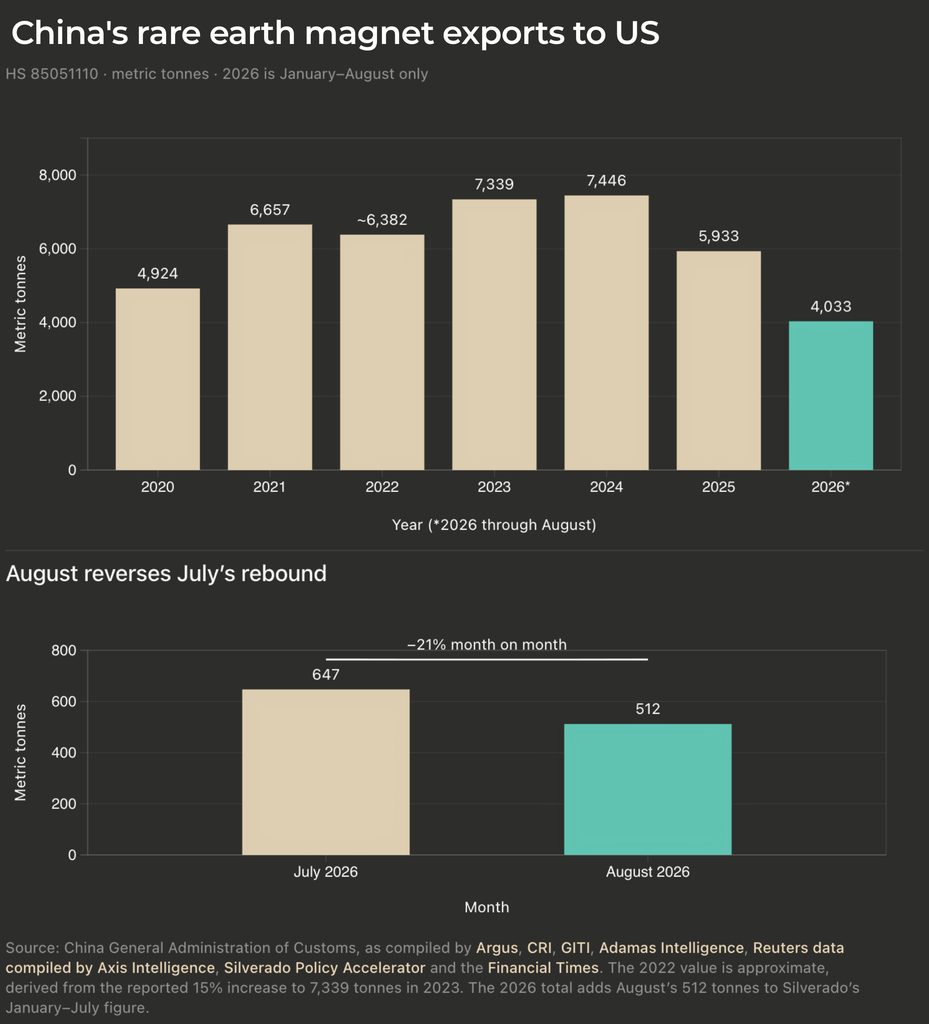
China exported 512 metric tonnes of rare-earth permanent magnets to the US in August, down 21% from July and 13% from a year earlier, according to Chinese customs data.
The fall interrupted a recovery that lifted shipments to 647 metric tonnes in July — the second-highest monthly volume since China introduced export controls in April 2025.
The fall in rare earth exports comes before Donald Trump and Xi Jinping meet in Washington. Bloomberg reports that China may offer additional export licences during the negotiations, but the customs figures do not establish whether the latest fall resulted from government policy, licence timing or normal changes in orders.
The fall in August rare earth exports was not a return to the 46.4-metric-tonne low recorded in May 2025, with shipments close to the 2026 monthly average of about 504 metric tonnes, but remained below the 621-metric-tonne average recorded in 2024, before the controls.
| Comparison | Volume |
|---|---|
| May 2025 low | 46.4 metric tonnes |
| July 2026 | 647 metric tonnes |
| August 2026 | 512 metric tonnes |
| 2026 monthly average | about 504 metric tonnes |
| 2024 monthly average | 621 metric tonnes |
The US has also underperformed other major destinations with Chinese magnet exports to the EU increasing 17% during the first seven months of 2026 compared with 2024, shipments to South Korea rose 24%, India 39% and Thailand 39%. August exports to Japan and Germany, however, fell 17% and 22% year on year, respectively.
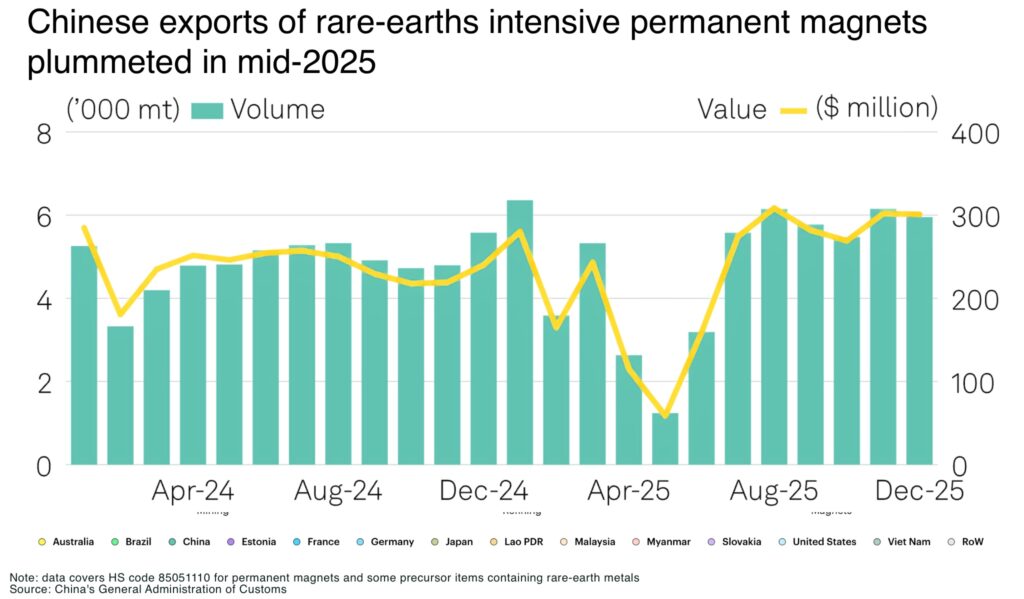
China’s controls (the April 2025 rules) require exporters to secure licences for specified rare-earth materials, including magnets containing samarium, gadolinium, terbium, dysprosium, lutetium, scandium and yttrium, together with specified related products.
This licensing system provides more than leverage over volumes, with a June report from RUSI finding that applications give Beijing detailed information about foreign buyers, end uses and supply-chain dependencies, with US manufacturers remaining dependent on administrative decisions in Beijing for magnets used across automotive, aerospace, defence and advanced manufacturing.