- German industry groups and companies including BMW, Rheinmetall and magnet maker Vacuumschmelze have signed a memorandum of understanding to set up a raw materials trading house, with the pre-founding phase due to finish by mid-2027
- Berlin will raise its raw materials fund to about US$1.64 billion (€1.5 billion)
- France will build strategic reserves of rare earths and other critical minerals from next year and encourage joint purchasing
German industry has agreed to set up a joint trading house to buy, trade and stockpile critical raw materials, including rare earths, as Europe’s two largest economies move towards collective buying to cut their reliance on China.
The industry associations BDSV, VDA, VDMA and ZVEI, together with members including BMW Group, Rheinmetall, JOEST and Vacuumschmelze, have signed a memorandum of understanding to start the pre-founding phase of the entity, which is due to finish by mid-2027.
Once set up, the trading house would pool industry demand, procure and trade raw materials, and support stockpiling and investment along the supply chain, giving smaller manufacturers buying power they lack on their own.
Germany’s economy ministry backed the plan on November 24, lifting its raw materials fund, which takes equity stakes in projects worldwide, to about US$1.64 billion (€1.5 billion), and creating a “one-stop shop” at the German Raw Materials Agency to coordinate financing and guarantees.
The plans come after China has introduced export restrictions:
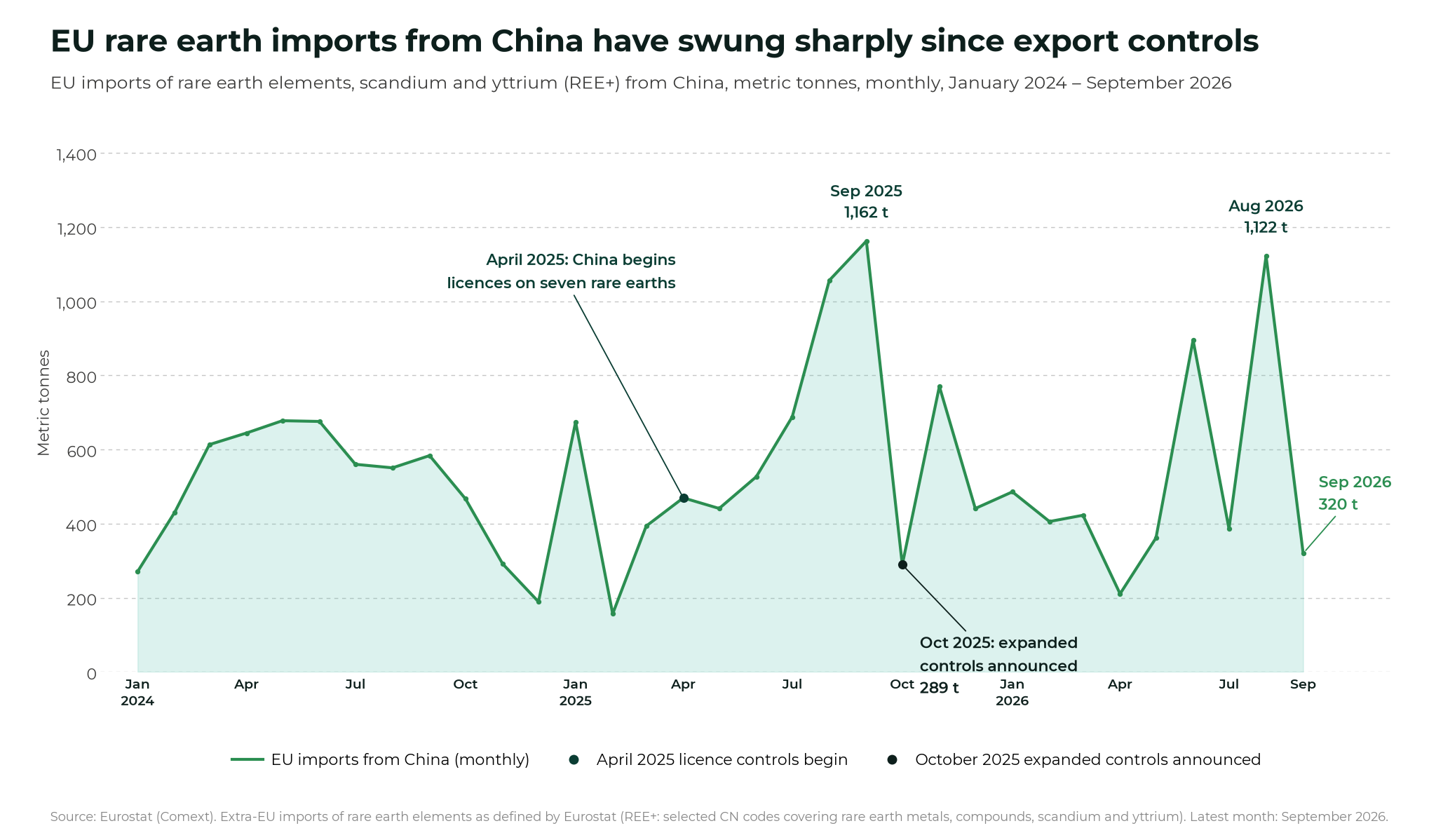
- the EU imported 7,100 tonnes of rare earth elements from China in 2025, or 46.8% of its extra-EU imports by weight
- in January–September 2026, those imports fell to 4,611 tonnes, 17% below the same period of 2025, and monthly volumes have swung from more than 1,100 tonnes to barely 200 tonnes since Beijing began licensing exports in April 2025, according to Eurostat trade data (imports from Malaysia rose 38% over the same nine months)
Why Europe is buying together
More than 90% of global rare earth magnet production sits in one region, and export restrictions drove germanium prices up 400% in two years.
“No company can address strategic raw material dependencies on its own,” said Dr Nicolai Martin, who chairs the VDA’s committee on automotive supply chains.
Meanwhile, France is moving in the same direction as President Emmanuel Macron told industry leaders that state-owned Caisse des Dépôts will lead strategic rare earths reserves from next year. Paris is also considering guaranteed price mechanisms for producers and incentives for long-term contracts.
The moves follow Chancellor Friedrich Merz’s call for stockpiles at European level and Brussels’ approval of a first critical raw materials storage hub, centred at Porto Marghera in Venice and linked to Rotterdam, initially aimed at materials including rare earths and tungsten.
The Japanese blueprint
The German groups openly cite Japan as their model, which set the precedent when state-backed buying turned into new supply.
In 2011, trading house Sojitz and state agency JOGMEC provided Lynas with US$250 million in loans and equity in return for at least 8,500 tonnes a year of rare earths products for Japan over ten years, then about 30% of the Japanese market.
In other words, Japan didn’t just stockpile; it paid for supply outside China and locked in the output.
What the plan does not solve (yet)
The problem is that a buyers’ club doesn’t create supply on its own.
The German memorandum of understanding commits no volumes or capital, and France has published no budget, tonnages or participant list.
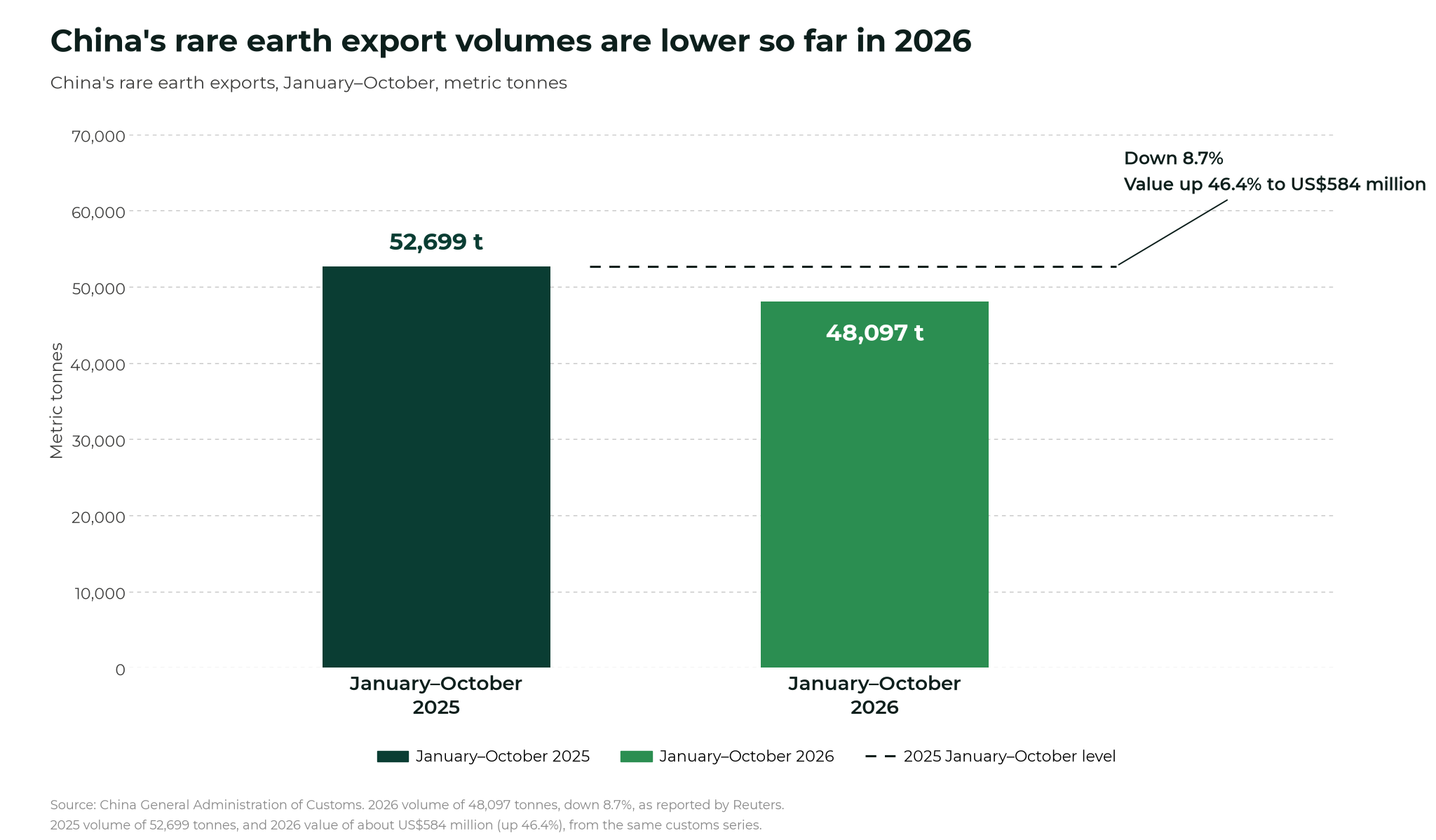
This means China still holds the upper hand. As we reported, China has only suspended controls on five rare earths until 10 January 2027, while controls on seven others stay in force. Its rare earth exports fell 8.7% in January–October from a year earlier, to 48,097 tonnes, even as the value of those shipments rose 46.4% to about US$584 million.
The test is whether pooled demand becomes the binding offtakes and price floors that lenders want before they fund non-Chinese mines and separation plants.
Pooling demand gives Europe a stronger hand at the negotiating table, but only signed contracts and committed capital will show whether it changes where Europe’s rare earths come from.