- Glencore’s own-sourced cobalt production fell 52% to 13,700 tonnes in the first nine months of 2026, as Congo’s export quotas led it to leave cobalt in solution rather than turn it into saleable hydroxide
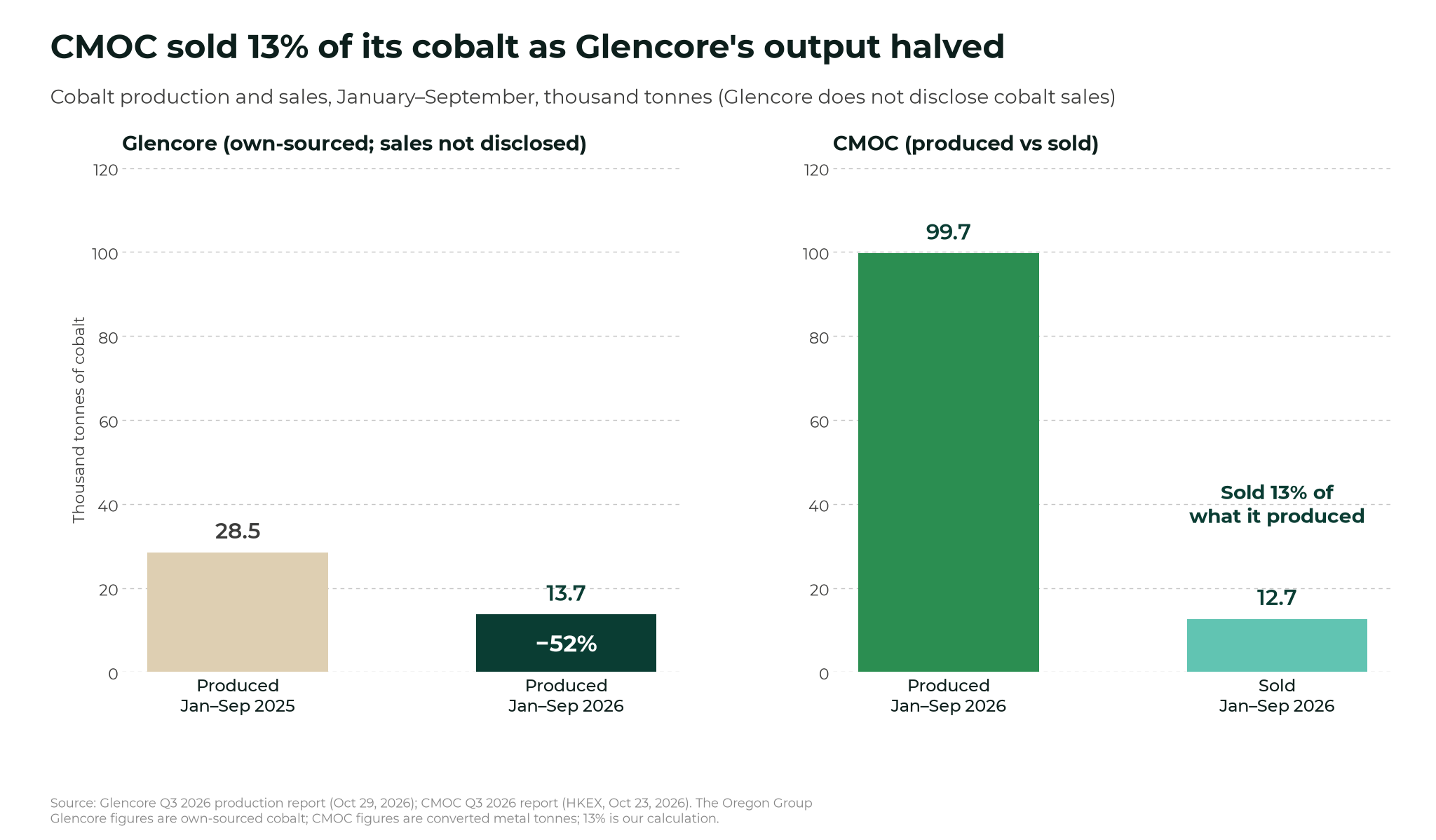
- CMOC, the world’s biggest cobalt miner, produced 99,694 tonnes of cobalt but sold only 12,661 tonnes in the same period, about 13% of its output, our calculations show
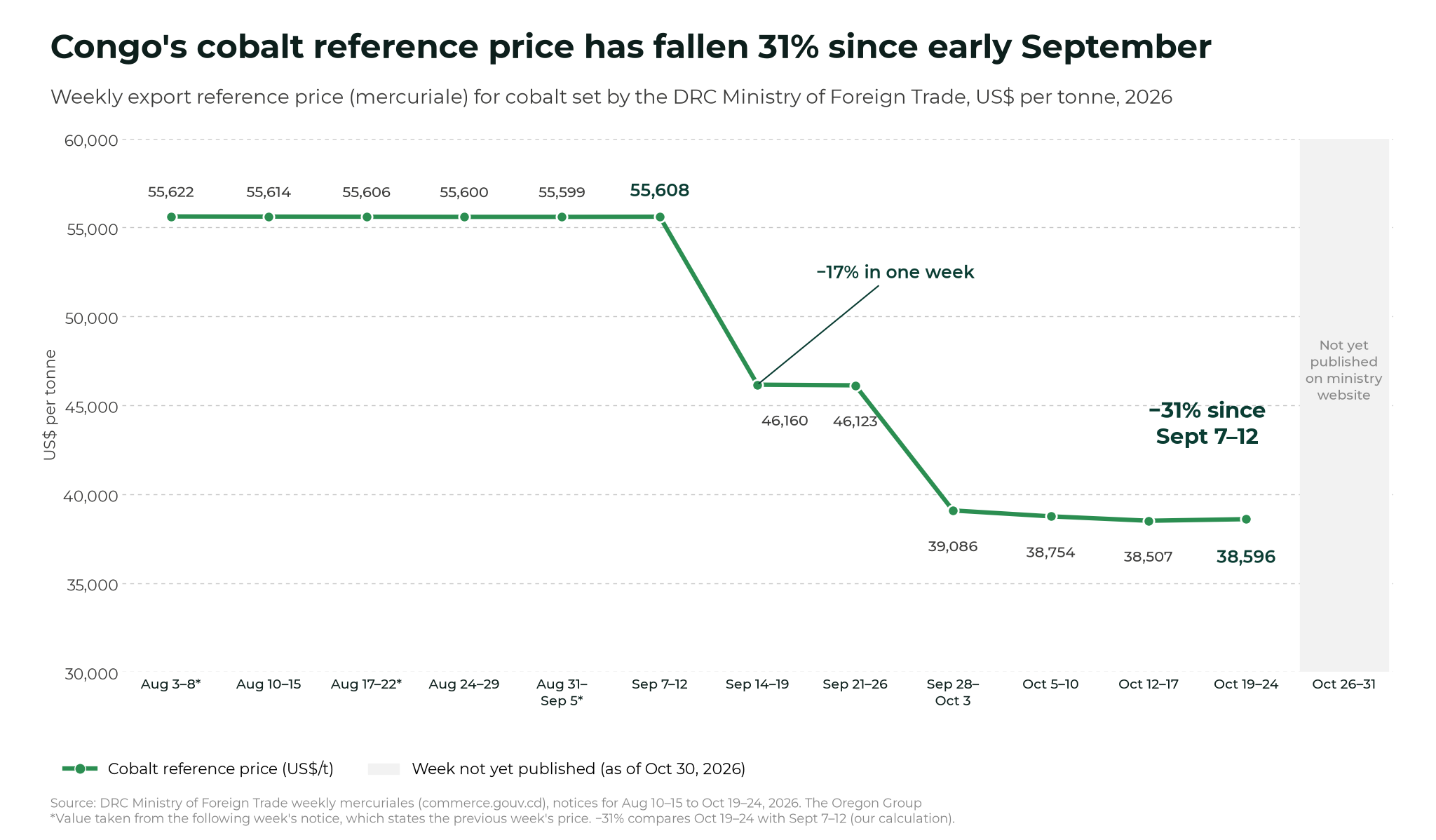
- Congo’s own weekly cobalt export reference price has fallen almost 31% in six weeks, from US$55,608 a tonne in the week of September 7–12 to US$38,596 in the week of October 19–24
Glencore produced 52% less cobalt in the first nine months of 2026 as the Democratic Republic of Congo’s export quotas pushed it to leave the metal in solution rather than make saleable hydroxide.
Glencore’s cobalt output from its own mines fell to 13,700 tonnes in January–September from 28,500 tonnes a year earlier, according to Glencore’s third-quarter production report, published on October 29 — and third-quarter output was 3,500 tonnes, down 20% from the second quarter.
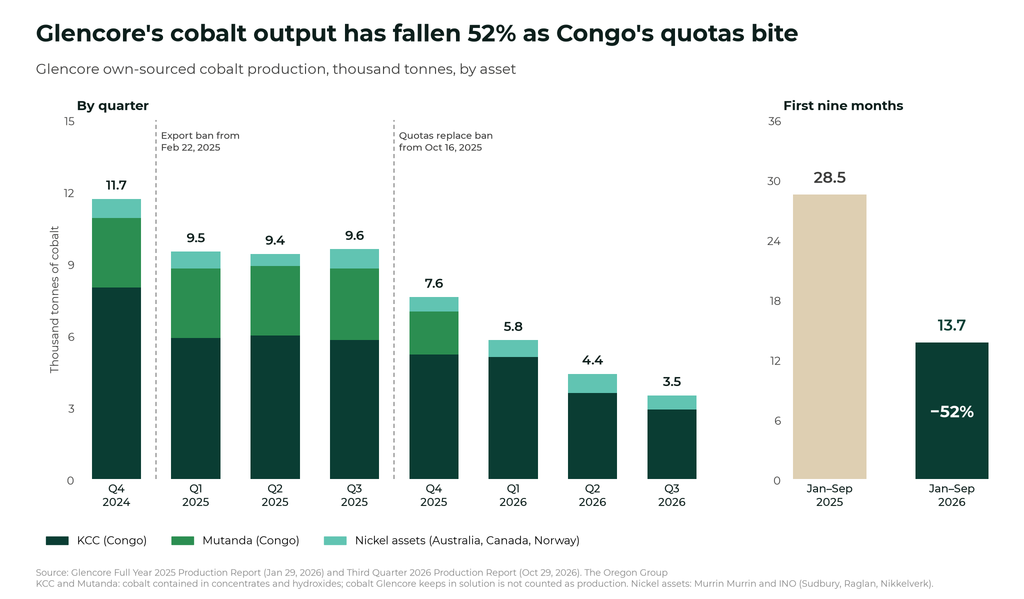
The company blamed “the ongoing DRC cobalt export quota regime and a continued focus on copper production… Consequently, cobalt contained in mixed ore is increasingly being retained in solution rather than processed into saleable hydroxide, with value expected to be realised as export regulations evolve.”
Cobalt held in solution is not counted as production, Glencore said, adding that KCC and Mutanda hold enough stocks to meet their near-term quota allocations.
Glencore’s KCC mine produced 11,600 tonnes of cobalt in the nine months, down 34%; third-quarter KCC output was 2,900 tonnes, down 19% from the second quarter; Mutanda produced no cobalt in the nine months, compared with 8,800 tonnes a year earlier, and has reported no cobalt output since the end of 2025.
Congo controls three-quarters of mined cobalt
Congo mined an estimated 230,000 tonnes of cobalt in 2025, about 73% of the world total; Indonesia was second, with 14%.
However, Congo’s cobalt regulator, ARECOMS, suspended cobalt exports on February 22, 2025, and later extended the ban until October 15, 2025.
Quotas replaced the ban from October 16, 2025, allowing up to 96,600 tonnes of contained cobalt a year in 2026 and 2027, according to the US Geological Survey. That is a base quota of 87,000 tonnes, or 7,250 tonnes a month, plus a 9,600-tonne strategic quota.
Kinshasa has since widened its grip on the supply chain, as we wrote in Congo bans copper and cobalt concentrate exports as global supply risks grow:
“The strategic direction, however, is clear with Kinshasa wanting greater control over volume, processing and value capture.”
Cobalt is being stockpiled, not removed
CMOC, the world’s biggest cobalt miner, shows how much metal is piling up behind the quotas, producing 99,694 tonnes of cobalt in January–September, up 13% from a year earlier, selling 12,661 tonnes, down 75%.
CMOC is expected to be able to export 31,200 tonnes of cobalt in 2026, only 27% of its 2025 output from its Congolese mines. Glencore was granted 22% of the quota allocations for the rest of 2025.
Prices are falling anyway
Cobalt hydroxide, the intermediate Congo exports, was assessed at US$22.00–23.00 a pound on August 11, according to Fastmarkets, which was four times its level on February 20, 2025, just before the ban. Since then, prices have slipped, with Dastmarkets’ inferred hydroxide price was US$14.62 a pound on October 16.
Congo’s own reference price tells the same story: the Ministry of Foreign Trade’s weekly cobalt mercuriale held at about US$55,600 a tonne through August and early September, and it then dropped 17% in the week of September 14–19 and reached US$38,596 in the week of October 19–24.
Demand is the primary problem, with participants at the Antaike cobalt forum in China and LME Week in London in October reported weak pricing sentiment, according to Benchmark Mineral Intelligence. It cited soft demand for lithium cobalt oxide, the battery chemistry used in consumer electronics, and large stocks of cobalt sulphate, battery precursors and recycled material in China.
What comes next
ARECOMS has signalled it could tighten further:
“If the imbalance between supply and demand were to persist or deteriorate, a reduction in export quotas may be considered in order to help restore market balance,” chair Patrick Mpoyi Luabeya told Fastmarkets in August.
Several market sources told Benchmark they expect Congo to cut export quotas by 25% next year, but, so far, ARECOMS has not announced a cut.
There are (of course) caveats, including that Glencore does not disclose cobalt sales, so its production figures do not show how much it shipped; and CMOC reports cobalt in converted metal tonnes and does not break out how much unsold cobalt it holds in inventory.
Congo’s quotas have cut how much cobalt reaches the market, not how much exists, but every tonne Glencore holds in solution and CMOC holds unsold, is supply that will weigh on the market.