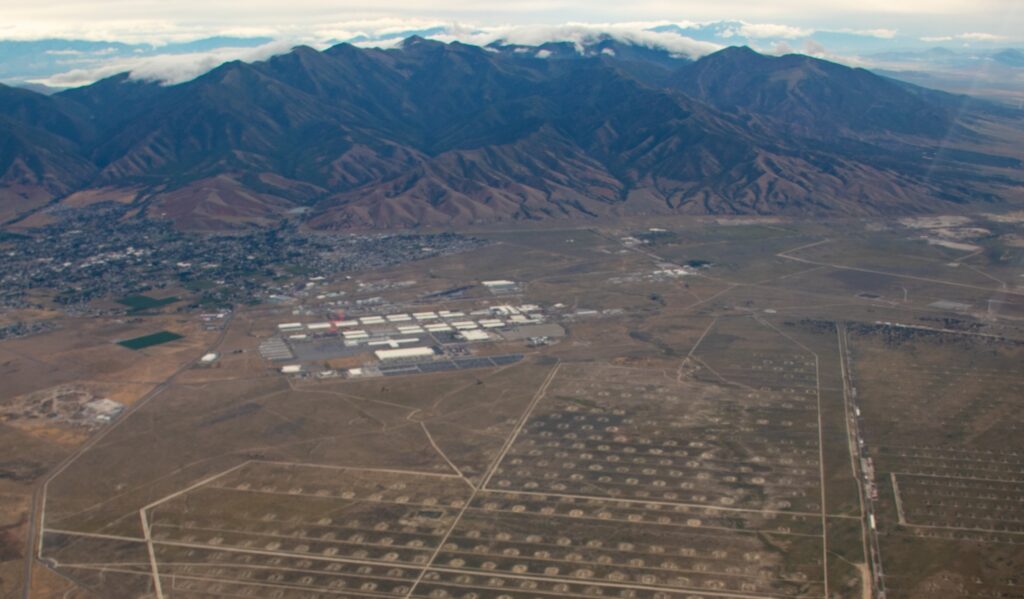
- REalloys signed a non-binding term sheet with the US Army for a dysprosium and terbium processing plant on about 200 acres of Tooele Army Depot, Utah
- the proposed lease runs 50 years with one 25-year renewal, and the Army would get the first chance to buy output but no obligation to buy it
- China holds what the Army calls a “near 100% global monopoly” on dysprosium and terbium, the heavy rare earths that keep magnets in missiles, radar and electric motors working at high temperatures
REalloys has taken a step towards building a heavy rare-earths processing plant on US Army land in Utah after signing a non-binding term sheet with the Army for a lease of up to 75 years at Tooele Army Depot.
The announcement comes less than two months before the Pentagon stops buying weapons that contain Chinese rare-earth magnets on January 1, 2027, as we reported in Pentagon’s China rare earth ban starts on Jan 1, but new supply can take 10 years.
The term sheet is not a signed lease, and instead sets out the main terms both sides would negotiate into a final Enhanced Use Lease, a deal that lets the Army rent spare land to private companies — and part of the US Army strategy to turn bases into critical mineral safe havens.
What REalloys and the Army have agreed
The plant would sit on about 200 acres and process and refine dysprosium and terbium, with other rare earths possible later if both sides agree in writing.
Those two metals are added to neodymium magnets so they keep their strength at high temperatures, in precision-guided munitions, electric motors, sonar and radar.
Under the proposed terms, REalloys would:
- develop, finance, build, operate and eventually decommission the plant, while the US keeps title to the land
- hold an initial 50-year lease with one 25-year renewal option, subject to Army consent
- pay annual base rent at fair market value from the start of the lease, plus a share of revenue (“participation rent”) once commercial operations begin
The Army would get a right of first offer on the plant’s output, but it is not obliged to buy anything.
The release gives no capacity, cost or start date for the Utah plant.
Tooele itself is a 43,000-acre ammunition depot set up in 1942, which the Army said in April had land to spare for private partners. Its model is Pine Bluff Arsenal in Arkansas, where Hanwha Defense is making a US$1.3 billion private investment in an explosives plant on Army land.
Jeff Waksman, the Army’s principal deputy assistant secretary for installations, energy and environment, set out why the Army wants the deal:
“Rare earth processing is a known national security vulnerability, with China specifically holding a near 100% global monopoly on dysprosium and terbium.”
Jeff Waksman, US Army
Why heavy rare earths matter
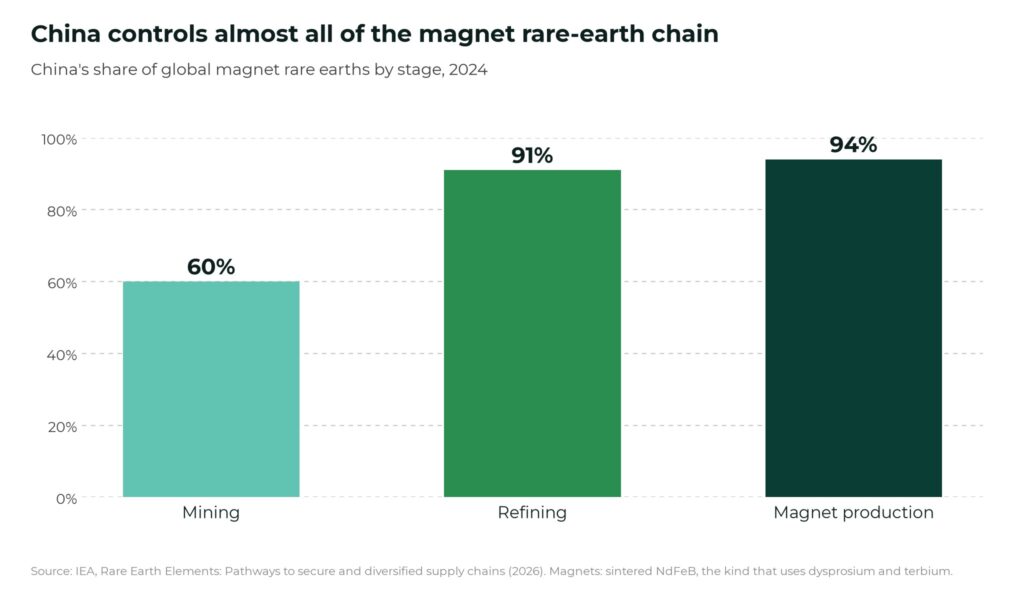
China produced 91% of the world’s refined rare earths and about 94% of the magnets that use dysprosium and terbium in 2024, according to the IEA.
Beijing has required licences to export seven medium and heavy rare earths, including dysprosium and terbium, since April 4, 2025. That rule was never part of the US–China trade truce, unlike a wider October 2025 package of controls whose suspension runs until November 10. Beijing said in September that the wider truce would be extended to January 10, 2027, but as of early November it had published no legal notice extending the suspension.
The result is an increasingly two-price market: in Europe, dysprosium and terbium cost around five times more than in China, according to the IEA.
That is the opportunity for a processor outside China, and Washington is already paying to build them.
Other US government rare-earth deals
The Pentagon and the Commerce Department have backed numerous rare-earth companies since mid-2025, including:
- MP Materials: in July 2025 the Pentagon agreed to buy US$400 million of preferred stock, lend US$150 million and guarantee a US$110 per kg floor price for neodymium-praseodymium (NdPr) oxide, the main light rare earth in magnets
- Vulcan Elements and ReElement: the Office of Strategic Capital agreed conditional loans of US$620 million and US$80 million in November 2025 for magnet making and rare-earth recycling, alongside a non-binding US$50 million Commerce Department offer in return for equity in Vulcan
- USA Rare Earth: signed definitive agreements with the Commerce Department in June 2026 for up to US$277 million in funding and up to US$1.3 billion in loans, handing the government about 16.1 million shares plus warrants, for its Round Top heavy rare-earths deposit in Texas and magnet plant in Oklahoma
- Lynas: in March 2026 signed a binding letter of intent for the Pentagon to spend about US$96 million on light and heavy rare-earth oxides over four years, with a US$110 per kg NdPr floor, after doubts over whether its planned Texas heavy rare-earths plant would go ahead
- Ucore: has US$22.4 million in non-repayable Pentagon funding for a Louisiana refinery designed to separate rare earths including dysprosium and terbium
- REalloys itself: received a US$200 million letter of interest from the US Export-Import Bank in October 2025, which signals interest but is not a loan
Together, these deals add up to about US$3 billion of public support, by our calculation, but most of it is loans: about US$2.15 billion, including up to US$1.3 billion for USA Rare Earth that is paid out only as the company hits milestones.
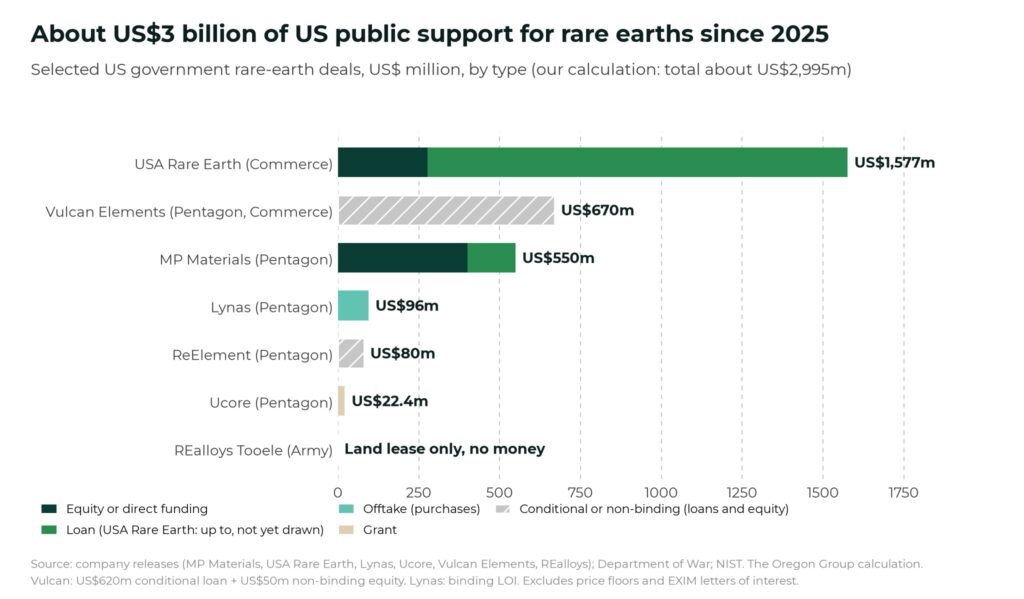
(About US$750 million, for Vulcan and ReElement, is still conditional or non-binding, and Lynas’s US$96 million buys rare-earth products rather than investing in the company.)
The Army deal is different: it offers land, not money. In Waksman’s words, it is designed to work “without putting any taxpayer dollars at risk.”
It is also part of a wider Army programme, when in June the Army conditionally selected four companies to process graphite, lithium, boron and heavy rare earths on four bases, and REalloys is the only rare-earths project among them.
It is the second to sign a term sheet, after Titan Mining agreed terms for a graphite plant at Anniston Army Depot, Alabama in October.
Where Utah fits in REalloys’ plans
Nasdaq-listed REalloys (ALOY) is building what it calls a “mine-to-magnet” chain, and Utah would add to projects already under way, for example:
- Saskatchewan Research Council: REalloys is funding an upgrade of the council’s Saskatoon plant that targets about 525 tonnes of NdPr metal, 30 tonnes of dysprosium oxide and 15 tonnes of terbium oxide a year, with rights to about 80% of the output
- heavy rare-earth metal plant: a facility to turn about 50 tonnes a year of dysprosium and terbium oxide into metal, targeting commissioning in the first quarter of 2028 and eventually moving to Euclid, Ohio
- Tanbreez, Greenland: a definitive offtake for 15% of Phase 1 production from Critical Metals Corp
REalloys ended June with US$122.4 million in cash after a US$100 million share placement, and says it has committed about US$58.3 million to fund the Saskatoon upgrade and the metal plant through commissioning.
In other words, Utah would give REalloys a US site under Army protection for the next step: refining heavy rare earths at home rather than in Canada.
What could prove this wrong
The term sheet can still fall away. Before a final lease is signed, the two sides must agree the rent, the Army must accept REalloys’ development plan, and the project must pass:
- environmental reviews and permitting
- a review of foreign ownership, control or influence
- project financing and REalloys board approval
- Army determinations and notification to Congress
If those conditions are not met or waived within 18 months, either side can walk away.
The “75-year deal” is the maximum: 50 years plus a 25-year renewal that needs Army consent, under a lease that does not yet exist.
There is also no guaranteed buyer, as a right of first offer means the Army sees the product first, not that it must purchase it, and the release puts no figure on the plant’s cost or how REalloys would pay for it.
Supply is the other question. There is no mine on the base, so the plant would depend on feedstock from elsewhere, and Chief Executive Leonard Sternheim told Fox Business a Western supply chain is more likely by 2029 or 2030 than overnight. As we wrote in our earlier article:
“New mines and refineries are coming, but on the industry’s timeline of years, not the Pentagon’s deadline of weeks.”
The Oregon Group
If the Tooele deal becomes a lease, the Army will have done something money alone has not: put heavy rare-earth refining inside a US military fence, reinforcing the national security support for secure rare earth supply.