
- US Department of Energy launches Defense Production Act initiative to rebuild domestic nuclear fuel cycle, covering mining, milling, conversion, enrichment, deconversion, fabrication, recycling and reprocessing
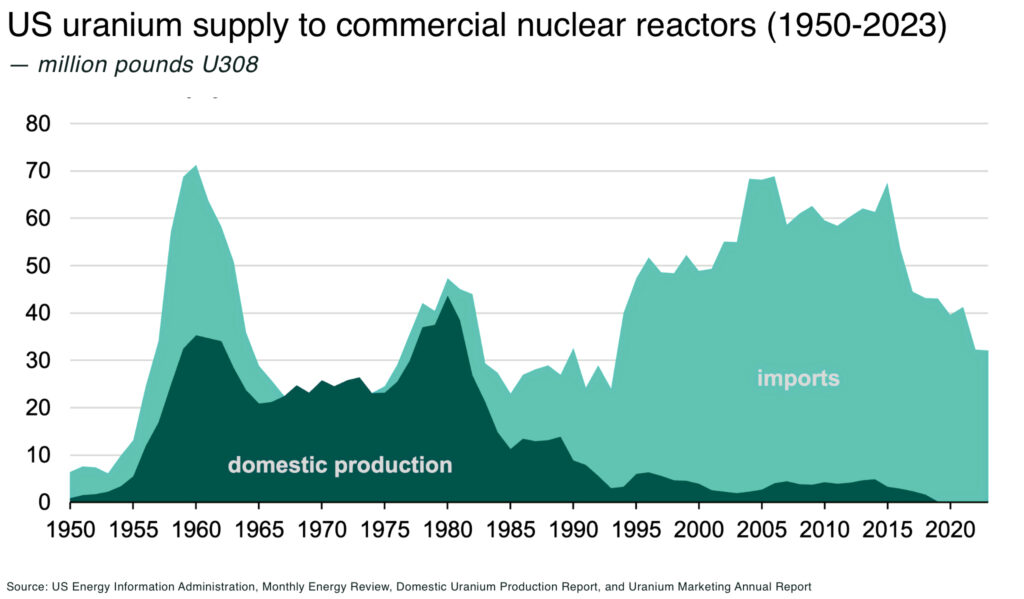
- US uranium mines produced just 677,000 pounds of U3O8 in 2024, while US reactors loaded 50.6 million pounds U3O8e into fuel assemblies
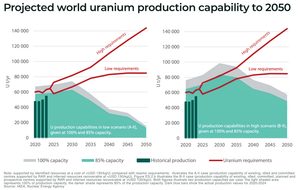
- global reactor uranium requirements forecast to rise from 68,920 tU in 2025 to just over 150,000 tU by 2040
The US has announced a plan to rebuild its nuclear fuel system on a timescale not seen since the first atomic age.
Under its new “Nuclear Dominance – 3 by 33” campaign, the Department of Energy wants to use the Defense Production Act to drive a seven-year rebuild of America’s entire nuclear fuel cycle: from uranium mining and milling to conversion, enrichment, fuel fabrication, recycling and reprocessing.
The closest historical comparisons are the Manhattan Project, which built US uranium enrichment capacity, and the civilian nuclear buildout after the 1954 Atomic Energy Act.
The challenge: US mines produced about 2.12 million pounds of U3O8 in 2025, but the EIA projects US civilian reactor uranium requirements of 57.584 million pounds U3O8 – meaning domestic mine production only covers 3.7% of projected reactor requirements.
And then there’s the problem of only one operating conventional uranium mill, one commercial uranium conversion facility, only one operating commercial enrichment plant, no commercial-scale domestic HALEU supply and no operating commercial reprocessing system in the USA.
How to achieve “Nuclear Dominance” — 3 by 33
Working with representatives from more than 90 companies spanning the nuclear industrial base, the Department of Energy will work through the Defense Production Act (DPA) Nuclear Fuel Cycle Consortium.
The DPA Consortium was established in August 2025 after President Donald Trump issued four Executive Orders to accelerate the redevelopment of America’s nuclear energy sector.
The stated goal is to “have enough nuclear fuel to power the current nuclear reactor fleet as well as future advanced reactors” by 2033, including:
- catalyze a secure and cost-competitive domestic fuel supply chain
- accelerate advanced reactor deployment and close the fuel cycle
- explore how the DPA framework can be activated to grow and align workforce, finance, innovation and collaboration in support of nuclear build out
The initiative will work through a series of 60-day “sprints” to support rapid progress.
There is already federal money behind the broader push in the US to support nuclear energy. For example:
- In April 2026, the Dept of Energy announced it was seeking private-sector partners for a commercial-scale demonstration of used nuclear fuel recycling
- in January 2026, the Dept of Energy awarded US$2.7 billion over 10 years to strengthen domestic enrichment services
Crucially, the consortium was establised under Section 708 of the Defense Production Act, which allows voluntary agreements between government and industry (when certain conditions are met). This gives companies a protected framework to coordinate on supply-chain capacity, demand, workforce, financing and production planning without triggering normal antitrust concerns.
The consortium is separate from the Dept of Energy’s existing LEU and HALEU procurement programmes, but it may also inform planning, making it a potential pipeline for support into offtake, procurement, loan support, regulatory coordination, workforce development and project prioritisation across the fuel cycle.
In short: the 3 by 33 is an attempt to organise America’s uranium sector: identify fuel-cycle gaps, align companies, and direct federal procurement to scale development quickly.
Why is the US rebuilding its uranium supply chain?
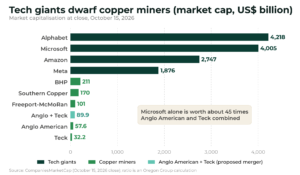
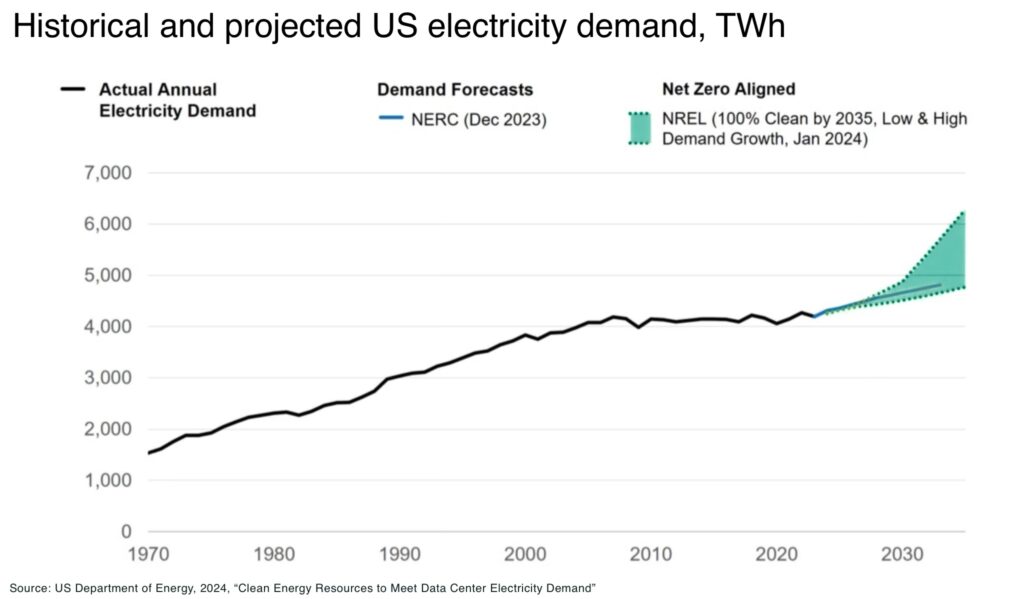
US electricity demand is projected to increase by 1% in 2026 and 3% in 2027 — the strongest four-year growth period since 2000 — and driven mostly by the growing demand from large data centers. And, estimates suggest data centers could account for up to 9-17% of US electricity generation by 2030, more than double current use.
“It takes massive amounts of electricity to generate intelligence. The more energy invested, the more intelligence produced. Since the demand for energy is unlimited, since the demand for intelligence is unlimited, so will be the demand for energy” — Chris Wright, US Secretary of Energy
Nuclear power offers stable energy offering baseload for national grids, with a potentially secure energy source, not reliant on vulnerable supply chains (similar to fossil fuels), that provides clean energy to meet net-zero goals.
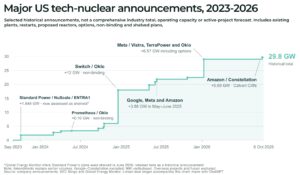
Both the government and tech companies are leading the charge:
- Microsoft / Constellation to restart the 835 MW Three Mile Island Unit 1 reactor with US$1 billion US govt loan
- Google signed working with Kairos Power on a planned US fleet of small modular reactors totalling 500 MW by 2035, with the first project targeted by 2030
- Amazon Web Services expanded its nuclear power strategy with Talen Energy, including a 1,920 MW power purchase agreement tied to the Susquehanna nuclear plant in Pennsylvania
- Meta announced agreements in 2026 with Vistra, TerraPower and Oklo to support up to 6.6 GW of new and existing nuclear capacity by 2035
The challenge to keep not just the data centers running, but financially competitive in the USA, as well as electricity bills stable and low for Americans, is energy security.
Nuclear energy accounts for approx 18% of US electricity but the fuel chain has been allowed to move offshore where it is exposed to volatile geopolitics. For example, Russia currently supplies about 25% of enriched uranium for America’s 94 nuclear reactors (and 44% of global uranium enrichment capacity)
America’s Prohibiting Russian Uranium Imports Act, signed into law on May 13, 2024, establishes a ban on importing Russian-produced low-enriched uranium (LEU) into the US, with a phase-out period lasting until January 1, 2028 — which is less than 2 years away.
In other words, time is running short for an industry that historically moves in decades.
The US is buying into a tightening global uranium market
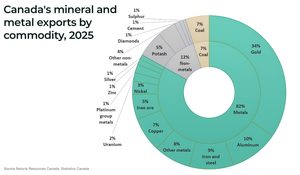
The US does not yet have enough domestic uranium supply to support its existing reactor fleet, let alone a larger nuclear buildout. In 2023, US nuclear generators imported uranium primarily from Canada, Australia, Russia, Kazakhstan and Uzbekistan.
But, just as the US wants to rebuild its nuclear fleet, global uranium supply is tightening. In other words, the US nuclear revival still depends on a global uranium market that is becoming more competitive and more geopolitically volatile.
Global reactor uranium requirements are projected to increase from 68,920 tU in 2025 to more than 150,000-204,000 tU by 2040, but that existing mines face depletion in the middle of the next decade.
And so attention is shifting to onshoring North American sources of uranium, with stable supply chains, established infrastructure and personell, as well as access to capital.
Manhattan Uranium
This is the macro scenario behind Manhattan Uranium.
Aero Energy, Urano Energy and Pegasus Resources are combining to create Manhattan Uranium Discovery Corp., the shares will trade under the new “MANU” ticker symbol on the TSX-V. A North American uranium explorer built around US domestic supply, Athabasca Basin exploration leverage and a board led by experienced uranium veterans. William Sheriff has joined the Company as Chairman. A 40-year minerals industry veteran, Mr. Sheriff co-founded Energy Metals Corp. and compiled the largest domestic uranium resource base in U.S. history before its $1.8 billion acquisition by Uranium One in 2007, and has since raised over $500 million in the public markets as founder and Executive Chairman of enCore Energy Corp., advancing it from inception to a producing uranium company.
The combined portfolio includes 25 underexplored properties covering 25,099 acres in the US, including 15 past-producing uranium mines, plus high-grade Athabasca Basin potential. The proposed company is designed around scale. And the companies have since upsized their financing to as much as $11.5 million, citing strong demand.
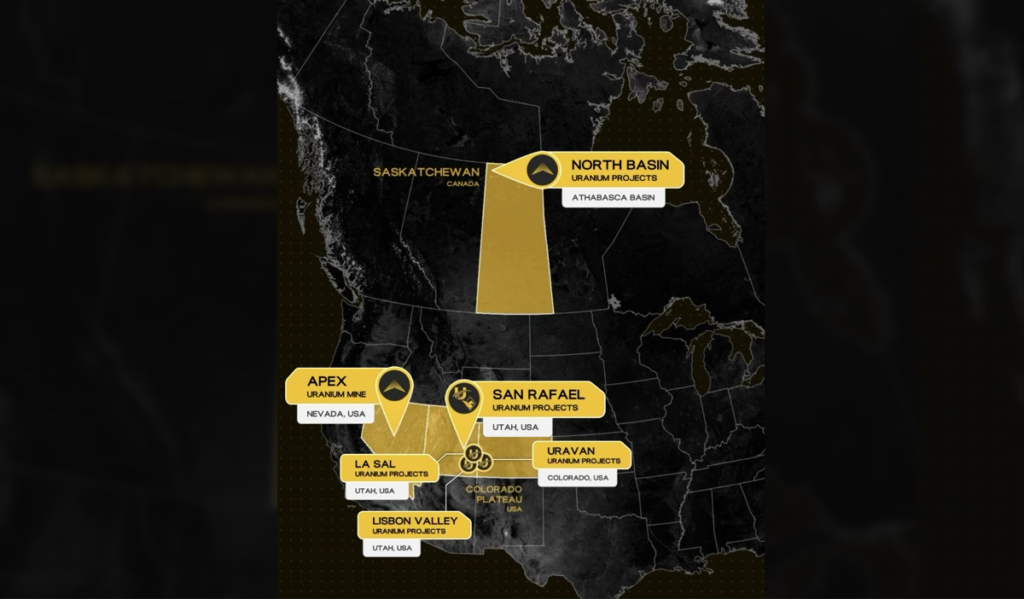
The portfolio gives the company two relevant angles: exposure to US domestic uranium policy and exploration leverage in Canada’s Athabasca Basin, one of the world’s highest-grade uranium districts, with grades of up to 20% uranium, x100 greater than the world average.
Why consolidate now?
The uranium sector is entering a capital discipline phase.
The last bull market created too many small companies chasing too many marginal assets. This cycle is different. The policy tailwind is stronger, but investors are increasingly selective. Projects need jurisdictional relevance, credible teams and a path to scale.
This is the rationale behind Manhattan Uranium: a merger that consolidates assets, management and market visibility at a time when Washington is explicitly trying to rebuild domestic nuclear fuel capacity.
This does not remove exploration risk. The company remains exposed to permitting, capital markets, uranium prices, drilling results and the challenge of turning historical mines or resources into modern compliant projects.
But the timing is significant.
The US is no longer just talking about nuclear power. It is funding enrichment, coordinating industry under the Defense Production Act and driving hard to reduce reliance on foreign fuel.
Conclusion
The US uranium revival is not just a mining story, it is a national security story.
AI data centers, industrial electrification and supply chain vulnerability are forcing a reassessment of both nuclear power and fuel supply.
And the timeline is critical. Achieving “nuclear dominance” by 2033 gives the US just seven years to rebuild capacity across a sector where permitting, financing, construction and qualification cycles often run for decades. In nuclear energy timescales, this is a marathon done at the speed of a sprint.