

Manhattan Uranium (TSXV: MANU | OTCQB: MAUUF) is positioning itself for the uranium demand set to fuel America’s nuclear reset: historic domestic uranium districts, permitted targets and near-term drill catalysts at the front end of the fuel cycle.
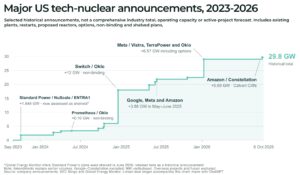
As the US races to expand nuclear power to meet AI-driven energy demand, secure uranium supply is becoming national security priority — and America has given itself just seven years to rebuild America’s entire nuclear fuel cycle.
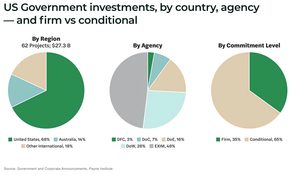
The Department of Energy’s “Nuclear Dominance – 3 by 33” campaign brings more than 90 companies into a Defense Production Act framework covering milling, conversion, enrichment, deconversion, fabrication, recycling and reprocessing.
But, new uranium mines are not built on policy slogans. They need geology, permits, data, infrastructure, capital and time (often decades) to build.
Manhattan Uranium is working to compress that timeline by consolidating old uranium districts with historic production, existing permits, underground workings and legacy drill data, giving modern exploration a head start instead of starting from a blank map.
- Manhattan Uranium emerged in May 2026 after the completed acquisitions of Urano Energy and Pegasus Resources, creating a platform with 15 past-producing uranium mines across 25 US properties covering 25,099 acres
- Manhattan and Fortune Bay have now commenced diamond drilling at Murmac, with the first 15 priority targets underway as part of a fully funded program of approximately 5,000 metres across up to 25 Murmac and Strike targets
- The US uranium gap remains stark: US uranium concentrate production rose to a preliminary 2.16 million pounds U3O8 in 2025, but that covered only about 3.8% of projected US reactor requirements of 57.584 million pounds
- Manhattan’s Apex Project in Nevada has a fresh regulatory catalyst after the US Forest Service approved up to seven drill pads at Nevada’s largest historical past-producing uranium mine
Why Manhattan Uranium, why now?
The US operates the world’s largest nuclear power plant fleet, with 94 reactors and nearly 97 GW of net capacity, and nuclear supplied about 18% of US utility-scale electricity generation in 2025.
Yet, despite US uranium concentrate production rising from 677,000 pounds U3O8 in 2024 to a preliminary 2.16 million pounds in 2025, including 1.04 million pounds in Q4 alone — that covers just 3.8% of US reactor requirements of 57.6 million pounds.
The policy ambition is now bigger than the domestic production base.
To hit the country’s target of nuclear dominance by 2033, the US needs projects that can move through validation, permitting and potential processing pathways in secure jurisdictions. And so, Aero Energy, Urano Energy and Pegasus Resources combined to create Manhattan Uranium Discovery Corp, a North American uranium explorer built to secure US domestic uranium supply.
The portfolio: old mines, new capital, modern drilling
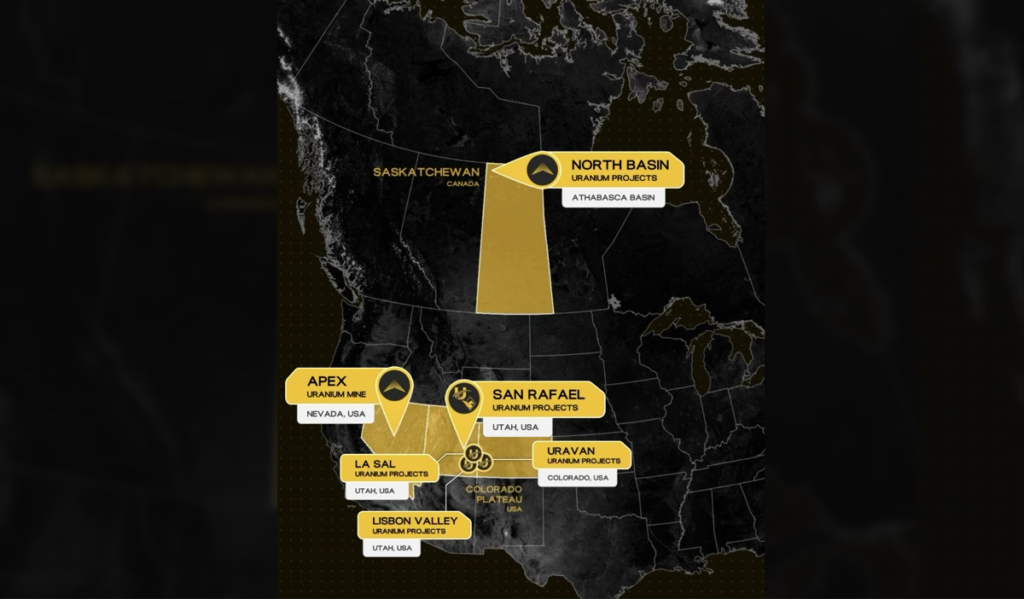
The combined portfolio includes 25 underexplored properties covering 25,099 acres in the US, including 15 past-producing uranium mines, plus high-grade Athabasca Basin potential. The combined company is designed around scale. And the company has since upsized their financing to as much as $11.5 million, citing strong demand.
Manhattan Uranium’s portfolio provides a diversity of exposure, from the Colorado Plateau and Nevada, to Canada’s high-grade exploration optionality in the Athabasca Basin, known for some of the world’s highest-grade uranium deposits, up to 20% uranium, x100 greater than the world average.
The mix is important: the US assets support the domestic-supply thesis, the Athabasca assets support the discovery thesis.
| Asset | Why it matters |
|---|---|
| I-70 and Melinda(Utah) | I-70 gives Manhattan a more advanced US hub: an active underground mining permit, thousands of historical drill holes and an expanded 4,416-acre land package. Melinda adds near-term target testing, with radiometric anomalies, and hundreds of historical drill holes |
| Lisbon Valley, (Utah) | Lisbon Valley brings scale in one of Utah’s most important uranium-vanadium districts, with 77.9 million pounds U3O8 and 10.3 million pounds V2O5 produced historically. North Lisbon is the more advanced asset, while Central Lisbon and Sun add earlier-stage district upside near the historic Mi Vida Mine |
| Apex(Nevada) | Apex is the near-term US catalyst: Nevada’s largest historical past-producing uranium mine, responsible for roughly 50% of the state’s all-time uranium output. The US Forest Service has approved up to seven drill pads, giving Manhattan a path to test historical intercepts including 34.1 metres at 0.37% U3O8 and 15.2 metres at 0.51% U3O8 |
| Murmac and Strike (Athabasca Basin) | Murmac and Strike give Manhattan Athabasca exploration exposure. Manhattan and Fortune Bay plan approximately 5,000 metres of drilling to test up to 25 priority targets across more than 60 kilometres of prospective electromagnetic conductor packages |
Murmac drilling is now underway
The Murmac and Strike story has moved from optionality to active drilling.
On June 16, 2026, Manhattan and Fortune Bay announced that diamond drilling commenced at Murmac near Uranium City in northern Saskatchewan, targeting high-grade, basement-hosted uranium mineralization related to the Athabasca Basin.
The program is part of the previously announced fully funded campaign at Murmac and Strike. It comprises approximately 5,000 metres of drilling across up to 25 targets, with drilling now underway on 15 priority targets at Murmac before moving to Strike.
The first 15 Murmac targets are selected from integrated geological, geophysical and geochemical datasets. Targeting focuses on favourable graphitic host rocks, electromagnetic conductor features, structural settings, gravity lows, alteration and uranium anomalism, with priority given to areas where multiple criteria are present.
The target list spans the Armbruster, Howland, Howland East and Pitchvein conductor corridors. The release highlights targets defined by electromagnetic lows and highs, magnetic lows, gravity lows, conductor breaks, conductor inflections and cross-fault intersections.
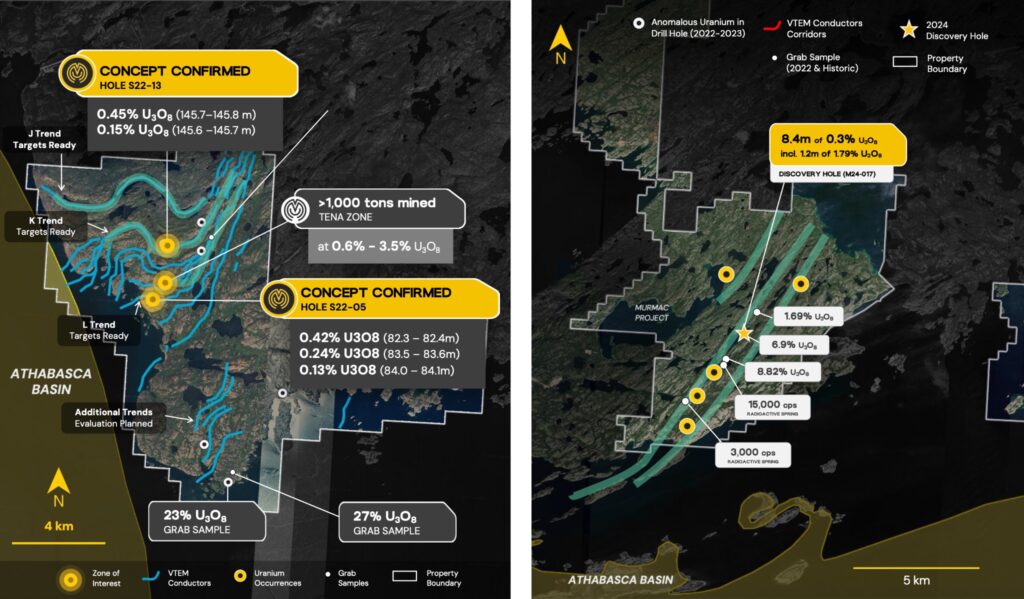
Previous drilling at Murmac confirmed shallow uranium mineralization associated with structured graphitic rocks. Hole M24-017 intersected 8.40 metres grading 0.30% U3O8, including 1.20 metres grading 1.79% U3O8, with individual assays up to 13.80% U3O8 over 0.10 metres and 4.54% U3O8 over 0.10 metres at approximately 64 metres below surface.
The strategic point is simple: Manhattan now has an active Athabasca drill campaign running in parallel with its US uranium portfolio. That gives the company a cleaner catalyst sequence: Murmac drilling first, Strike drilling next, Apex permitted in Nevada and Utah historical datasets being compiled toward modern technical validation.
“The commencement of drilling at Murmac marks a significant milestone for Manhattan. The Athabasca Basin is the world’s premier high-grade uranium jurisdiction, home to some of the largest and highest-grade deposits ever discovered, and our position at Murmac gives Manhattan meaningful exposure to the kind of discovery potential that can define a company.
Combined with our extensive US portfolio of 25 projects including 15 past-producing mines, we believe Manhattan is uniquely positioned as one of the most compelling North American uranium exploration stories in the market today,” stated William Sheriff, Chairman of Manhattan.
Strike remains the next Athabasca target
Strike remains the second part of the 2026 Athabasca campaign. After the initial Murmac targets, the drill program is expected to move to Strike, where previous exploration has confirmed uranium potential at surface, in historical workings and through drilling.
At the Tena Zone, historical small-scale mining reportedly produced more than 1,000 tons in the 1950s at grades of 0.6% to 3.5% U3O8, while Fortune Bay surface sampling returned 3.51% U3O8 and 1.75% U3O8, according to the June 4 Murmac and Strike target-selection release. Fortune Bay’s maiden drill program at Strike also intersected anomalous uranium in three of nine shallow holes, including a maximum individual assay of 0.43% U3O8.
For investors, this gives Manhattan a cleaner catalyst sequence: Athabasca drilling in June, Apex drilling authorization in Nevada, and Utah resource validation work behind it.
Apex is the drilling runway
Apex, as Nevada’s largest historical past-producing uranium mine (producing over half Nevada’s all-time uranium output), may be the company’s most immediate US value driver.
Historic intercepts include 34.1 metres at 0.37% U3O8 and 15.2 metres at 0.51% U3O8, with surface samples reporting up to 1.00% U3O8.
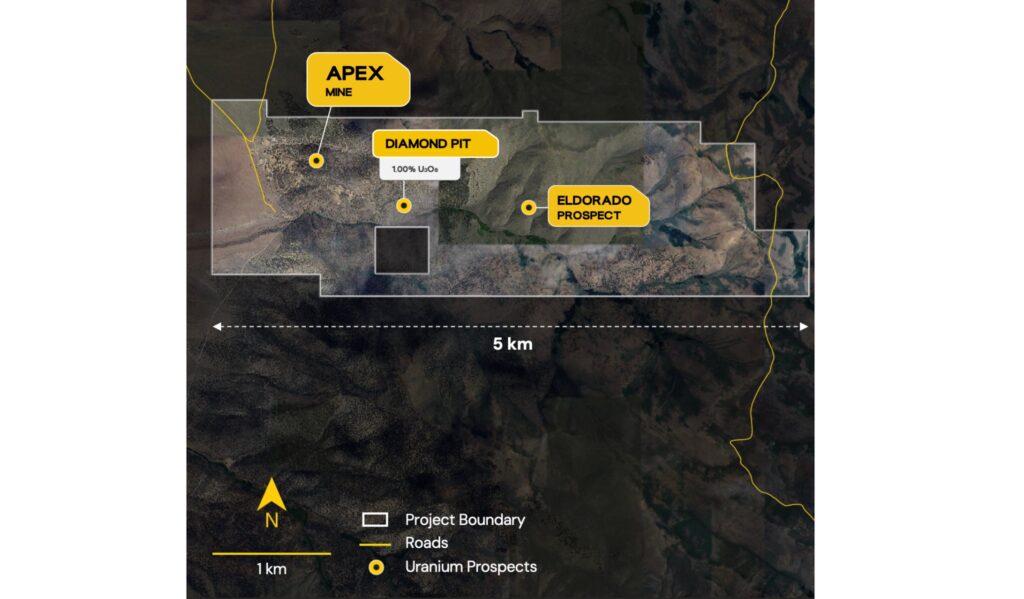
Then, on May 21, 2026, Manhattan announced the US Forest Service approved the Apex Plan of Operations for drilling in Lander County, Nevada, authorizing up to seven drill pads, a staging area, temporary road access and limited cross-country travel.
This gives Manhattan a modern drilling path at a historical mine with underground workings, known uranium showings and Nevada-scale strategic relevance.
The team
Manhattan’s portfolio is built around old uranium districts, so Manhattan is not trying to build a uranium platform with a first-cycle team.
William Sheriff joined Manhattan as Chairman, bringing one of the stronger uranium resumes in the North American market. A 40-year minerals industry veteran, Sheriff co-founded Energy Metals Corp. and helped compile what the largest domestic uranium resource base in US history before the company was sold to Uranium One for US$1.8 billion in 2007.
He later founded enCore Energy, advancing it from inception into a US uranium producer and raising more than US$600 million in the public markets. That experience matters for Manhattan because the company’s strategy is not just geological. It is also about consolidation, capital markets execution, permitting discipline and knowing which historical districts deserve modern dollars.
The broader Manhattan board and management team adds depth across uranium discovery, development and public markets. Following the Urano and Pegasus acquisitions, the board includes William Sheriff, Galen McNamara, John Hamrick, Grace Marosits and Garrett Ainsworth, with leadership experience from companies including enCore Energy, NexGen Energy, Alpha Minerals, Union Carbide and General Atomics.
2026 work program: validation first, then scale
Manhattan’s 2026 work program shifts from portfolio assembly to catalyst execution: Athabasca drilling in June, Apex permitted for drilling in Nevada, and Utah historical datasets being compiled toward modern technical validation.
The company has flagged multiple drill programs across the portfolio, including I-70 in Utah, Apex in Nevada and Murmac/Strike in the Athabasca Basin. The near-term aim is to validate historical mineralization, test the highest-priority conductors and begin converting legacy datasets into current technical work.
In Utah, the focus is resource validation and compilation at I-70, where Manhattan is working through historical drilling and underground data ahead of potential NI 43-101 resource work. At Apex, the newly approved Plan of Operations clears the way for modern drilling at Nevada’s largest historical uranium producer. In Saskatchewan, Murmac and Strike now bring a fully funded 5,000-metre program designed to test up to 25 priority targets.
Beyond 2026, the strategy is consolidation. Manhattan is evaluating additional uranium M&A opportunities, district-scale expansion and potential US milling pathways, with the goal of building a larger North American uranium platform rather than a single-project exploration story.
Conclusion
Timing is everything — and, in America’s nuclear fuel rebuild, time is short — with new demand expected to come online uranium supply remains import-heavy and geopolitically risky. Manhattan has assembled assets and a team in the jurisdictions now most exposed to that policy shift at just the right time.
Q&A
What is Manhattan Uranium?
Manhattan Uranium Discovery Corp. is a North American uranium explorer trading as TSXV: MANU, formed after the May 2026 acquisitions of Urano Energy and Pegasus Resources, with 15 past-producing uranium mines across 25 US properties.
What is Manhattan Uranium’s newest catalyst?
The newest catalyst is Murmac drilling. Manhattan and Fortune Bay announced on June 16, 2026 that diamond drilling has commenced at Murmac, starting with 15 priority targets before additional fully funded drilling at Strike.
Why is Manhattan Uranium tied to US energy security?
The company’s US assets sit in historic uranium districts at a time when US nuclear generators imported 99% of the uranium concentrate they used in 2023 and federal policy is targeting the domestic nuclear fuel cycle.
What is Manhattan Uranium’s next major catalyst?
Apex is a key catalyst after the US Forest Service approved the Plan of Operations for drilling, authorizing up to seven drill pads at Nevada’s largest historical past-producing uranium mine.