
For most of the past two decades, the technology industry has operated as if the physical world were somebody else’s problem.
Software companies scaled without building factories. Cloud computing let businesses add capacity without worrying much about what sat behind it. Even when technology companies moved into hardware, global supply chains generally delivered what they needed.
The AI boom gets discussed mostly in terms of semiconductors, computing power and electricity. All three matter. But underneath them sits a constraint that receives far less attention: commodities.
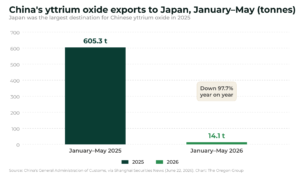
Data centers are physical infrastructure. So are the power plants, transmission lines, substations, transformers and cooling systems required to run them. Building all of this requires enormous quantities of copper, aluminum, steel and other materials. Expanding electricity generation brings uranium and natural gas into the equation. Semiconductor manufacturing depends on its own set of specialty metals—including gallium, germanium, palladium, and silicon—whose supply chains are heavily concentrated outside Western control.
Technology companies are becoming dependent on industries that move very slowly. That’s a new problem for an industry accustomed to moving at digital speed.
AI Is More Physical Than It Looks
When a user types a question into a phone and gets an answer in seconds, the experience feels almost entirely digital.
AI requires large data centers filled with advanced computing equipment. Those facilities need enormous electricity. Electricity requires generation. Generation needs transmission. Transmission requires copper, aluminum and electrical equipment. Data centers require construction materials, cooling infrastructure and backup power.
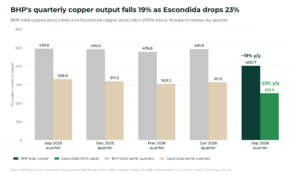
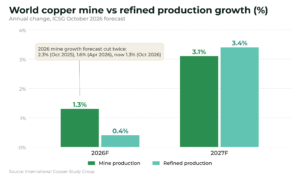
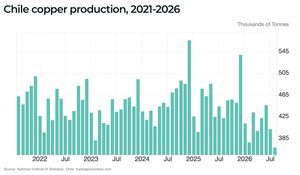
Copper is the clearest example of how these layers connect. It sits in transformers, transmission systems, data centers and power generation. Copper demand is already being pulled simultaneously by electrification, grid modernization and renewable energy—and AI infrastructure is now adding to that pressure. If AI electricity demand keeps growing, the industry won’t just need more chips. It will need considerably more of the infrastructure surrounding those chips.
Subscribe for Investment Insights. Stay Ahead.
Investment market and industry insights delivered to you in real-time.