
Bank of America has launched an 18-month, US$250 billion Critical Infrastructure Finance Initiative covering the physical systems behind America’s AI, energy and industrial buildout — with critical minerals explicitly included as a strategic priority.
The eligible sectors include:
- critical minerals and mining
- data centers
- semiconductors and telecommunications
- conventional and renewable power
- energy storage and electric batteries
- electricity transmission
- water, transportation
For mining and metals investors, the most significant part of the announcement is not necessarily the US$250 billion headline, but the decision to treat critical minerals as infrastructure which will support eligible primary-market lending, investments, capital-markets transactions and advisory work.
The inclusion of critical minerals reflects a new reality that data centers need electricity generation, substations, transformers, cooling systems, backup storage and extensive copper and aluminium cabling before a single chip can begin processing data.
Global data-center electricity consumption is projected to more than double to approximately 945 terawatt-hours by 2030. Data centers are forecast to account for about half of US electricity-demand growth over the same period.
US private data-center construction had already reached a seasonally adjusted annual rate of US$50.7 billion in April 2026, up 28.1% year on year, and that construction figure excludes servers, racks and other IT equipment.
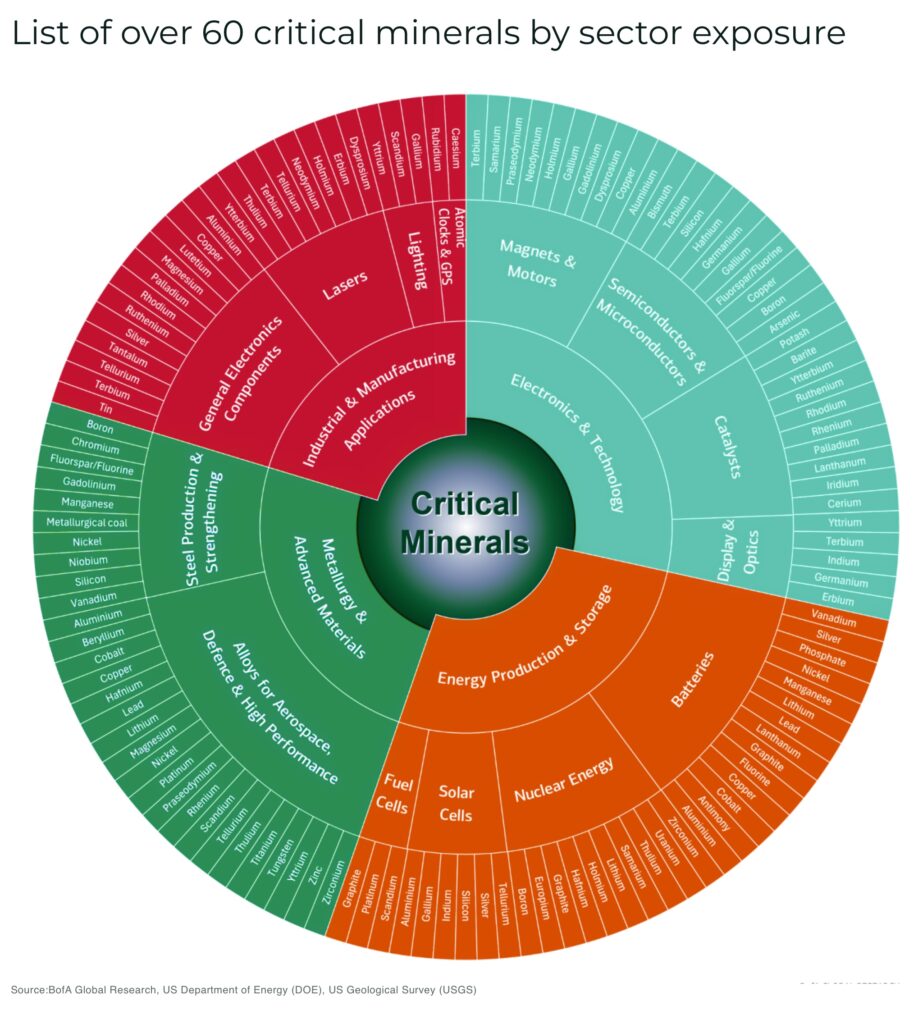
Bank of America’s own research identifies copper, gallium, rare earths, helium, neon and other specialised inputs as potential constraints on AI deployment, warning that demand is outpacing both supply growth and recycling.
The opportunity for mining is significant, but it is not guaranteed.
Large data centers and regulated utility projects generally offer contracted revenues, established counterparties and assets that conventional lenders understand. New mines and processing plants bring permitting risk, volatile commodity prices, technical uncertainty and development timelines that can stretch across political cycles.
The West needs an estimated US$500 billion in new mining capital through 2040 under current policy settings. Yet the persistent problem is not simply the availability of money, it is getting capital into early-stage projects and unfamiliar processing technologies.
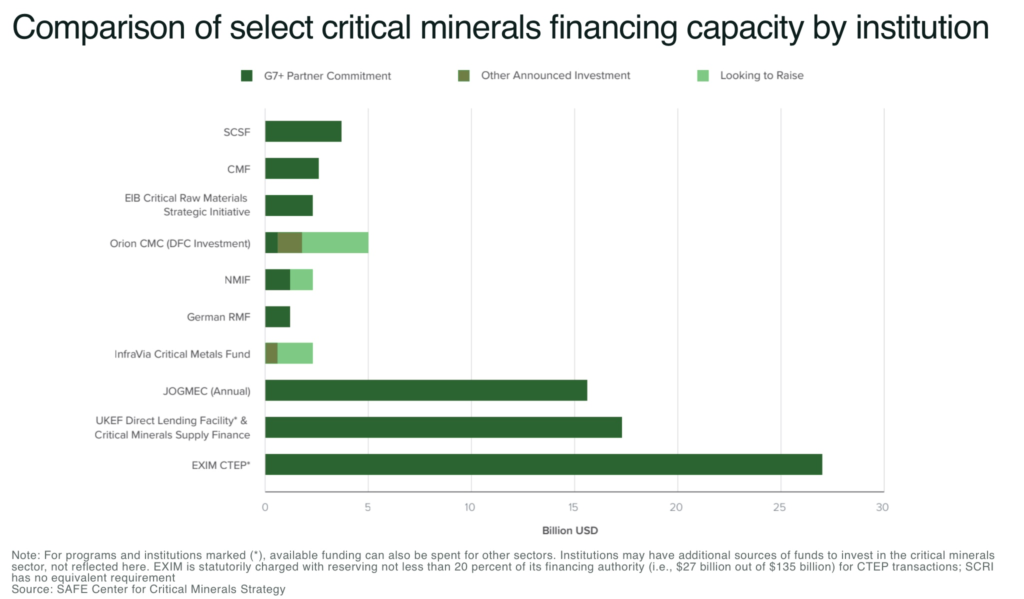
Bank finance can help, particularly when combined with:
- long-term offtake agreements
- government guarantees or political-risk insurance
- price floors
- export-credit support
- strategic equity
- shared financing across allied countries
Without these structures, most commercial capital will continue flowing toward mature infrastructure rather than the mines and refineries on which that infrastructure ultimately depends.
Wall Street is aligning around national infrastructure
Bank of America is not acting alone:
- JPMorganChase launched a US$1.5 trillion, ten-year Security and Resiliency Initiative in October 2025, covering critical minerals, energy, advanced manufacturing, defense and strategic technologies
- Morgan Stanley followed with its own US$1.5 trillion, ten-year US infrastructure initiative
This is, of course, partly a competition for lending, underwriting and advisory fees, but also marks a deeper shift: energy security, technology leadership and mineral supply are converging into a single infrastructure asset class supported by an increasingly bipartisan political climate.
For example the White House quickly promoted Bank of America’s plan as “more investment in the U.S.A.,” tying it to America’s 250th anniversary and the administration’s wider domestic-investment agenda.
If the initiative primarily finances data centers and power assets, critical minerals may remain a small line item inside a very large headline, but it helps turn undeveloped mineral resources and processing proposals into bankable projects, it could mark something more important: the point when Wall Street began financing the AI supply chain from the ground up.