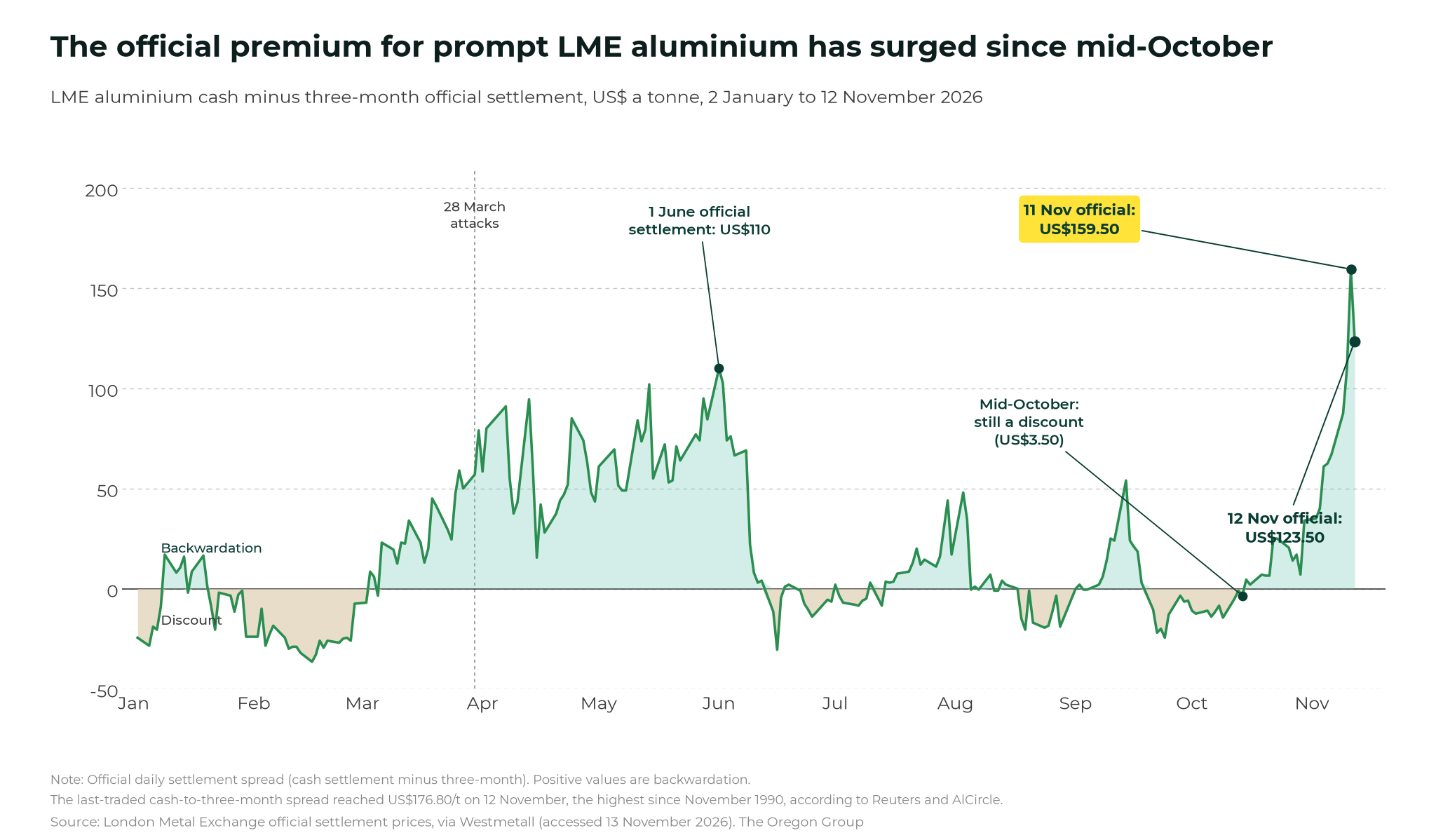
- the premium for aluminium delivered now over aluminium delivered in three months on the London Metal Exchange last traded at US$176.80 a tonne on November 12, its highest since November 1990
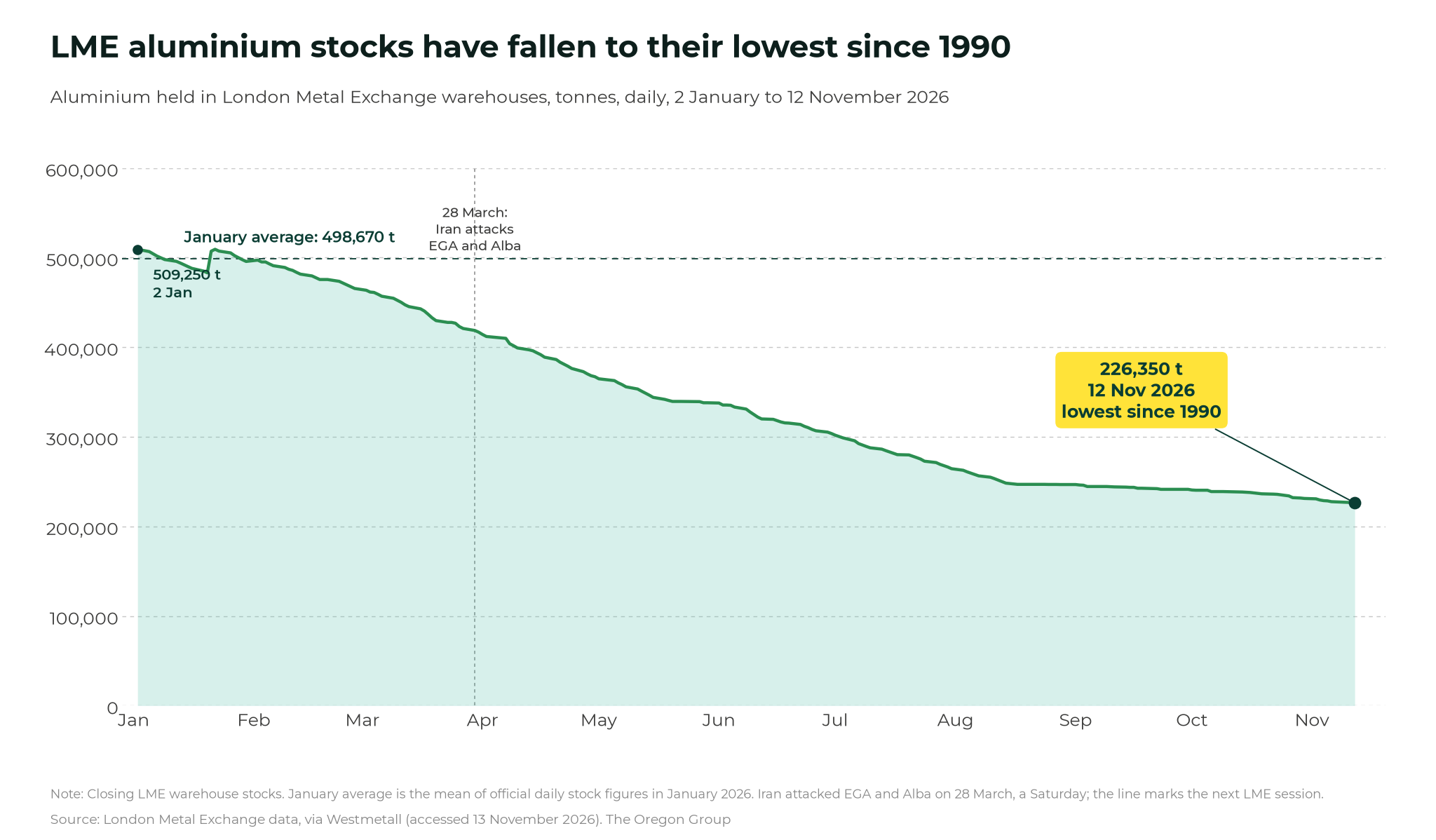
- LME aluminium stocks have fallen to 226,350 tonnes, the lowest since 1990 and less than half January’s average of 498,670 tonnes, equal to about one day of world primary aluminium output
- nearly all of that metal is Russian, and one holder controls 30-39% of warrants, while trader Trafigura is reportedly buying LME aluminium to ship to China
The premium for buying aluminium now rather than in three months has hit a 36-year high on the London Metal Exchange, as stocks in LME warehouses fell to their lowest since 1990.
The cash-to-three-month spread, known as backwardation, last traded at US$176.80 a tonne on November 12, the highest since November 1990. Official settlement prices put the premium at US$123.50 a tonne that day, after US$159.50 the previous session. As recently as mid-October, the spread was trading at a discount.
Stocks have collapsed at the same time — in particular, LME warehouses hold 226,350 tonnes of aluminium, the lowest since 1990, down from a January average of 498,670 tonnes. The world produced just under 74 million tonnes of primary aluminium last year, so by our calculation the entire LME stock equals about one day of global output.
A squeeze on Russian metal
The aluminium metal that remains is almost entirely Russian, with Russian-origin aluminium made up 99.98% of available, or on-warrant, LME stocks at the end of October, and one entity holds 30-39% of LME aluminium warrants.
That matters because many Western banks and traders have stepped back from handling Russian metal since the invasion of Ukraine. As Wood Mackenzie analyst Uday Patel put it:
“the LME aluminium price is effectively the price of the Russian metal now because it’s the only origin there”
China has no such reluctance, and trader Trafigura has reportedly built a significant long position in LME aluminium to sell at a profit in China, where Russian aluminium is widely accepted. Positions in the November contract shown in LME data are collectively larger than the exchange’s entire stock, ahead of the contract’s expiry on Wednesday, November 18.
On the Shanghai Futures Exchange, December aluminium closed 550 yuan a tonne above January, the steepest front-month backwardation since 2002, suggesting China is short of metal too.
The Gulf supply gap behind it
The squeeze follows the loss of supply from the Middle East after Iran attacked Emirates Global Aluminium (EGA) and Aluminium Bahrain on March 28, badly damaging EGA’s Al Taweelah smelter, which produced 1.6 million tonnes of cast metal in 2025.
EGA said this week that restoration of the smelter has reached 61%, with full recovery expected in the first quarter of 2027. Its aluminium sales fell 36% in the first nine months of 2026, and its debt rose 40% to US$4.9 billion, partly because of repair spending.
As we wrote in June, in Aluminium inventories fall below five days of global supply, when the spot premium had reached US$97 a tonne:
“That kind of backwardation is a classic sign of buyers paying up for metal now, not later.”
The last-traded premium is now almost twice as high, and Goldman Sachs’ metals sales desk told clients it “struggle to see spreads easing when China and LME are both competing for metal“.
The risks to watch
This squeeze is in metal available for immediate delivery, not necessarily in long-term supply. Three-month LME aluminium fell 1% to US$3,032 a tonne on November 12, well below the US$3,707.50 four-year high it hit on June 1, and the LME can require holders of dominant positions to lend metal back to the market at capped rates. Once Gulf output returns, ING said in July it expects the market to move from a 2026 deficit of about 1.2 million tonnes into a modest surplus in 2027.
The risk for buyers outside China is that the only metal left on the world’s main exchange is metal many of them won’t touch, and China is outbidding them for it.