
- US suppliers must direct 100% of covered tungsten scrap and battery black mass sales to domestic buyers under a new Bureau of Industry and Security allocation order
- Restrictions run from August 27, 2026, through August 27, 2027
- China controls about 80% of global tungsten mine supply and much of the processing chain
- The order secures feedstock, but America’s limited recycling capacity remains the critical bottleneck
The US will block most exports of tungsten waste and lithium-ion battery “black mass” for one year — from August 27, US companies selling covered material must allocate 100% of their monthly sales to buyers located in the US.
Tungsten waste and scrap, along with specified grades of shredded lithium-ion battery material, must remain physically inside the country unless the Commerce Department grants an exception.
The rule transforms industrial scrap into a strategic resource as Washington races to reduce its dependence on China for materials used in weapons, semiconductors and advanced manufacturing, in particular, with reports of missile shortages due to the war in Iran.
The Federal Register temporary final rule was issued under the Defense Production Act after President Donald Trump declared recoverable critical materials essential to national defense. Customs officials may detain shipments while BIS determines whether the material is covered.
Technically, the measure is a domestic-sales requirement rather than an unconditional export ban. BIS can approve exemptions for exceptional hardship, irreparable harm or shipments sent abroad for processing and subsequently returned to the US.
Why tungsten — and why now?
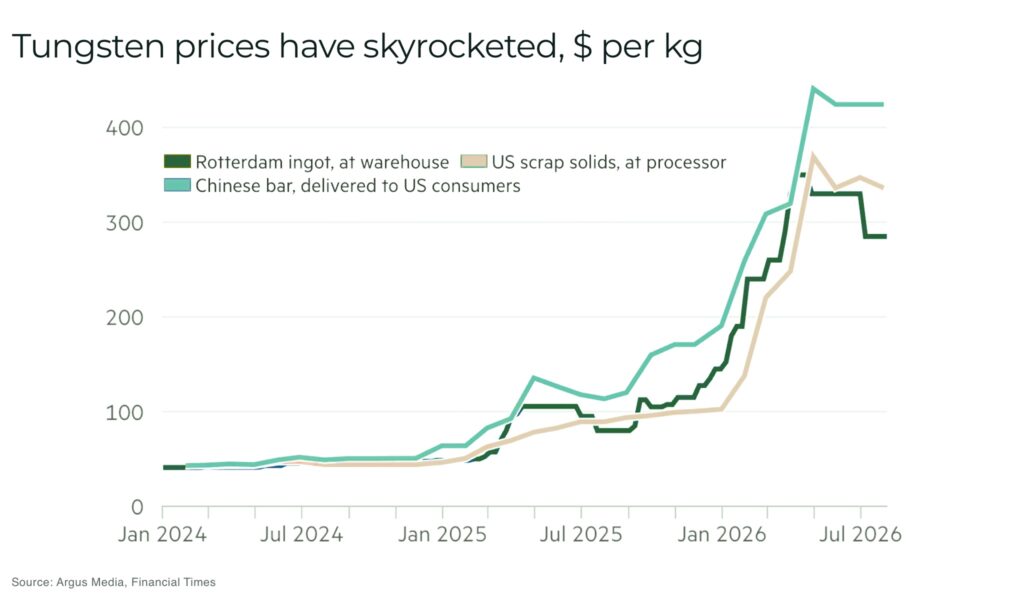
The price of tungsten has gone vertical with gains over the past year outpacing those gold and oil. The price spike reflects a supply squeeze as demand for tungsten across the West ramps up, just as China, which controls about 80% of global mine production and 80% of downstream processed tungsten products, tightens exports.
As we highlighted in our recent report, demand drivers for tungsten include military, technology, electric vehicles, aerospace, etc.
Read more: Why tungsten prices are rising so fast: inside the supply crunch
China produced roughly 79% of the world’s mined tungsten in 2025 and controls an estimated 70% to 85% of several downstream processing stages. The US, meanwhile, has recorded no domestic tungsten mine production since 2015, even though several American companies retain processing capacity.
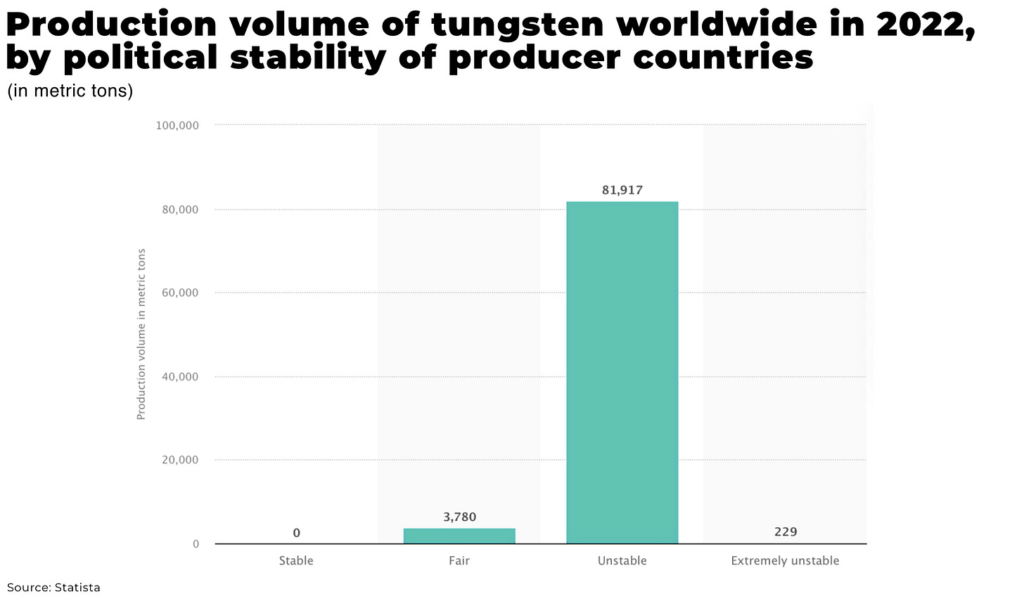
And, from January 1, 2027, US defense procurement rules are set to restrict tungsten sourced from China, Russia, Iran and North Korea in key military applications. President Trump subsequently ordered tighter controls on exemptions in a July 2026 defense supply-chain executive order.
New American mines will not be ready in time to close that gap, so scrap is therefore one of the few sources of tungsten Washington can secure immediately.
For example, the US exports an estimated 33,000 tonnes a month of electronic waste and other scrap. So, this means overseas consumers — particularly those already competing for non-Chinese tungsten — lose another potential source of secondary supply.
The export restriction is one of Washington’s clearest acknowledgements that critical-mineral security begins before a new mine is permitted.
The policy direction is unmistakable: tungsten waste is no longer being treated as disposable material. It is now part of the US defense supply chain. The order buys the US twelve months to finance processing plants, qualify new suppliers and connect domestic scrap collectors with American end users.