
China imported more than 1,000 tonnes of gold in the first eight months of 2026, exceeding its purchases for the whole of last year — with imports reaching their highest level for the period in customs records dating back to 2017.
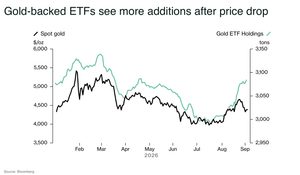
Lower international prices and a stronger yuan encouraged purchases and investment demand, while Chinese gold prices traded above global benchmarks, drawing metal into the country.
The import bill reached US$158.8 billion, compared with US$96.5 billion for 886 tonnes across all of 2025, according to Financial Times figures reported by International Finance.
The two major sources of buying include:
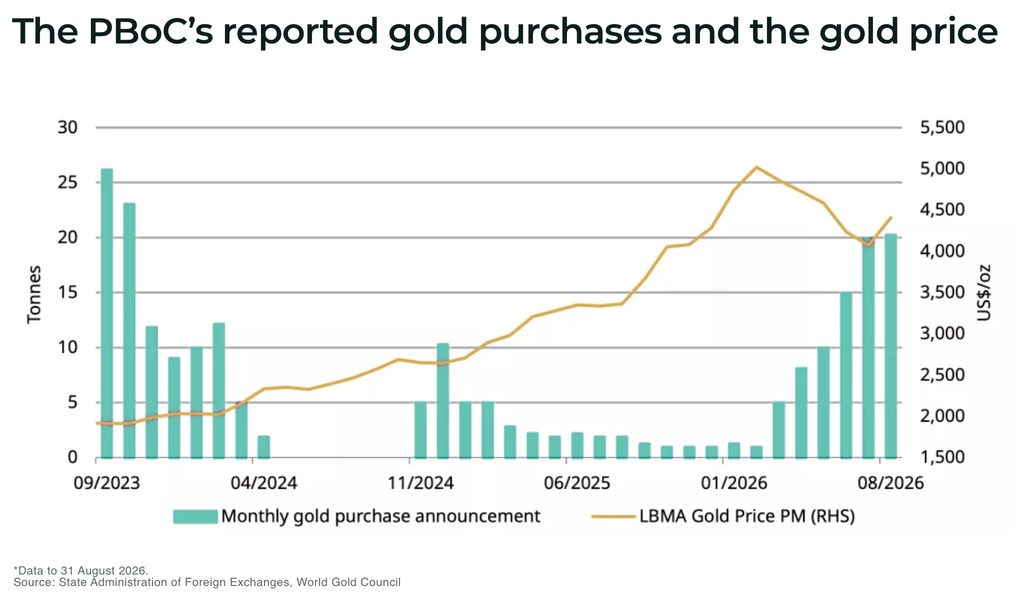
- Central-bank reserves: the People’s Bank of China added 20.2 tonnes in August, its largest monthly purchase since October 2023. Its 22nd consecutive monthly increase lifted official holdings to 2,387 tonnes, equivalent to 9% of foreign-exchange reserves
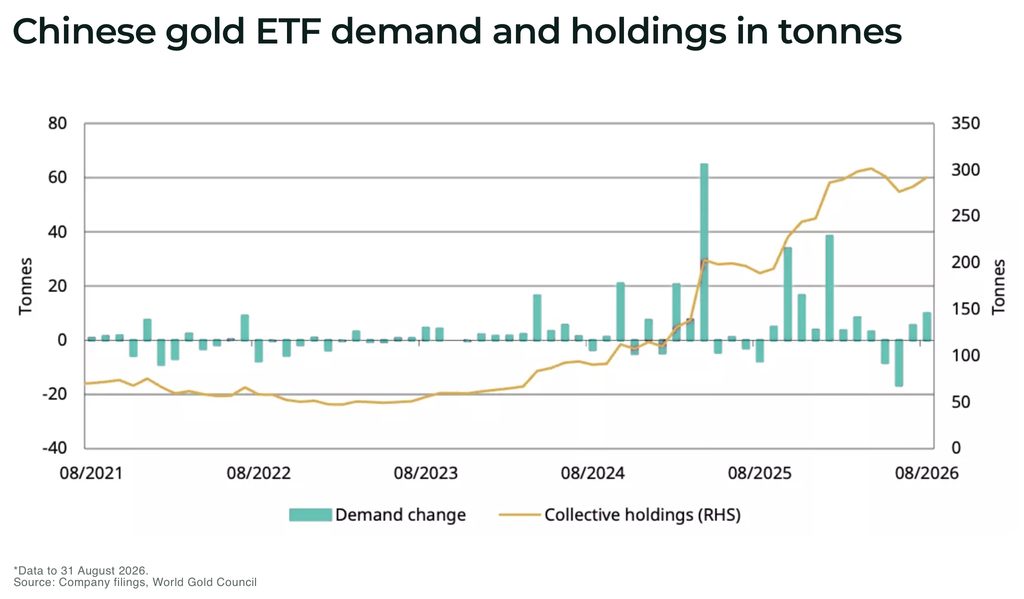
- Investment funds: Chinese gold ETFs added 11 tonnes in August, taking holdings to 293 tonnes. Inflows continued into early September, supported by falling domestic bond yields and sluggish equities
Official reserve additions and commercial imports are separate measures; the 1,000-tonne import figure should not be read as central-bank buying.
The scale is substantial: China’s eight-month imports exceeded a quarter of the approx 3,672 tonnes mined worldwide in 2025, when mine production grew just 1%. Imports can also include recycled metal and existing inventories.
However, physical demand softened in August. Shanghai Gold Exchange withdrawals fell 22% month-on-month and 27% year-on-year to 62 tonnes, reflecting cooler bullion investment and weak jewellery demand.
For gold investors and miners, the figures suggest continued support from reserve diversification and investment flows. Sustained Chinese buying could help absorb selling elsewhere, although August’s wholesale slowdown shows that buyers remain sensitive to price and volatility.