
- China exported 40,668 metric tonnes of refined zinc in August, its second-highest monthly volume in almost 20 years
- the country became a net exporter of 4,388 metric tonnes over the first eight months of 2026, reversing its traditional position as a major net importer
- LME zinc inventories rose from 88,000 metric tonnes in mid-August to 126,975 metric tonnes in early October as metal arrived in Hong Kong, Singapore and Taiwan
China exported 40,668 metric tonnes of refined zinc in August — more than four times the July volume — as a shortage of immediately available metal on the London Metal Exchange opened a profitable route from Chinese smelters to Asian warehouses.
The August total was China’s second-highest monthly zinc export volume in almost two decades, according to World Bureau of Metal Statistics data compiled from Chinese customs figures.
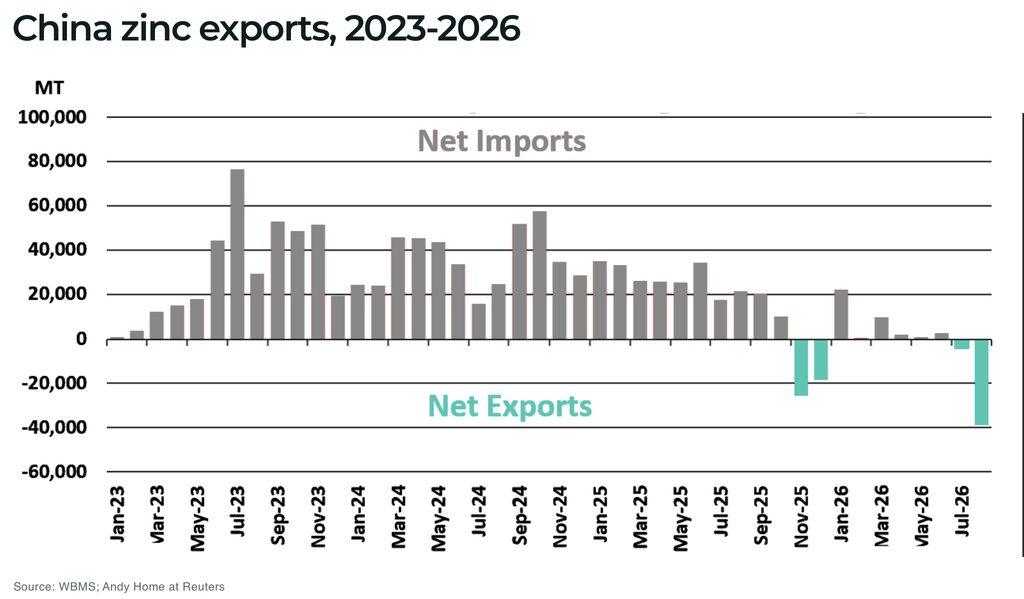
Imports, meanwhile, fell to approximately 2,300 metric tonnes in August. China exported a net 38,300 metric tonnes during the month and became a net exporter of 4,388 metric tonnes across January to August.
China has historically absorbed refined zinc from the international market, but is now supplying metal to a Western market struggling with mine disruption, low smelter margins and high energy costs.
What happened in September?
China’s official September zinc trade figures are not yet available, as the latest published monthly Chinese trade statistics cover August, meaning September exports should not yet be quoted as a confirmed customs figure — however, the physical evidence nevertheless suggests shipments continued.
LME warehouses in Hong Kong received 35,000 metric tonnes of zinc from mid-August to early October, and Singapore received 21,250 metric tonnes and Kaohsiung in Taiwan received 16,725 metric tonnes.
Those movements overlap with August and cannot be treated as a separate September export total, but almost daily deliveries into Hong Kong during September indicate that the August export wave did not stop at month-end.
Shanghai Metals Market also reported that the export window remained open during September as the price of zinc outside China continued to exceed the domestic market after adjusting for currency, freight and other costs. However, it expects exports to be lower than August as the arbitrage opportunity narrows.
| Market indicator | August 2026 | Position by early October |
|---|---|---|
| Chinese refined-zinc exports | 40,668 metric tonnes | September customs total not yet available |
| LME registered zinc stocks | 88,000 metric tonnes at the mid-August low | 126,975 metric tonnes |
| LME three-month zinc | Four-year high of US$4,065 per metric tonne in early September | Approximately US$3,715 per metric tonne |
| Cash premium over three-month metal | US$215 per metric tonne in late August | Approximately US$60 per metric tonne |
Chinese exports have therefore relieved the immediate squeeze, but they have not eliminated it.
The cash price still trades above the three-month contract, a market structure known as backwardation that signals buyers continue to pay a premium for immediately available zinc.
China’s zinc surplus meets a Western smelting problem
The export surge reflects a growing split between Chinese and Western zinc markets.
Weak construction activity has weighed on Chinese demand for galvanized steel, while the country’s refined-zinc production increased by 5.9% during the first half of 2026, refined production outside China fell 3.4% over the same period.
The raw-material market is tighter with global zinc mine production declining by 2.6% year over year in the first half, as major operations including Antamina in Peru and Red Dog in Alaska processed lower-grade ore.
Competition between smelters for concentrates pushed spot treatment charges (the fees miners pay smelters to process their material) to a reported minus US$113 per metric tonne in August. These negative charges transfer value from the smelter to the miner and place severe pressure on processing margins.
Europe ,meanwhile, faces the added burden of high electricity costs. For example:
- Nyrstar launched a strategic review of its 315,000-metric-tonne-per-year Budel smelter in the Netherlands on September 24, citing Chinese overcapacity, competition for feedstock, historically low treatment charges and elevated European energy costs
- Budel continues to operate while the review is under way, so closure should not be treated as decided
Further reductions in Western smelting capacity would deepen the dependence now visible in the LME market.
China is becoming the market’s balancing supplier
China’s zinc shipments have lowered prices and rebuilt exchange inventories which, in the short term, is bearish for the LME price and helpful for consumers of galvanized steel.
However, the longer-term signal with zinc is more complicated.
The current squeeze is rooted partly in falling mine supply and weakening smelter economics. Moving Chinese metal into LME warehouses treats the shortage of deliverable zinc; it does not repair Western processing capacity or increase the supply of concentrate.
As our earlier analysis of volatility in critical zinc supply highlighted, small disruptions can have an outsized effect on a market already exposed to declining ore grades, energy costs and concentrated refining capacity.
China is on course to become a net annual zinc exporter for the first time since 2022 — and the strategic point is simple: the West is trying to reduce its dependence on Chinese processing for critical minerals, yet the LME zinc market increasingly needs Chinese smelters to supply its metal of last resort.
The next test will be China’s September customs figures. If exports remained near August’s elevated level, the LME squeeze could continue to unwind. If shipments fall as the arbitrage closes, the cash premium may widen again, revealing how little spare zinc is available outside China.
FAQ
How much zinc did China export in August 2026?
China exported 40,668 metric tonnes of refined zinc, the second-highest monthly total in almost 20 years.
Did Chinese zinc exports continue in September?
LME warehouse arrivals and Chinese market data indicate shipments continued, but September customs figures have not yet been published. The final volume therefore remains unconfirmed.
Why is China exporting zinc?
LME zinc prices rose relative to Shanghai prices, creating an arbitrage opportunity to buy Chinese metal and ship it to LME-approved warehouses in Asia.
Has the LME zinc squeeze ended?
No. Registered inventories have recovered and the cash premium has narrowed, but cash zinc still trades above three-month metal, indicating continued tightness in immediately available supply.
Why does this matter for investors?
Chinese exports can suppress prices in the near term, while falling mine production, negative treatment charges and pressure on Western smelters support a tighter medium-term supply outlook.