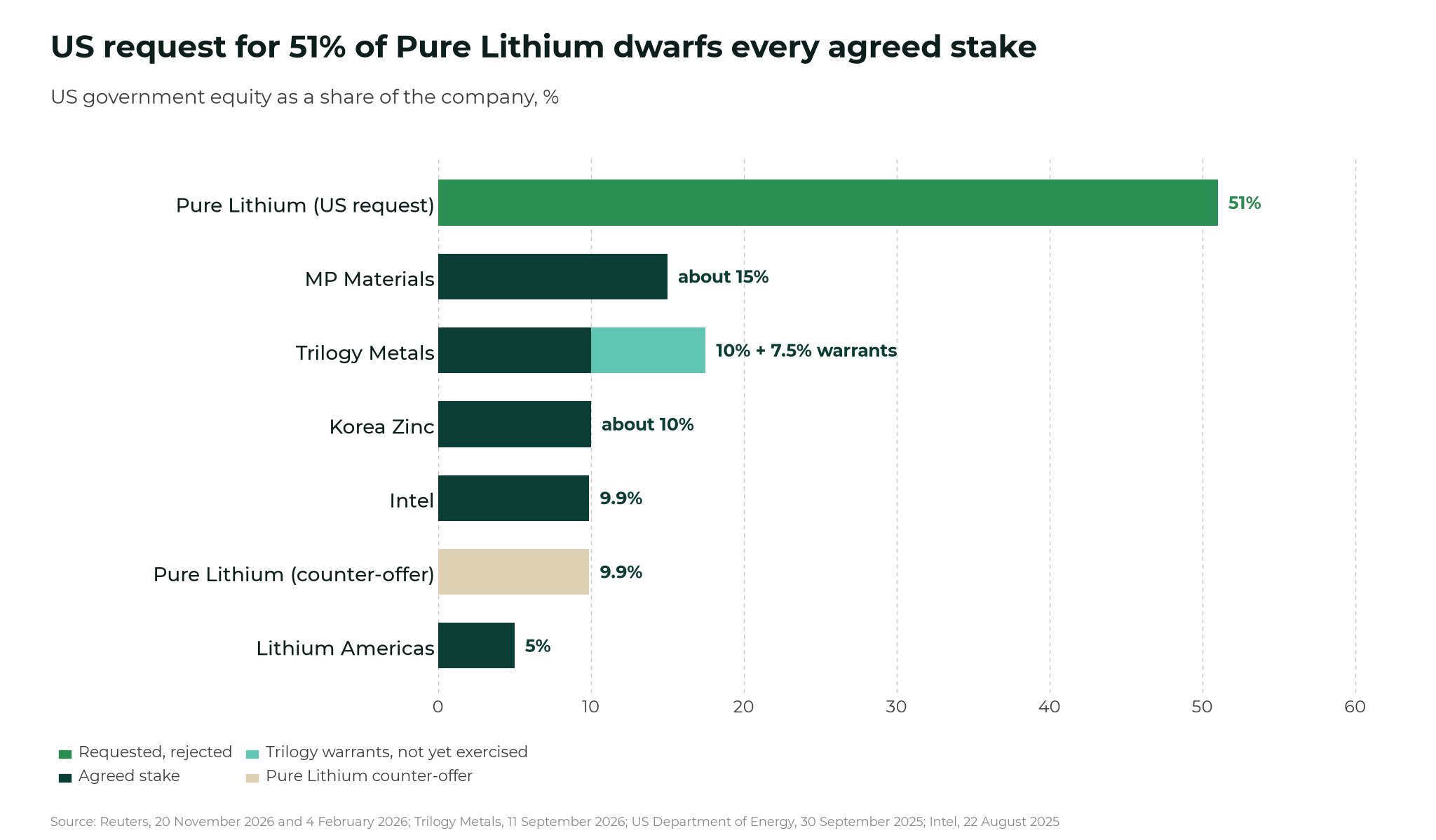
- US Commerce Secretary Howard Lutnick asked Pure Lithium in July for a 51% controlling stake in the lithium metal battery developer, in exchange for US$1 billion from Japan’s US$550 billion US investment pledge to build a plant the company would not own
- Pure Lithium refused, and Commerce turned down its 9.9% counter-offer in August, saying it remained “fixed on 51% equity”
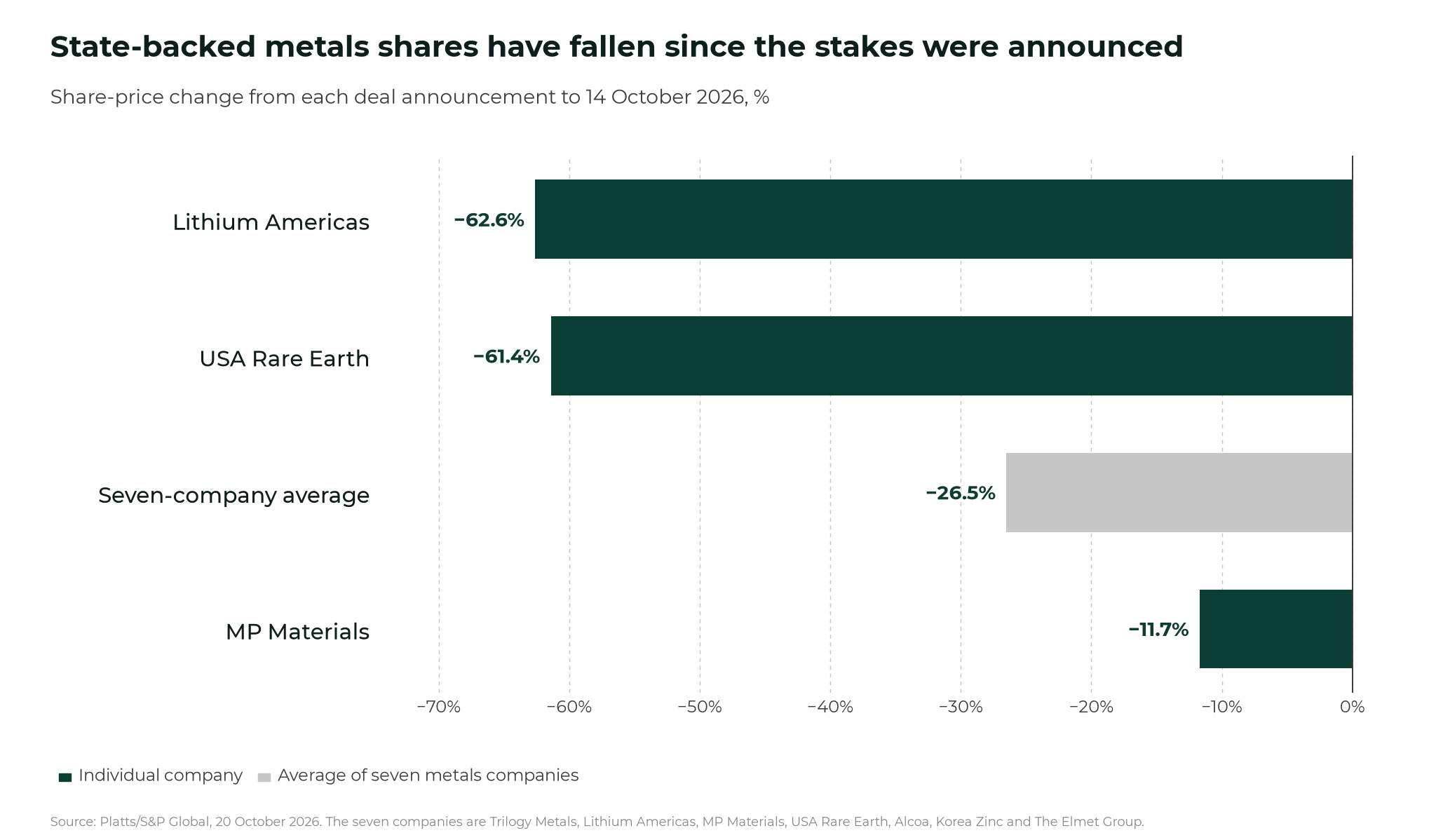
- shares in seven metals companies that accepted US government equity have fallen an average of 26.5% since the stakes were announced, according to Platts
The US Commerce Department demanded a 51% controlling stake in battery start-up Pure Lithium in exchange for a US$1 billion plant the company would neither own nor control, according to documents reviewed by Reuters — but the company said no.
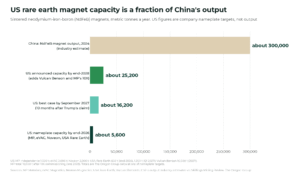
Until now, the largest stake the Trump administration has agreed is about 15% of rare earths producer MP Materials, which made the government its largest shareholder. So, if Pure Lithium had agreed to the deal, Washington would have held its first majority stake in a company since it began buying into critical minerals and strategic industries last year.
What Washington asked for
Lutnick reportedly made the request at a 45-minute meeting with chief executive Emilie Bodoin on 29 July, arranged by billionaire Robert Friedland, one of Pure Lithium’s largest shareholders. He said the government needed control so its battery could be used by the US military and other agencies.
The privately held company says its lithium metal battery is far more efficient than a conventional lithium-ion cell and can be built without graphite, nickel or cobalt.
Under the proposal, US$1 billion of Japan’s pledge would have built a plant owned by a special-purpose vehicle controlled by Tokyo and Washington. Pure Lithium would have operated it, receiving a share of revenue only after debt service on the US$1 billion, and no funding itself.
Its lawyers at Skadden Arps were blunt in a 22 August memo:
“51% is far outside precedent and invites scrutiny”
Skadden Arps, counsel to Pure Lithium
The same memo warned that the arrangement would “cripple Pure Lithium’s ability to raise capital or pursue an IPO.” According to the memo, the Commerce Department, which did not respond to Reuters’ questions, was “prepared to move on to other projects” if the company did not meet the mark.
How far US stakes have gone so far
Washington has already taken minority positions across the minerals supply chain, for example:
- MP Materials: a US$400 million preferred-equity investment, paired with a ten-year price floor and a magnet purchase commitment, for about 15%
- Trilogy Metals: a 10% stake plus warrants for another 7.5% for about US$35.6 million, tied to copper and zinc in Alaska’s Ambler district
- Korea Zinc: about 10% of the company, issued to the joint venture and US strategic investors, with the Department of War holding 40% of the joint venture building a US$7.4 billion smelter in Tennessee
- Lithium Americas: warrants for 5% of the company and a 5% economic stake in its Thacker Pass lithium joint venture with General Motors
- USA Rare Earth: shares and warrants for a US$1.6 billion Commerce investment in its Round Top project in Texas
A 51% demand is a different kind of deal as minority stakes give taxpayers upside while leaving founders and private shareholders in charge; majority control hands the state the board, the strategy and, ultimately, the customer list.
The legal footing for such arrangements is also untested. For example, the administration has used funds from the 2022 CHIPS Act, but opposing lawmakers contend the law never authorised such ownership, and no court has ruled on the question.
Investors have stopped paying for the government’s vote of confidence
The market already appears to be cooling on state equity: shares in seven metals producers that accepted government stakes (Trilogy Metals, Lithium Americas, MP Materials, USA Rare Earth, Alcoa, Korea Zinc and The Elmet Group) have fallen an average of 26.5% since each deal was announced, according to a Platts analysis.
Lithium Americas was down 62.6% and USA Rare Earth 61.4% from their announcement dates as of 14 October. Even MP Materials, which rose 118.1% in the three months after its July 2025 deal, was 11.7% below its price on the day the deal was announced.
Analysts credit MP’s initial jump to the price floor rather than the shareholding. “I’d say that it was less the US government taking an investment and more the announcement of a floor price,” Max Yerrill, vice president at BMO Capital Markets, told Platts.
As we noted in our analysis of America’s US$27 billion push to break China’s minerals grip:
“Washington is increasingly willing to absorb risks that private investors struggle to price.”
The Pure Lithium episode shows the price Washington may now want for absorbing that risk.
What it means for investors
The bigger consequence is for the companies queuing for federal help. If equity is the entry fee and control is the opening bid, boards must weigh state money against dilution, loss of strategic control and a harder path to private capital: the trade-off Pure Lithium’s own lawyers spelled out.
That favours the forms of support the market has actually rewarded: price floors, offtake agreements and purchase commitments that underpin revenue without taking the company. It also shows Japan’s US$550 billion pledge becoming a pool that Washington can direct into specific US plants on its own terms.
For listed juniors and developers in lithium, rare earths, graphite and other critical minerals, the terms of government support now matter as much as the headline dollars.
The risks to watch
The account rests on documents and one person with direct knowledge; the Commerce Department did not respond, though Pure Lithium did not dispute it. The battery is not yet in mass production, and a January hearing in Pure Lithium’s dispute with Panasonic, which denies reverse-engineering the technology, may shape its value more than any state deal.
Government money also does not shield projects from the cost of building in the US. Lithium Americas, in which Washington holds a 5% stake, has raised the cost of its Thacker Pass lithium mine in Nevada by about 31% to US$3.83 billion, blaming higher wages, a shortage of skilled workers, tariffs on imported equipment and immigration limits.
“For the companies behind us right now, it’s going to be tough, very tough,” chief executive Jon Evans told Bloomberg.
Washington’s minerals push needs private capital to build the mines, refineries and plants it wants, and demands for control risk pushing that capital away.