
More than US$750 billion needs to be invested in mining and refining between 2026-2040 to meet demand for key energy minerals, according to the latest report by the International Energy Agency.
Copper and nickel dominate the capital requirement, with copper needing approx US$310 billion and nickel US$280 billion, together accounting for almost 80% of the total.
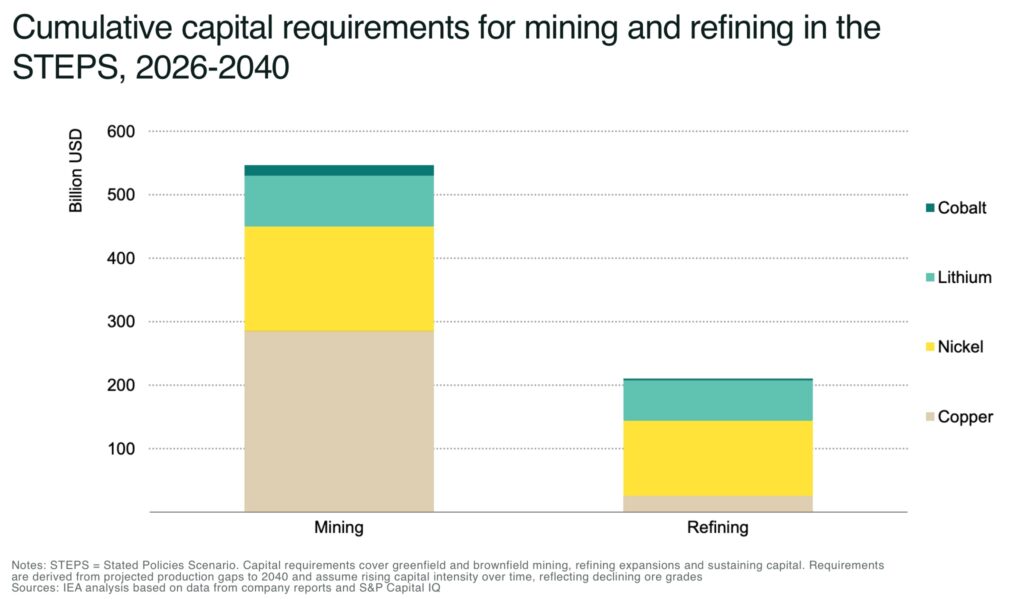
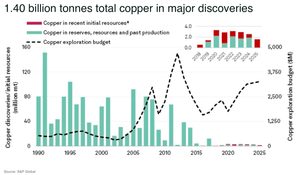
The estimate covers new mines, brownfield expansions, refining capacity and sustaining capital, and reflects rising development costs as ore grades decline, particularly in mature copper-producing regions.
The challenge is that the investment requirement is increasing as industry spending slows with critical-mineral investment falling 9% in 2025, ending several years of growth. Spending by battery-material companies dropped more than 20%, while lithium producers cut investment by around 40%.
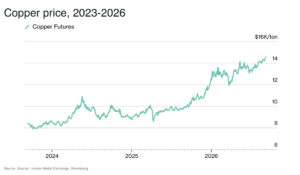
Copper, however, was the exception, with capital spending by copper-focused companies rising 8%, and merger and acquisition values increasing by 20% from 2024.
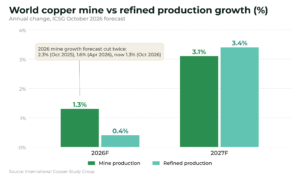
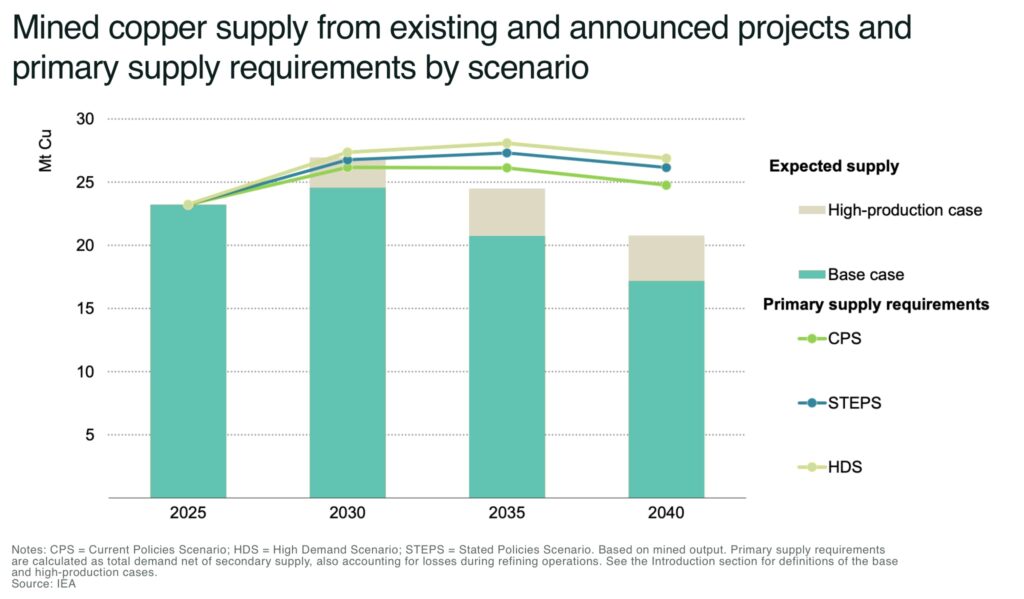
The IEA expects supply deficits for copper and lithium to persist through 2035 with only about 75% of projected copper requirements being met in 2035 in its base-case scenario, despite progress at projects in the Democratic Republic of Congo and Zambia.
Nickel faces a different financing problem, with large volumes of low-cost Indonesian supply pressuring competing producers, even as the IEA estimates the industry needs US$280 billion of investment through 2040. The challenge is that virtually all recent growth in refined nickel supply has come from Indonesia but, as we have highlighted in our recent analysis, environmental concerns and stalling ore grades have started to throttle growth in the country.
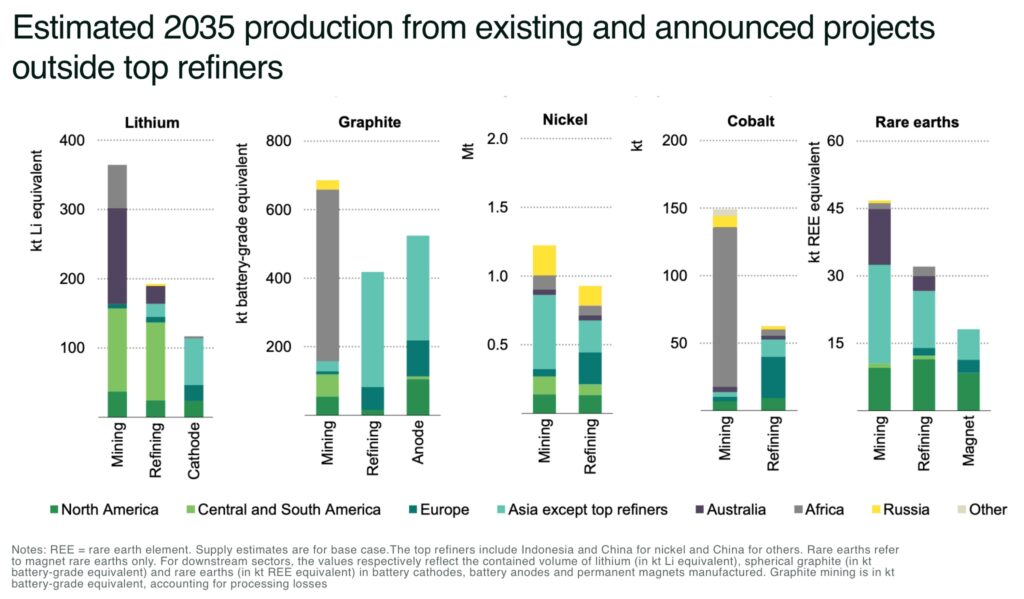
The project pipeline is also heavily weighted towards mining, with new refining and downstream capacity outside dominant producing countries continuing to lag proposed mine supply.
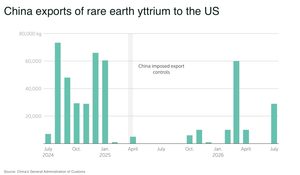
By 2035, planned rare-earth refining capacity in diversified regions is expected to equal only around two-thirds of mine output, while magnet production would cover just one-third. Planned cathode capacity outside the dominant supplier is similarly equivalent to only about one-third of projected lithium mining capacity.
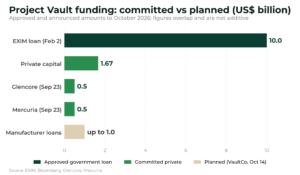
Governments support is rising, with public-finance commitments for critical-mineral value chains reaching about USD 65 billion in 2025, more than x4 levels in 2023 — however, the IEA warns a wide gap remains between announced commitments and capital actually deployed.
The investment challenge is therefore not simply to build more mines. It is to finance complete supply chains, from extraction through refining and manufacturing, while low prices, concentrated production and rising project costs continue to constrain private capital.