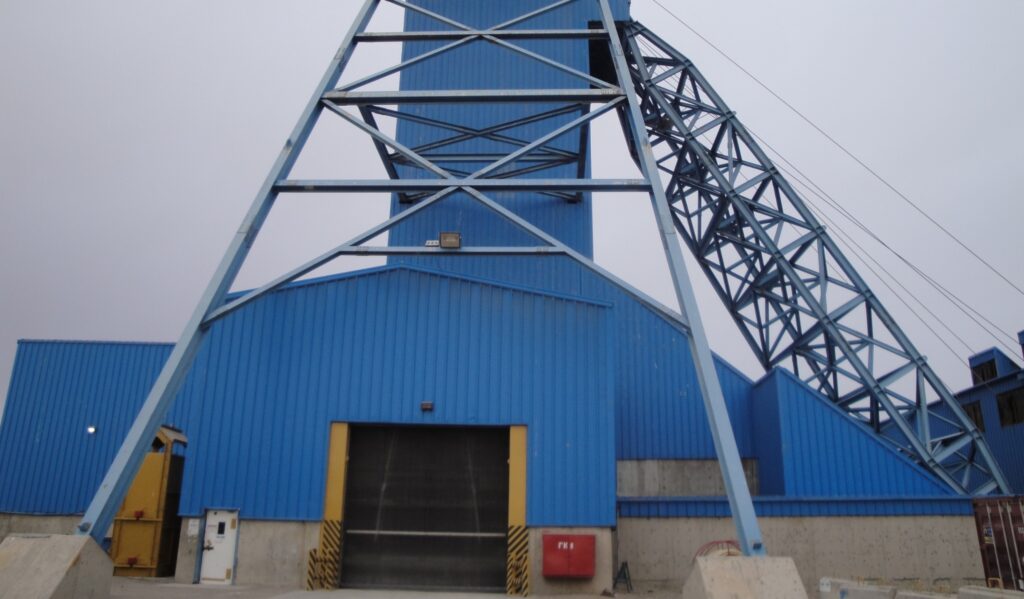
- underground operations at Rio Tinto’s Oyu Tolgoi copper-gold mine in Mongolia are paused after seismic activity along a rock fault zone on October 29, injuring workers but causing no fatalities
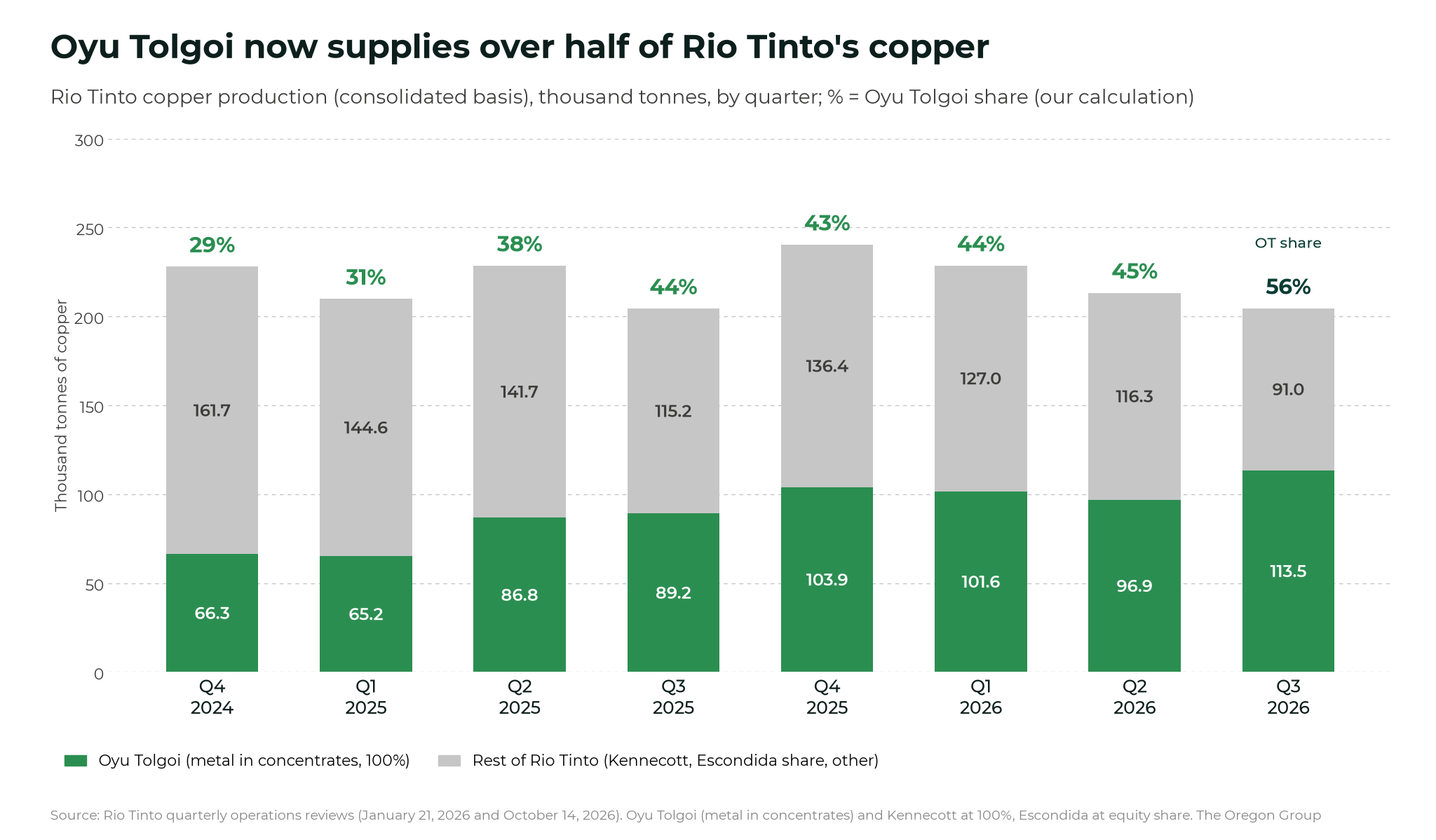
- the mine produced 113,500 tonnes of copper in concentrates in the third quarter, up 27% on a year earlier and more than half of Rio Tinto’s copper output, our calculations show
- operator Oyu Tolgoi LLC is preparing a staged restart, but the mine’s copper concentrate exports to China have fallen about 70% since mid-October because of a border bottleneck
Rio Tinto has paused underground operations at its Oyu Tolgoi copper and gold mine in Mongolia after a seismic event injured workers.
Seismic activity along a rock fault zone at about 18:00 local time on Thursday, October 29 (10:00 London time) caused ground vibration in the underground mine, Rio Tinto said. Underground operations are “paused in line with procedure, subject to completion of a safety review.”
Accounts of the injuries differ with Rio Tinto saying three employees were hurt, but its operating company, Oyu Tolgoi LLC, initially said 15 workers were injured in a rockfall triggered by the tremor. By Friday, Oyu Tolgoi LLC said two employees remained in hospital in Ulaanbaatar with non-life-threatening injuries and 13 had been discharged.
The company also said it is preparing a “safe and controlled restart” after a preliminary inspection found the rockfall “is confined, with no structural impact to the cave or its operating infrastructure.”
Why Oyu Tolgoi matters to Rio
Oyu Tolgoi is the engine of Rio Tinto’s copper growth.
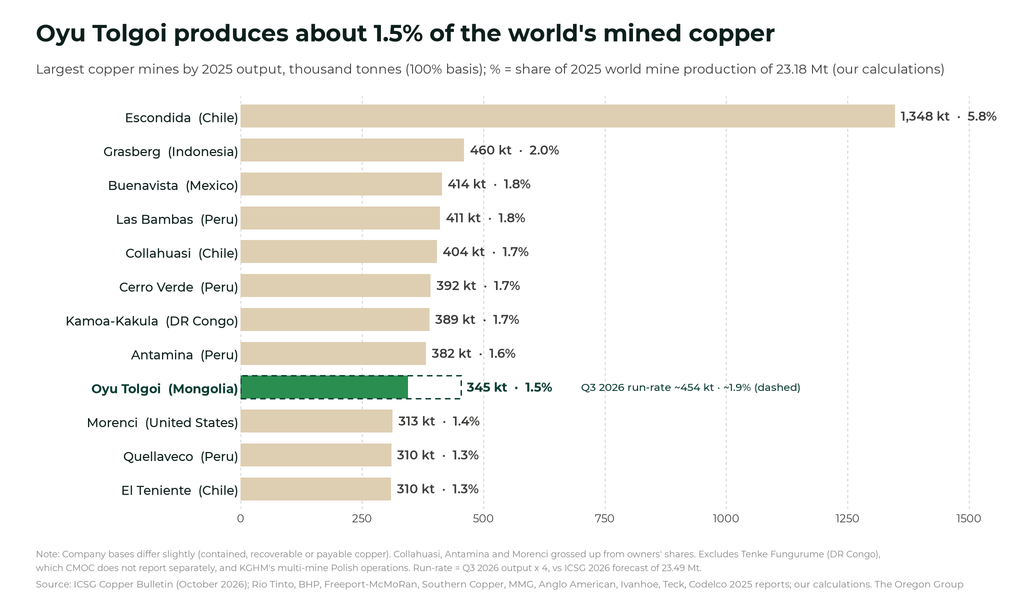
Oyu Tolgoi produced 345,000 tonnes of copper in 2025, about 1.5% of world mine output of 23.2 million tonnes estimated by the International Copper Study Group (our calculations show from ICSG market forecasts and Rio Tinto production results), making it one of the world’s dozen largest copper mines — at its third-quarter run-rate of about 450,000 tonnes a year, that share would approach 2%.
The mine produced 113,500 tonnes of copper in concentrates in the three months to September 30, up 27% from a year earlier, putting it on an annualised run-rate of about 450,000 tonnes — while Rio’s total copper output was 204,500 tonnes in the quarter — in other words, Oyu Tolgoi supplied 56% of it, our calculations show, up from 29% in the last quarter of 2024.
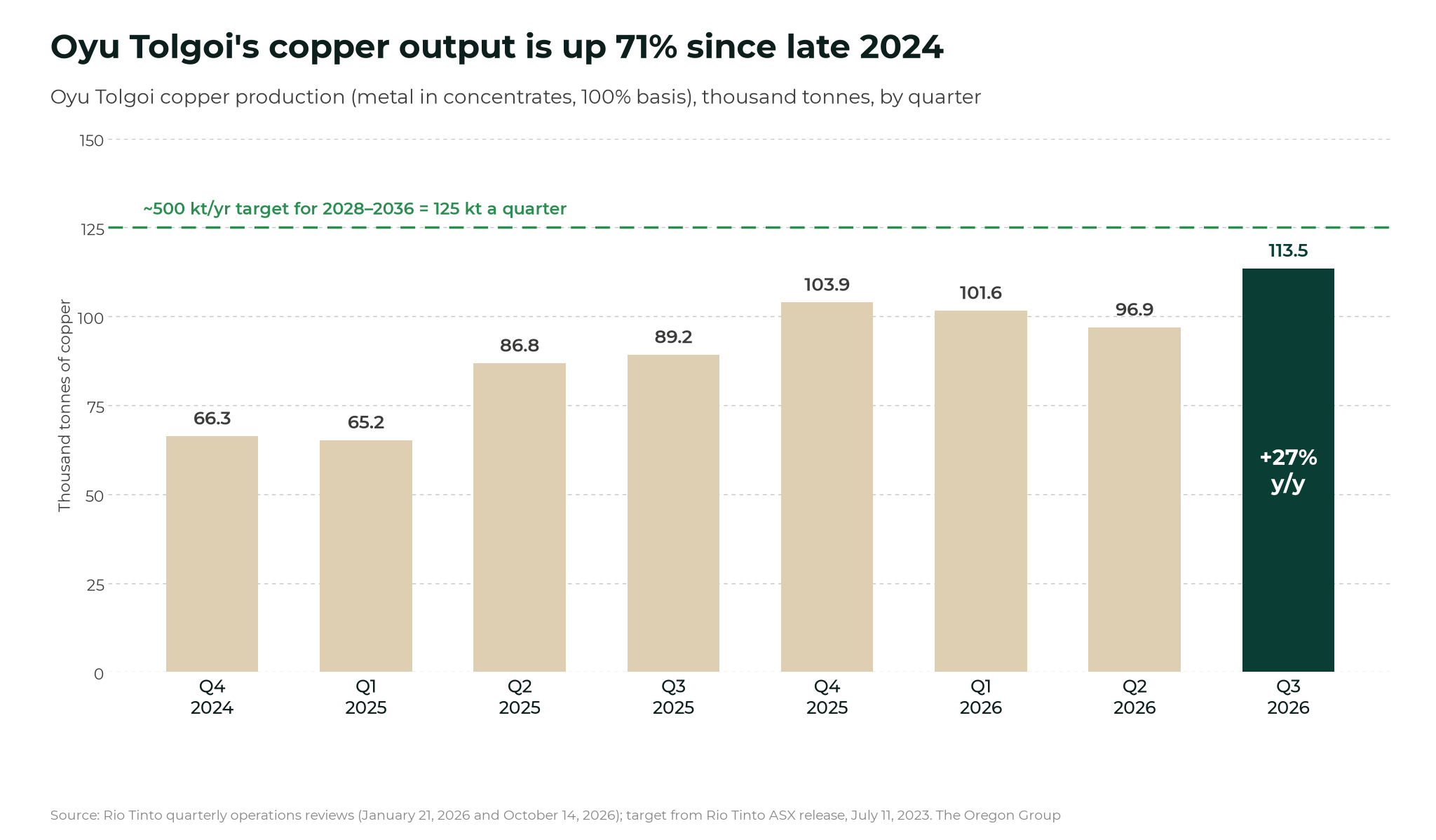
The underground block cave drives the copper growth, with Rio Tinto saying higher output came from the underground ramp-up, higher grades and better recoveries, targeting about 500,000 tonnes of copper a year on average from 2028 to 2036.
Rio has (so far) kept its 2026 group copper guidance of 800,000 to 870,000 tonnes in October, but it has not commented on guidance since the seismic event.
Notably: the copper price barely moved, with three-month copper on the London Metal Exchange was down 0.25% at US$14,320.50 a tonne at 03:10 London time on Friday.
The border is the bigger squeeze
The more immediate problem for Oyu Tolgoi may also be at the Chinese border, not underground, as Rio Tinto also flagged delays affecting all vehicles at the Ganqimaodu crossing into China, which have reduced the trucks available to carry its copper concentrate.
Oyu Tolgoi LLC said its concentrate exports fell about 70% in two weeks, as daily truck convoys dropped from 12–13 to about four.
Mongolian officials link the slowdown to China installing face-recognition checks for drivers, work expected to run until the end of December.
That matters because Oyu Tolgoi has no smelter, so its concentrate feeds smelters in northern China, which Shanghai Metals Market says face near-term delivery risk.
Another underground mine hit
The pause adds Oyu Tolgoi to a list of large underground copper mines disrupted since 2025, for example:
- Freeport’s Grasberg Block Cave in Indonesia, where a September 2025 mud rush killed seven workers; its mill ran at 67% of capacity in the third quarter of 2026
- Codelco’s El Teniente in Chile, where a seismic event in July 2025 killed six workers
- Ivanhoe’s Kamoa-Kakula in the Democratic Republic of Congo, where seismic activity in May 2025 flooded part of the Kakula mine; Ivanhoe then cut its 2025 copper guidance to 370,000–420,000 tonnes, from 520,000–580,000
As we argued in our earlier article, Freeport pushes Grasberg mine restart to 2028 as copper market tightens:
“copper’s supply problem is no longer just about long permitting timelines and underinvestment. It is now about operational fragility at tier-one mines, input shortages, geopolitics and infrastructure risk.”
Notably, El Teniente, Grasberg and Oyu Tolgoi are all block caves.
The International Copper Study Group has already cut its 2026 mine supply growth forecast to 1.3%, with output at Grasberg and Kamoa-Kakula still constrained, and the World Bank expects copper to average a record US$13,200 a tonne in 2026.
What could limit the impact
Surface operations, including open-pit mining and milling, are still running, said Jefferies analyst Christopher LaFemina, who called the event “unlikely to have long-term impacts on production expectations”.
Oyu Tolgoi LLC found no damage to the cave beyond the rockfall area. Neither Rio nor the operator has said when the restart will begin.
The market is also not short of refined metal – analysts polled by Reuters raised their 2026 global surplus estimate to 125,000 tonnes.
Even so, a mine producing more than half of Rio’s copper now has two choke points: rock underground and trucks at the border.