
China’s biggest lithium mine by capacity is facing another restart delay after the Yichun Ecology and Environment Bureau withdrew the proposed acceptance notice for the CATL-owned Jianxiawo mine’s environmental assessment after questions were raised about its earlier public disclosures.
The procedural setback carries significant supply consequences with Benchmark Mineral Intelligence, which identifies Jianxiawo as China’s largest lithium mine by capacity, cutting its 2026 production forecast by almost 49%, from 62,500 to 32,000 tonnes of lithium carbonate equivalent — erasing 30,500 tonnes from its lithium 2026 forecast. Its 2027 forecast remains around 99,000 tonnes.
A mining licence is not permission to produce
CATL halted Jianxiawo in August 2025 after its original mining licence expired, triggering an 8% limit-up move in Chinese lithium carbonate futures.
The company has since secured a replacement licence covering lithium, ceramic clay, rubidium and caesium. It is valid from November 28, 2025, to November 27, 2047. A safety-production permit followed on June 29, 2026.
But those approvals do not complete the chain.
The withdrawn environmental filing proposed annual ore production of 30 million tonnes, down roughly one-third from the mine’s previous 45-million-tonne rate. It covered the open pit, crushing and ore-transport infrastructure, but excluded the associated processing plant and tailings facility from its assessment.
That matters because mined ore is not lithium carbonate. Jianxiawo cannot return as a meaningful source of lithium chemicals unless extraction, mineral processing and tailings management can all operate legally and at scale.
China’s environmental-assessment participation rules require developers to use their own website, local public media or a relevant government website for early project disclosures. The Yichun regulator’s intervention suggests procedural compliance can stop a major supply restart even after the core mining and safety permits have been issued.
What’s happening with the lithium price
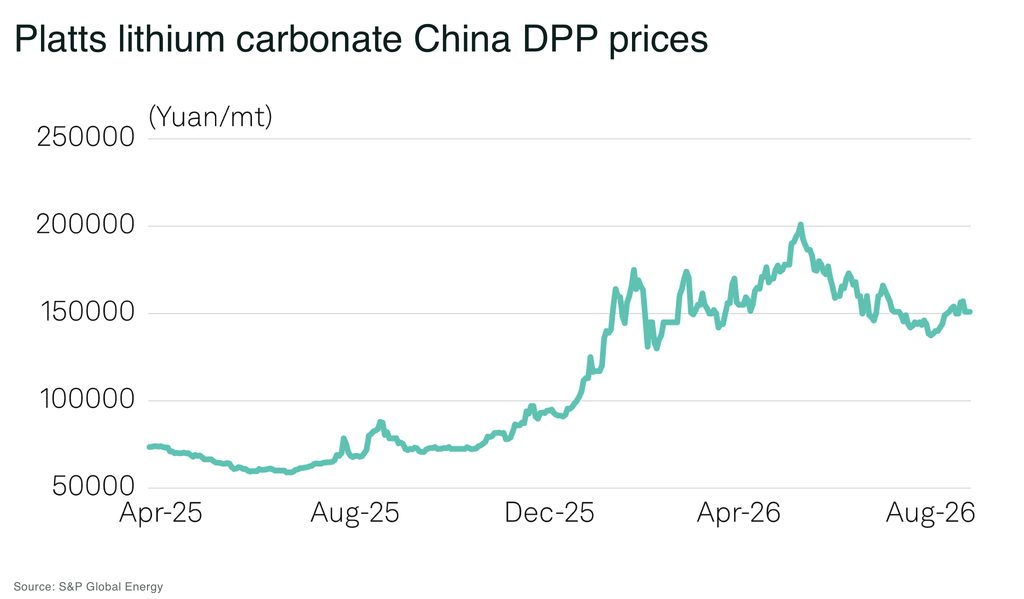
China’s lithium carbonate market rallied in August 2026 as delayed restart expectations for a major lepidolite mine in Jiangxi, maintenance outages at some lithium salt producers and accelerating inventory drawdowns tightened near-term supply.
However, the latest delay has not repeated the market shock of August 2025 with China’s main lithium carbonate futures contract falling 3.24% to RMB154,780 per tonne on September 2.
One reason is that the broader supply picture remains more balanced:
- Australia’s Department of Industry expects global lithium demand to grow by more than 11% annually through 2031, against supply growth of about 10% and still expects near-term oversupply before the market moves back towards balance by 2030
- higher prices are also bringing idled Australian capacity back into production, as we previously examined in our newsletter — Can lithium hit US$30,000 in 2026? — high-cost lepidolite and marginal hard-rock projects can leave, and re-enter, the market quickly
“At the moment, this is a classic rebound from the bottom,” a China-based producer told S&P Global. “Whether Jianxiawo restarts or not does change the reality of a tight market balance.”
Jianxiawo remains a swing producer rather than proof of an immediate global deficit.
The next milestone will depend on new notice from the Yichun environmental regulator, followed by final approval and evidence that the entire mine-to-processing chain can operate. Until then, Jianxiawo’s value as a lithium price catalyst now depends on the slowest permit in the chain.