- China extends its suspension of the October 2025 rare-earth and battery export controls to January 10, 2027, a day before the pause was due to end on November 10
- the six suspended measures include licences for five more rare earths and a rule that would require Chinese approval for foreign-made magnets containing 0.1% or more Chinese-origin rare earths by value
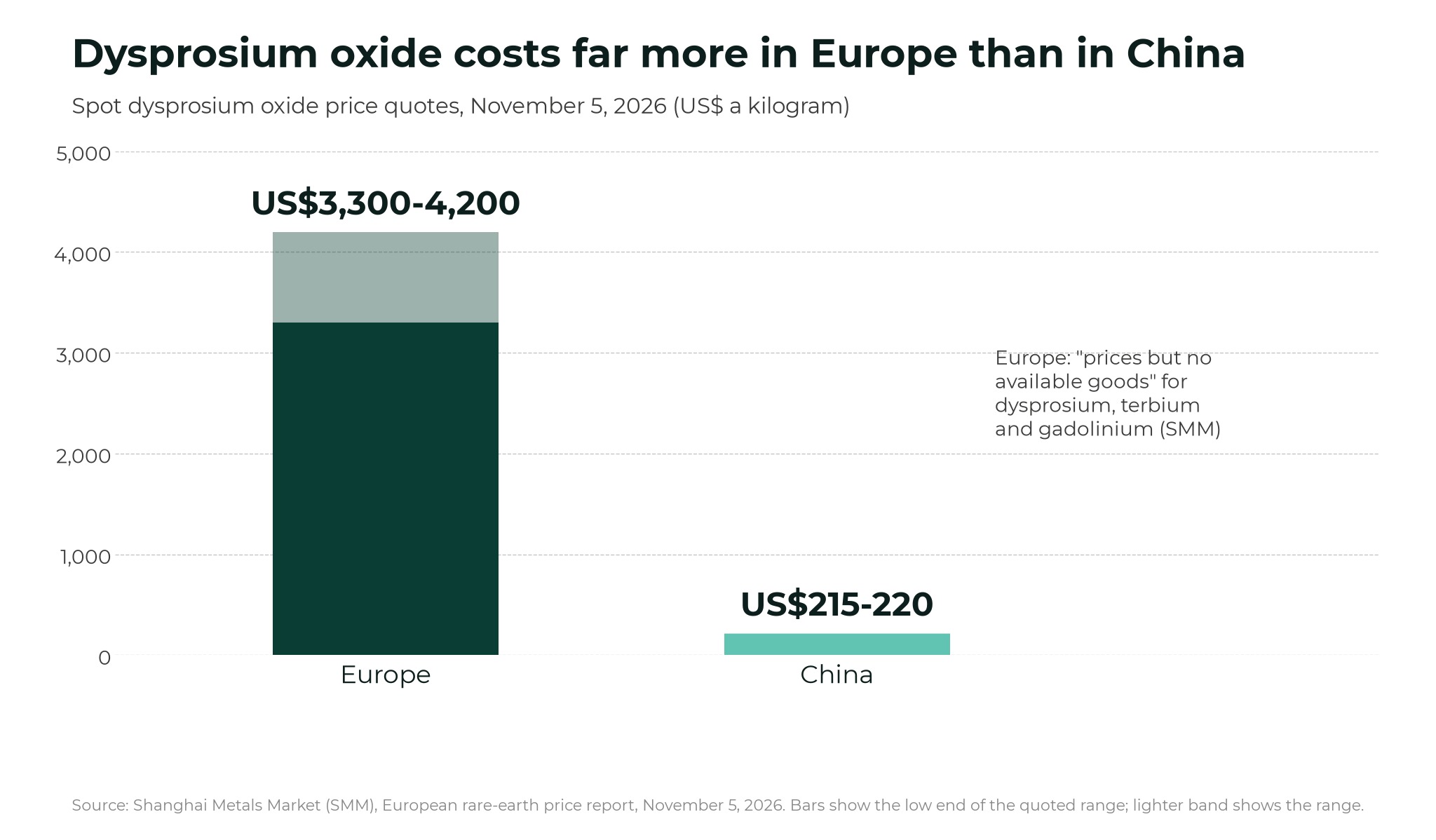
- China’s April 2025 licences on seven medium and heavy rare earths, including dysprosium and yttrium, are not affected, and spot dysprosium oxide in Europe was quoted at US$3,300-4,200 a kilogram on November 5, against US$215-220 a kilogram in China
China has extended its pause on the most sweeping of its rare earth export controls to January 10, 2027, one day before the suspension was due to run out.
The Ministry of Commerce and the General Administration of Customs said in Announcement No. 58 of 2026, published on Monday, that six measures announced in October 2025 will stay suspended from November 11 until January 10. The one-line notice gave no other details.
The decision brings China’s legal text into line with the wider US-China trade truce, which both sides already said would run to January 10 after Xi Jinping’s visit to Washington in September. Yesterday, the US warned China it must immediately meet its trade commitments, after US officials said Beijing was fulfilling only about two-thirds of its rare-earth pledge.
What stays suspended
The six measures that stay on hold until January 10 cover:
- licences for holmium, erbium, thulium, europium and ytterbium, five rare earths added in October 2025
- a rule requiring a Chinese licence for foreign-made rare-earth magnets and targets when Chinese-origin rare earths make up 0.1% or more of their value
- controls on rare-earth processing equipment, raw materials and technologies, under Announcements No. 56 and No. 62
- controls on high-energy lithium batteries and synthetic graphite anode materials, and on synthetic diamond and other superhard materials
Arguably, the 0.1% rule matters most for Western manufacturers as it would reach magnet makers in Japan, Europe or the US that use any meaningful amount of Chinese material, even if the finished magnet never passes through China.
Part of a wider package
The rare earth notice was one of several Chinese moves on Monday to keep the truce in place, including:
China’s State Council Tariff Commission said it would keep suspending its extra 24% tariff on US goods for two months from 13:01 Beijing time on November 10, while keeping a 10% tariff in place.
Meanwhile, the Commerce Ministry said it would extend for two months its suspension of measures against 16 US companies on its export control list and 11 US companies on its unreliable entity list, its blacklist of foreign firms seen as harming Chinese interests.
Washington has made a matching move, with the US Commerce Department’s Bureau of Industry and Security has extended its own pause to January 10, 2027 on a rule that would have extended US export restrictions to companies at least 50% owned by blacklisted firms, many of them Chinese.
What has not changed
However, the extension removes a deadline, not a shortage.
China’s April 2025 licences on seven medium and heavy rare earths (samarium, gadolinium, terbium, dysprosium, lutetium, scandium and yttrium) were never part of the pause and still require a permit for every shipment — helping to drive up prices heavy rare-earth prices outside China far above those inside it; for example, on November 5, spot dysprosium oxide in Europe was quoted at US$3,300-4,200 a kilogram, against US$215-220 a kilogram in China, while terbium oxide in Europe reached US$7,300-8,300 a kilogram.
Washington says Beijing is still falling short. Last Friday, US Trade Representative Jamieson Greer pressed Vice Premier He Lifeng on “concrete actions” on “agricultural purchases, rare earths, and other critical minerals”, after US officials told the Financial Times that China was meeting only about two-thirds of its rare-earth pledge.
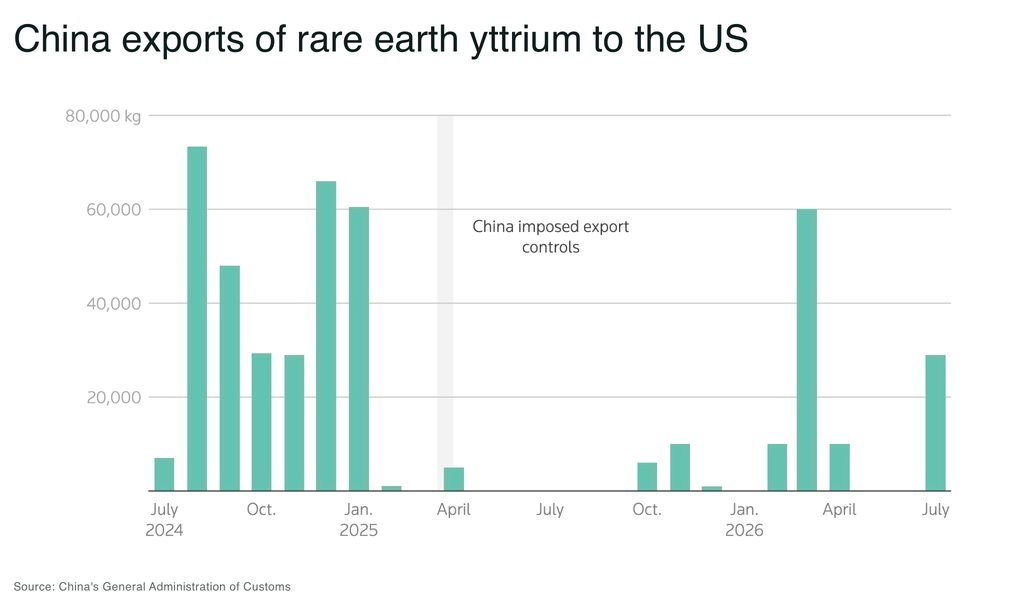
As we reported, the US warned China over rare earths after Beijing delivered only two-thirds of its commitments, and Japan has already seen China’s yttrium oxide exports to it fall 97.7% in January-May.
The next deadlines
Monday’s notice moves the deadline, but the calendar is still crowded:
- November 18-19: Donald Trump has said he expects to meet Xi at the Asia-Pacific Economic Cooperation (APEC) summit in Shenzhen, according to Reuters
- November 27: China’s suspension of its ban on gallium, germanium and antimony exports to the US is due to end, and no extension has been published
- January 1, 2027: the Pentagon’s ban on Chinese rare earths, magnets and tungsten in defence supply chains starts
- January 10, 2027: the rare-earth pause, China’s tariff suspension and the US pause on its rule for blacklisted firms’ affiliates all end on the same day
What it means for investors
For magnet makers, battery companies and chip-equipment buyers outside China, the extension removes the risk of a sudden widening of licence requirements this week, which should ease pressure on supply contracts signed for early 2027.
The bigger signal is that China is now renewing (for now) its concessions in two-month steps, not one-year blocks, which keeps Beijing’s leverage close at hand for every round of talks, and gives Western buyers only a short planning window each time.
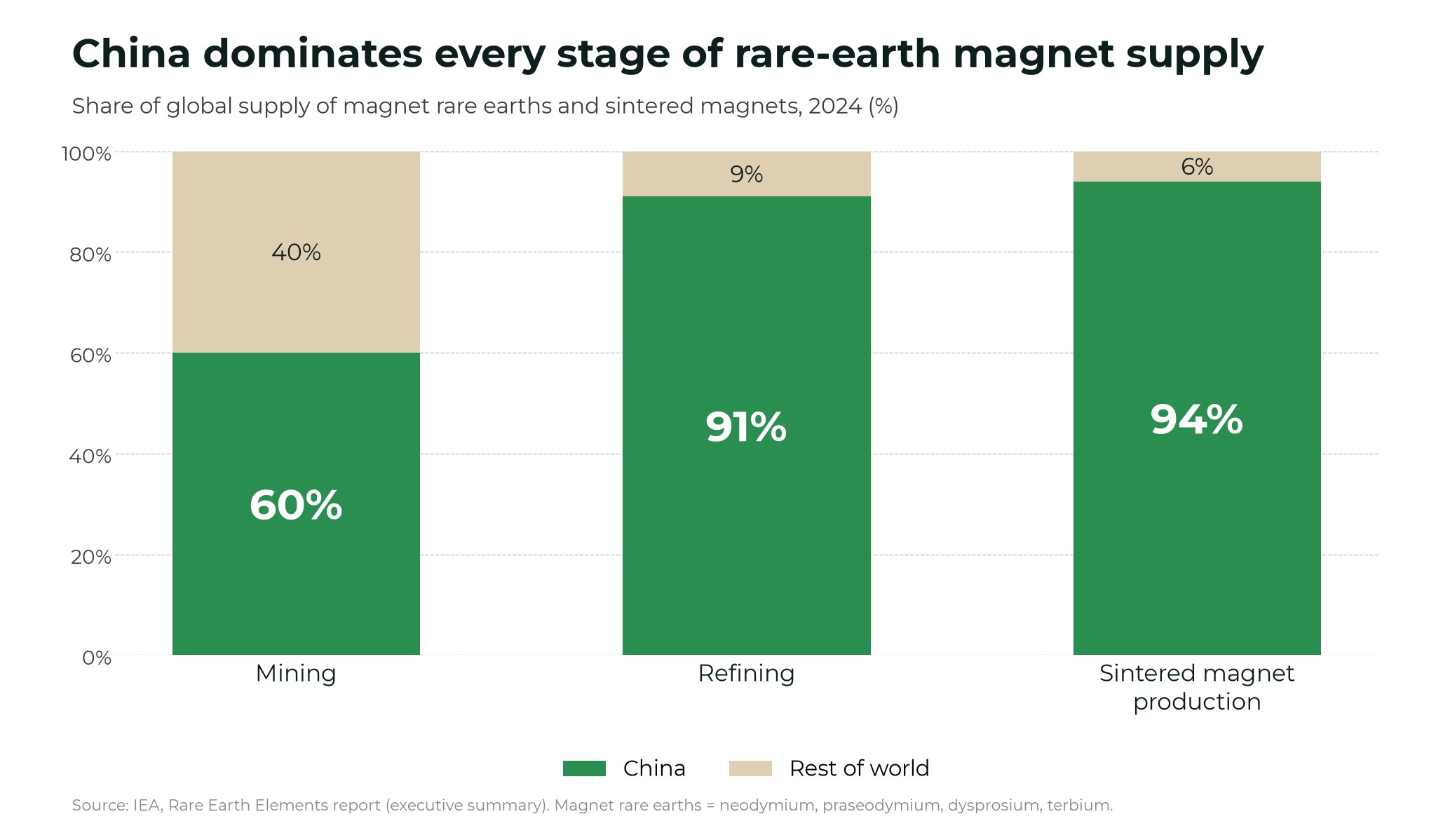
Beijing can do this because it still controls most of the chain: China accounted for 60% of mined magnet rare earths, 91% of refined output and 94% of sintered permanent-magnet production in 2024.
Companies such as MP Materials, Lynas Rare Earths, Energy Fuels and USA Rare Earth are selling into a market where buyers now have to plan around a renewal date every few months, while the April 2025 heavy rare-earth licences stay in place.
Potential risks and disruptions
- the notice is a single line with no detail, so China could still slow approvals for the five newer rare earths and the related equipment once the pause ends, or tie a further extension to US concessions at APEC or later
- the January 10 date could be extended again, or replaced by a longer deal, which would reduce the premium buyers are paying for non-Chinese supply
- heavy rare-earth prices in Europe are thinly traded quotes; Shanghai Metals Market (SMM) itself says dysprosium, terbium and gadolinium often have “prices but no available goods”, so they may not reflect what large buyers actually pay
China has bought itself two more months of leverage, and Western buyers two more months of uncertainty. The price gap on dysprosium shows the market is still paying for that uncertainty.