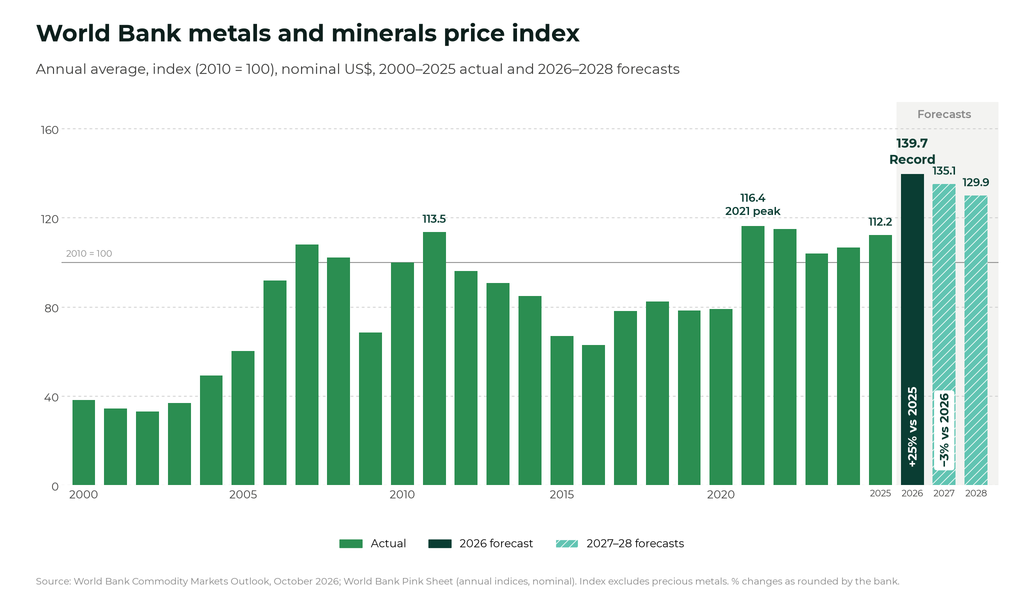
- the World Bank expects its metals and minerals price index to rise 25% in 2026, with aluminium, copper and tin all hitting record highs, before easing 3% in 2027
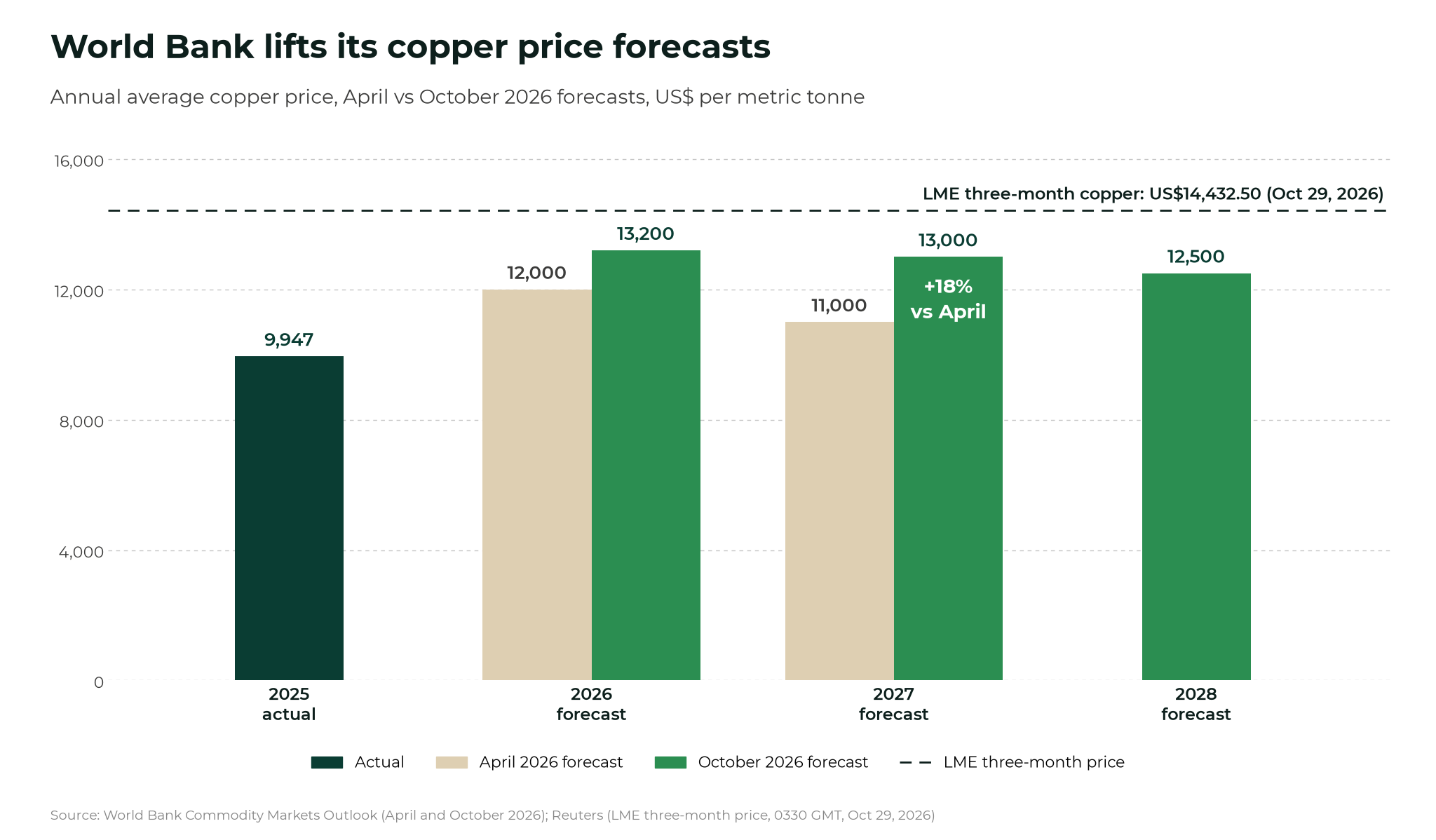
- its forecast for the 2027 average copper price is up 18% since April, to US$13,000 a tonne, only slightly below the record US$13,200 average it expects for 2026
- governments imposed 147 restrictive trade measures affecting critical minerals in the first nine months of 2026, more than double the 63 measures that eased trade
The World Bank expects its metals and minerals price index to rise 25% in 2026, with aluminium, copper and tin all hitting record highs.
Copper is the centrepiece, with the bank raising its 2027 copper price forecast by 18% to US$13,000/tonne, with expectations for prices to stay near record highs next year, not fall back.
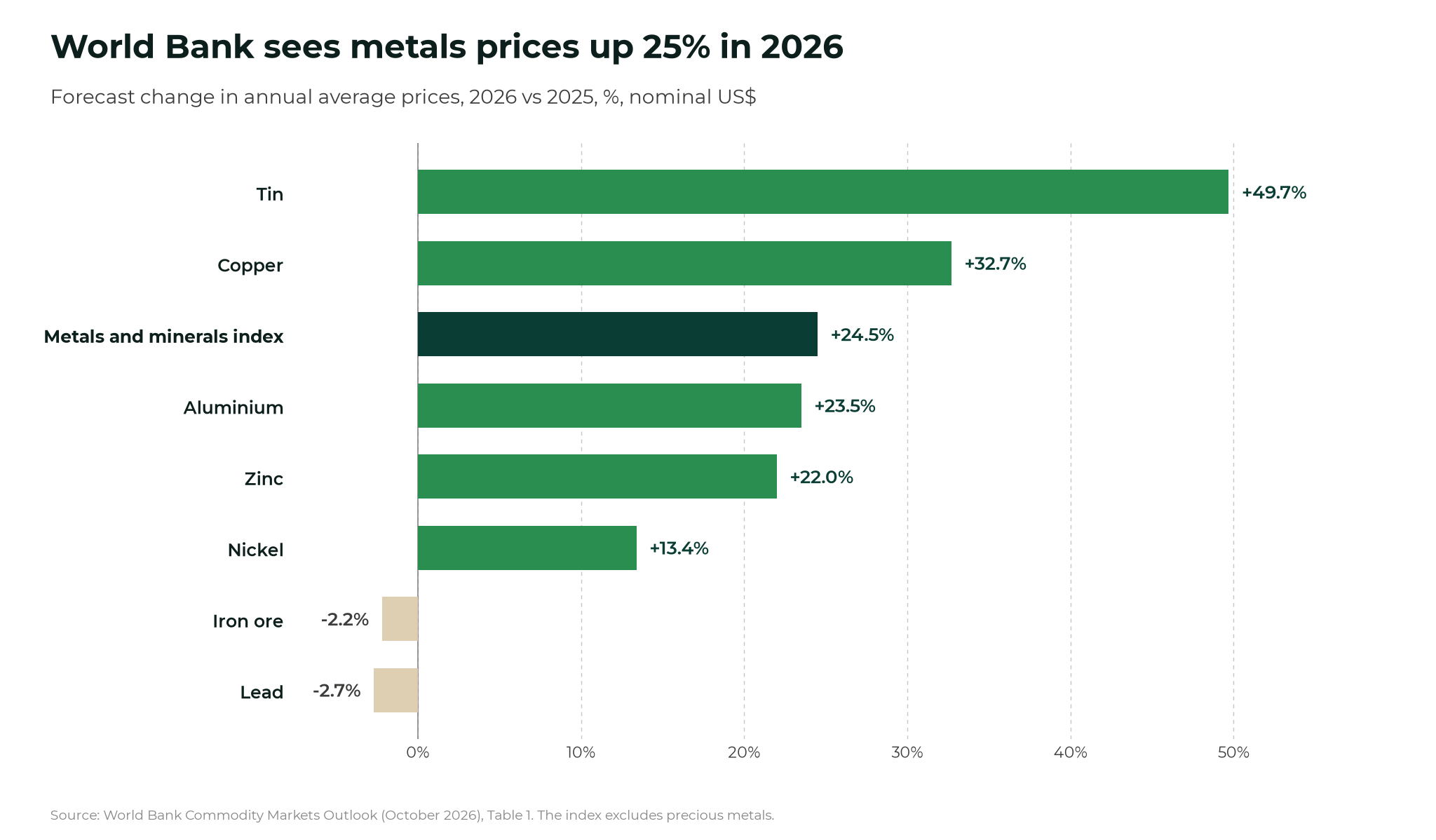
The index, which excludes precious metals, is on track for a record annual average in 2026, the bank said in its October Commodity Markets Outlook. It expects the index to slip 3.3% in 2027, but says a “high-price regime” will remain, as investment in electrification, renewable energy and data centres keeps demand for base metals firm.
The World Bank forecasts record annual average prices in 2026 for four of the seven metals in its metals and minerals index, and for all three precious metals it tracks:
- tin to average a record US$51,000 a tonne in 2026, up 49.7% from US$34,059 in 2025, the previous record; it forecasts US$45,000 in 2027, down 11.8%
- for copper, the bank now expects a record average of US$13,200 a tonne in 2026, up 32.7% on last year’s US$9,947, the previous record; its 2027 forecast of US$13,000, down 1.5%, compares with US$11,000 in April
- aluminium to average an all-time high of US$3,250 a tonne in 2026, up 23.5% from US$2,632 in 2025 and above the previous record of US$2,705 in 2022, before easing to US$3,100 in 2027, down 4.6%
- zinc to average a record US$3,500 a tonne in 2026, up 22% from US$2,868 in 2025 and just above the previous record of US$3,481 in 2022, before falling to US$3,100 in 2027, down 11.4%
- nickel to average US$17,200 a tonne in 2026, up 13.4% from US$15,162, well below its 2007 record of US$37,230; it forecasts US$17,250 in 2027, up 0.3%
- iron ore to average US$98 a dry tonne in 2026, down 2.2% from US$100.2, against a 2011 record of US$167.8; it forecasts US$95 in 2027, down 3.1%
- lead to average US$1,910 a tonne in 2026, down 2.7% from US$1,962, against a 2007 record of US$2,580; it forecasts US$1,925 in 2027, up 0.8%
The bank also forecasts records for precious metals, which its metals index excludes:
- silver to average a record US$70 an ounce in 2026, up 75.9% from US$39.80 in 2025, the previous record; it forecasts US$62 in 2027, down 11.4%, and US$58 in 2028, down 6.5%
- platinum to average a record US$1,950 an ounce in 2026, up 52.6% from US$1,278 and above its 2011 record of US$1,719; it forecasts US$1,750 in 2027, down 10.3%, and US$1,610 in 2028, down 8%
- gold to average a record US$4,600 an ounce in 2026, up 33.6% from US$3,442 in 2025, the previous record; it forecasts US$4,250 in 2027, down 7.6%, and US$4,000 in 2028, down 5.9%
Why copper won’t fall back
The World Bank warns that it is supply, not demand, holding prices up.
Copper mine output has been “somewhat lower than anticipated” this year, with mine supply growth expected to stay subdued because of lingering weather-related disruptions in Indonesia, and operational constraints and declining ore grades in Chile, the world’s largest producer.
Meanwhile, the bank expects demand to firm in 2027–28, supported by investment in power grids and data centres and the car industry’s shift to electric vehicles, which use more copper.
That warning matches reports from the mines themselves, for example: BHP’s copper output fell 19% in the September quarter, Codelco’s Andes Norte expansion at El Teniente remains suspended, and Peru’s Antamina mine halted operations this week after a worker died.
The US is pulling copper away from everyone else
The bank also points to a second driver: the prospect of additional US tariffs “has increased inventory demand for copper”.
COMEX copper inventories in July were more than ten times their January 2021 level, according to the bank’s chart data — and metal held in American warehouses is not available to smelters and fabricators elsewhere.
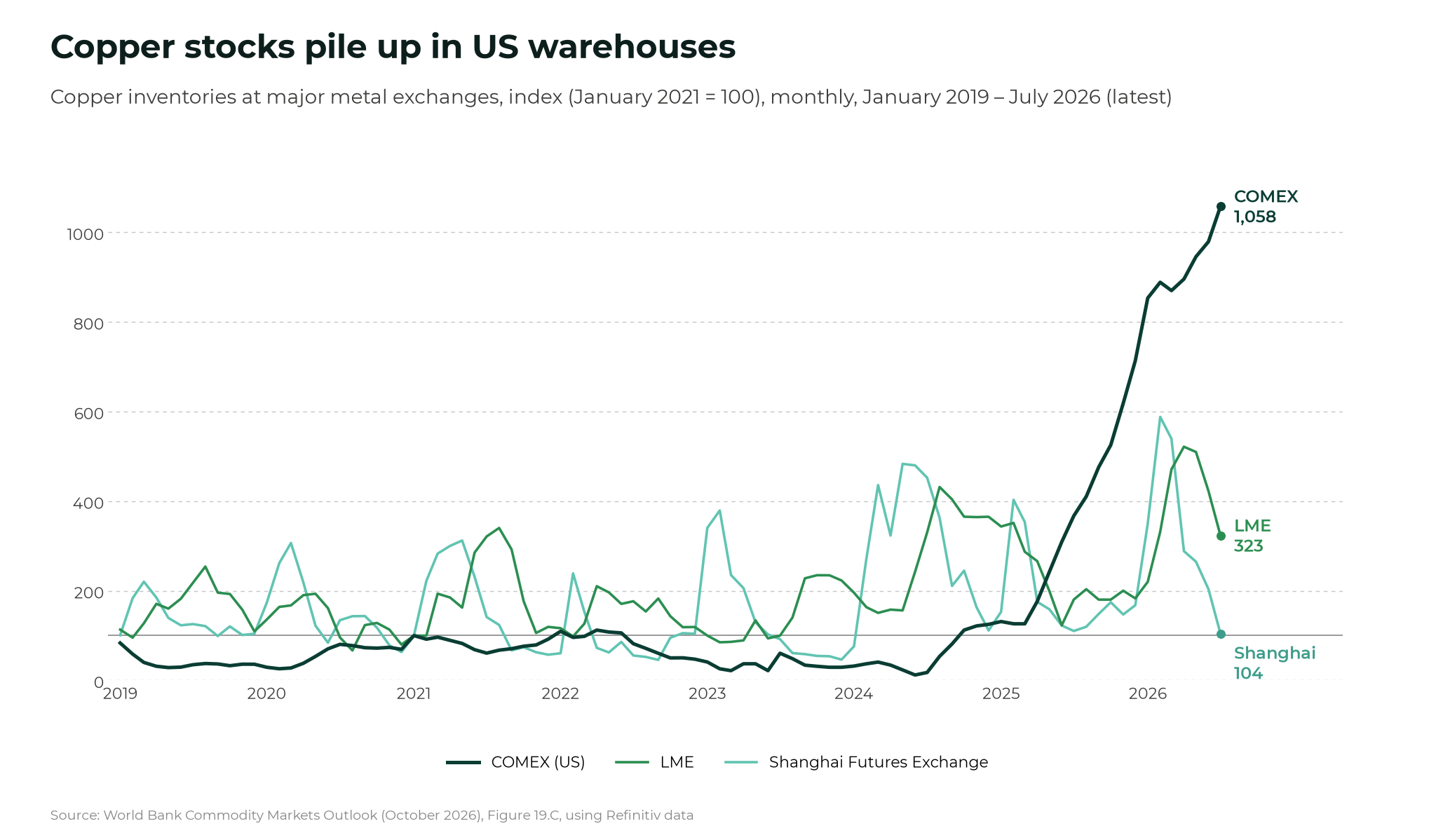
In other words, copper is becoming a regional market, with the US pulling metal in and the rest of the world competing for what is left.
Resource nationalism is tightening supply further
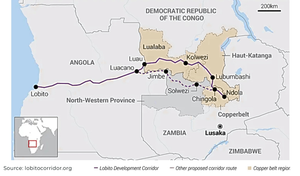
Trade policy is adding another constraint; for example, the Democratic Republic of Congo introduced a ban on copper concentrate exports in August to encourage domestic processing.
More broadly, the bank’s data show 147 restrictive measures affecting critical minerals in the first nine months of 2026, against 63 that eased trade.
Freeport and China’s premium show the squeeze
Freeport-McMoRan, the world’s largest publicly traded copper producer, beat Wall Street’s third-quarter profit estimates on Tuesday, October 27, even though its copper production fell 9% from a year earlier.
Price did the work with Freeport’s average realised copper price was US$6.54 a pound in the quarter, up from US$4.68 a year earlier. But copper production fell to 832 million pounds from 912 million, mainly because of lower operating rates at Grasberg in Indonesia, which is still recovering from a September 2025 mud rush that killed seven workers. (Grasberg’s mill ran at 67% of capacity in the quarter. Freeport expects it to reach 80% by mid-2027 and approach full capacity only by the end of 2027.)
Freeport’s chief executive was clear about what drove the result. “Favorable pricing for our products, particularly for copper and molybdenum, drove strong margins with substantial conversion to bottom-line results,” Kathleen Quirk said.
Meanwhile, Chinese buyers are scrambling for imported metal.
The Yangshan copper premium rose to US$205 a tonne on Wednesday, October 28, its highest in more than a decade. On Monday, October 26, Shanghai Metals Market put its average Yangshan warrant premium at US$178 a tonne.
The premium is what Chinese importers pay above the London Metal Exchange price for copper. In other words, it measures how hard Chinese buyers are competing for physical metal, separately from the global copper price.
Chinese exchange stocks are falling too. Copper held in Shanghai Futures Exchange warehouses fell more than 26% in the previous week, Reuters reported on October 29, citing the exchange’s weekly inventory report, following two weeks of inflows.
Notably, China’s refined copper output fell 1.1% in the third quarter from a year earlier, as smelters cut production in the face of higher costs.
Traders warn there is little spare metal to be had. Copper is “sold out everywhere,” said Xiao Chuankang, an analyst at Shanghai-based consultancy Mysteel Global.
This is the World Bank’s tariff point in practice, with traders shipping hundreds of thousands of tonnes of copper to the US in anticipation of tariffs on refined metal, so global stocks are not low in aggregate but are heavily concentrated in America.
What could go wrong
The forecast is not a straight bull case.
The bank’s 2027 forecast of US$13,000 is below today’s market. Three-month copper on the London Metal Exchange traded at US$14,432.50 a tonne early on Thursday, October 29. The bank also expects prices to ease to US$12,500 in 2028.
Global copper demand actually declined slightly in the first half of 2026, according to the bank, meaning this year’s rally has rested on disrupted supply and stockpiling, not stronger consumption.
And further increases in energy costs could push inflation and interest rates higher, weighing on investment, manufacturing and demand for industrial metals.
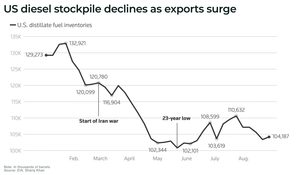
Producers face the other side of that squeeze. Average US diesel prices reached record levels in October, according to the bank, which also warns that higher electricity costs, particularly in Europe, could constrain aluminium and zinc smelting.
The World Bank’s forecast says copper’s problem is no longer whether demand turns up, but whether high energy costs and interest rates break demand before new mines can break the shortage.